
‘He who does not work, neither shall he eat.’
—2 Thessalonians 3:10, The Holy Bible
For most of human history, survival came with a very simple expectation.
You worked. You earned. You ate.
There really was no choice in the matter. Life was harsh — and indeed, only the toughest people survived.
Before 1900, 40% of all children failed to reach the age of five. And for those lucky individuals who did survive beyond the age of five? Well, the situation wasn’t that great either. When they reached adulthood, their average life expectancy was only around 30. This meant that anyone who reached 40 was generally considered to be a superhero.
You have to understand what kind of world it was. Poverty was widespread. Disease was rampant. Medical care was rare. This meant that even a minor scratch on your arm could lead to an infection with devastating consequences.
So, if you were trying to survive in those days, it was your family and your community that were the most important anchors. They protected you. They supported you. They uplifted you.
But what if you had no community ties? Well, in that case, you were in trouble. Serious trouble.
There was no safety net waiting to catch you. No sickness benefit. No unemployment allowance. No retirement pension.
So, if you got into hardship, that really was the end of the line. You just suffered and died. No one would notice. Because up until the early 20th century, social welfare simply did not exist.
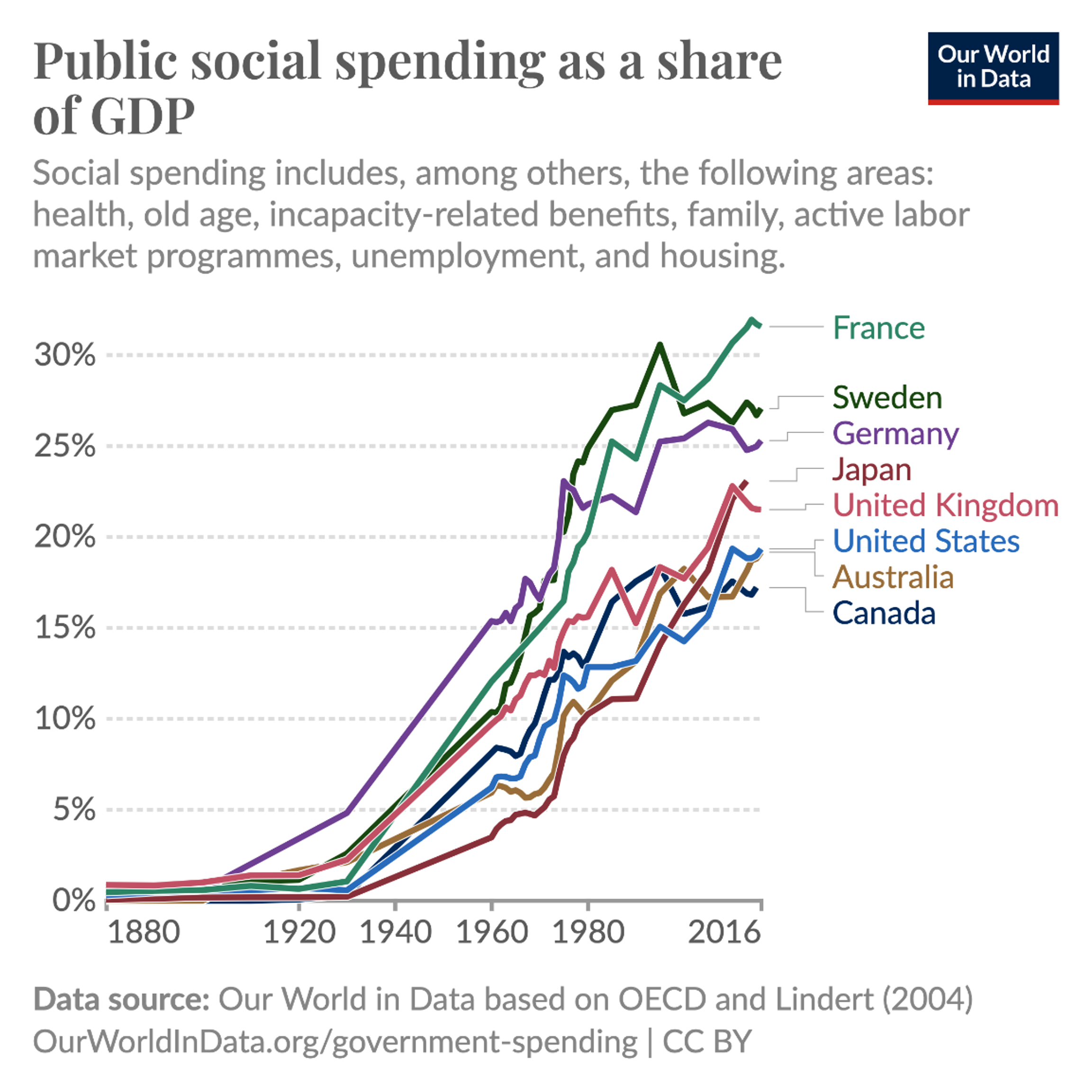
Source: Our World in Data
I’ve taken a look at the numbers, and they’re quite revealing:
- Before 1900, most countries only devoted 1% to 2% of their GDP to social spending. Some countries didn’t even bother with it.
- But today? Well, that figure has skyrocketed. Here in New Zealand, we now allocate over 20% of our GDP to social spending. Meanwhile, in France, their expenditure is even higher. It’s over 30%.

Source: Jorge Jaramillo / Wikimedia Commons
Certainly, there’s no hiding it. France has grabbed the headlines in 2026. The country has been convulsed by fire and fury:
- I note that pundits on both the left and right are trying to score points by debating ideology. But they seem to miss something important, which is historical context.
- Here’s the truth: French society has always been unruly. Between 1661 and 1789, the nation experienced 8,516 rebellions. That works out to 66 incidents of civil disorder per year. It’s stunning.
- From food riots to peasant revolts, from labour strikes to political coups, there’s no shortage of upheaval here. The most famous of these, of course, is the French Revolution, where they overthrew the monarchy. This tradition, it seems, has carried on to the present day.
- I asked a French friend why his people are so fond of violent insurrections. His response? Well, they romanticise the act of taking to the streets. It’s deeply embedded in the fabric of their culture. Hence the phrase vive la révolution (long live the revolution).
But here’s the billion-dollar question: are such rebellions actually effective? Do they really lead to happiness?
- Well, these days, the quality of life for the average French person has improved tremendously. No one notices when a child lives beyond the age of five. No one notices when an adult lives beyond the age of 30. These events — once considered miraculous a century ago — are no longer remarked upon.
- But a better quality of life hasn’t created a sense of gratitude. Instead, it’s created a sense of grievance. Increasingly, you see people complaining that the government is not delivering enough welfare. This is despite the fact that public social spending is at all-time highs.
The economic fallout of such complacency is profound:
- Here’s my observation: while America exports technology, France exports handbags. Indeed, as my colleague Simon Angelo has pointed out, even the poorest US state of Mississippi actually has a higher GDP per capita than France.
- Of course, the woke activists might dispute this. They will argue that GDP is a bad way to measure happiness. Instead, they will say that happiness is only related to social welfare. Therefore, the more government spending, the merrier.
- But here’s the hole in their logic: it’s impossible to improve our quality of life if we don’t improve our economic output.
- In fact, the reason that we’re living longer and healthier lives now is because our society has gotten richer over time. The secret sauce here is rising productivity.
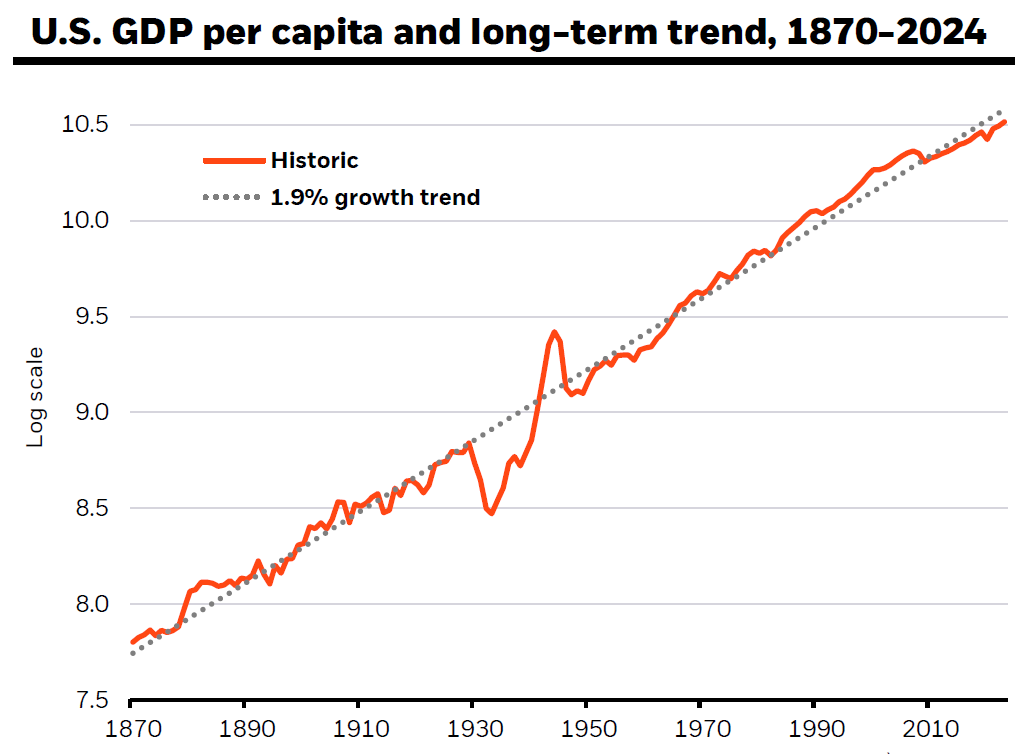
Source: BlackRock
Indeed, wealth and health actually go hand in hand. We can’t have one without the other:
- So, yes, it can be tempting to rely on a welfare state. One that promises to take care of everyone from the cradle to the grave. Showering them with benefits.
- But watch out. When there are too many safety nets in our society, I suspect that people will no longer feel the need to take the leap of faith anymore. They will lose their motivation to work. Risk-taking drops to zero. Free enterprise vanishes.
- Once that happens, the wonder and mystery that comes with building a courageous life will be lost. And that’s very tragic.
Source: Acaben / Wikimedia Commons
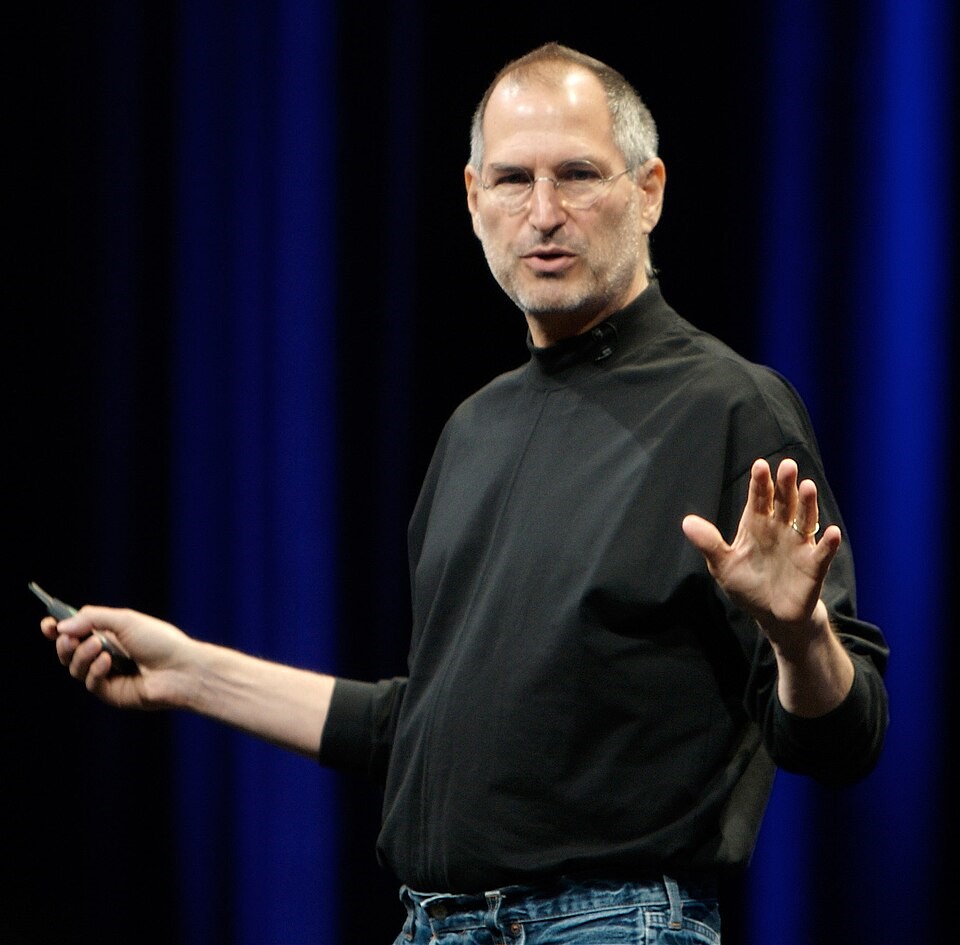
Why does it matter? Well, I can’t help but reflect on what the legendary Steve Jobs had to say about this:
- In 2005, he gave a commencement speech at Stanford University. He talked about his entrepreneurial journey at Apple, filled with heartbreaks and setbacks. Success did not come easy for him, but he was determined to keep going anyway.
- Here’s an excerpt from his speech: ‘Your work is going to fill a large part of your life. And the only way to be truly satisfied is to do what you believe is great work. And the only way to do great work is to love what you do. If you haven’t found it yet, keep looking and don’t settle. As with all matters of the heart, you’ll know when you find it. And like any great relationship, it just gets better and better as the years roll on. So keep looking. Don’t settle.’
- Then Jobs ended his speech with a call to action for young people: ‘Stay hungry. Stay foolish’.
- That’s good advice right there. What Jobs was talking about was having the courage to back yourself. Don’t be afraid to set off on an adventure, even when the road ahead looks uncertain. You have to embrace the wonder and mystery of what might happen next. That’s part of the entrepreneurial journey.
As a society, I think we are at our best when we celebrate the prosperity that comes from ambition and audacity:
- Why should we settle for government handouts when we can strive for something much greater?
- After all, the future doesn’t belong to the lazy and the entitled. The future belongs to the builders and the creators.
- Let us never forget about the virtue of working hard for its own sake. Life is not meant to be comfortable. Life is meant to be challenging.
Our Quantum Income Strategy
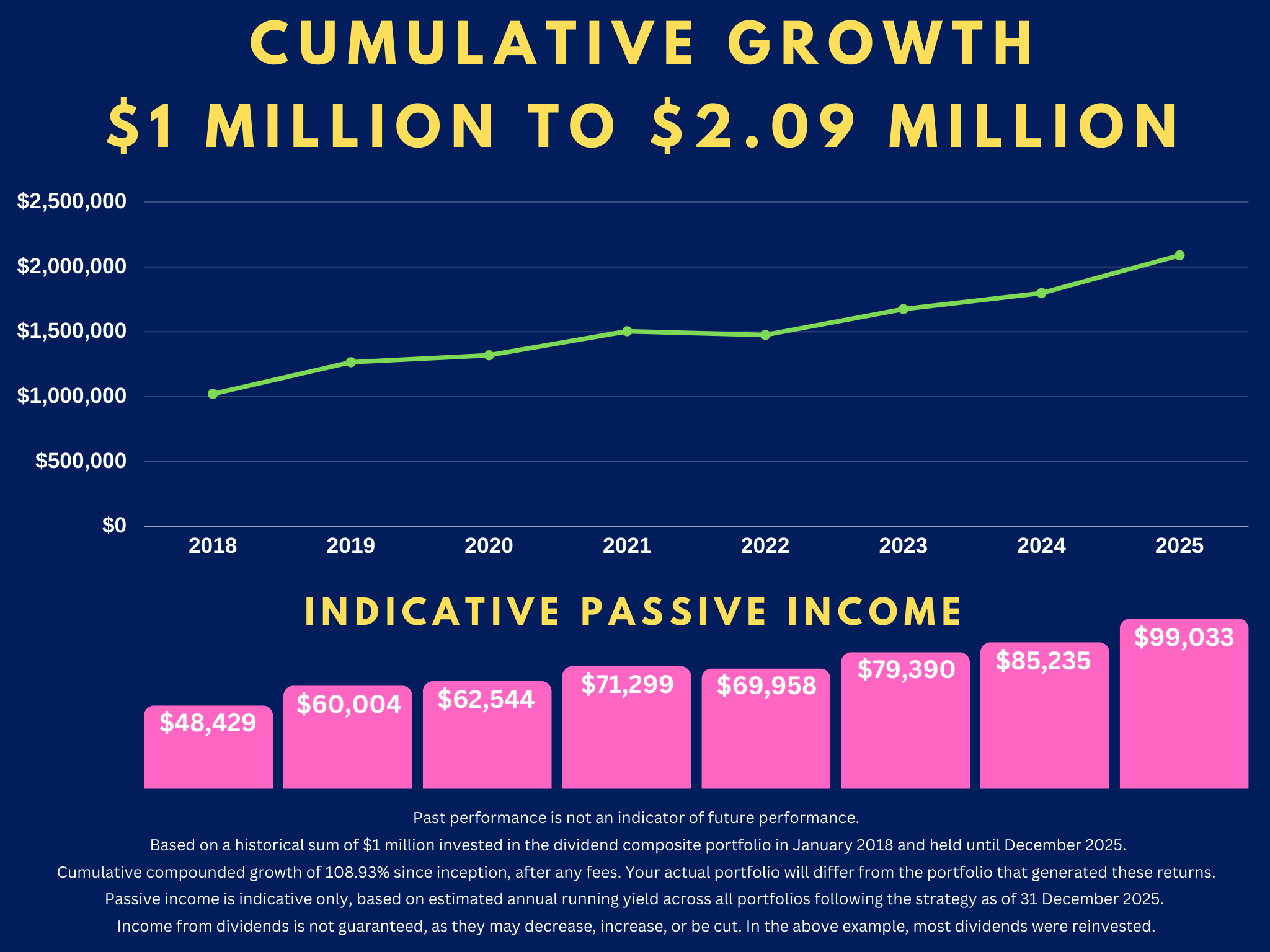
Successful investors tend to be resilient:
- They are regular folks who have painstakingly built up their wealth. They are helping the world to change for the better. They are investing in companies that are creating new jobs, new products, new services.
- In fact, if there’s a problem out there, you can bet your bottom dollar: there’s already an entrepreneur working hard at figuring out a creative solution for it. And that, in turn, will generate even more wealth in the long run.
Here at Wealth Morning, we believe it’s the builders who create value, not the activists. This is why we run what may be the only active night-trading desk in New Zealand for our Eligible and Wholesale Clients:
- Every week, we aim to buy into exceptional companies in Australia, Europe, and America.
- Our focus is on sectors that offer the perfect balance of growth and income.
- Our mission? To capture pockets of outstanding opportunity where we can.
- Where others see doubt, we see clarity — and we aim to use it as a springboard to build a better future.
- Are you interested? 👉 Click here to book a consult with us. Find out more about our Quantum Income Strategy, available exclusively to Eligible and Wholesale Investors.
Regards,
John Ling
Analyst, Wealth Morning
(This article is the author’s personal opinion and commentary only. It is general in nature and should not be construed as any financial or investment advice. Wealth Morning offers Managed Account Services for Wholesale or Eligible investors as defined in the Financial Markets Conduct Act 2013.)
John is the Chief Investment Officer at Wealth Morning. His responsibilities include trading, client service, and compliance. He is an experienced investor and portfolio manager, trading both on his own account and assisting with high net-worth clients. In addition to contributing financial and geopolitical articles to this site, John is a bestselling author in his own right. His international thrillers have appeared on the USA Today and Amazon bestseller lists.