
When you have a large hammer, it’s easy to spot protruding nails.
As the election approaches, most of the major political parties have supermarket policies targeting the cost-of-living crisis.
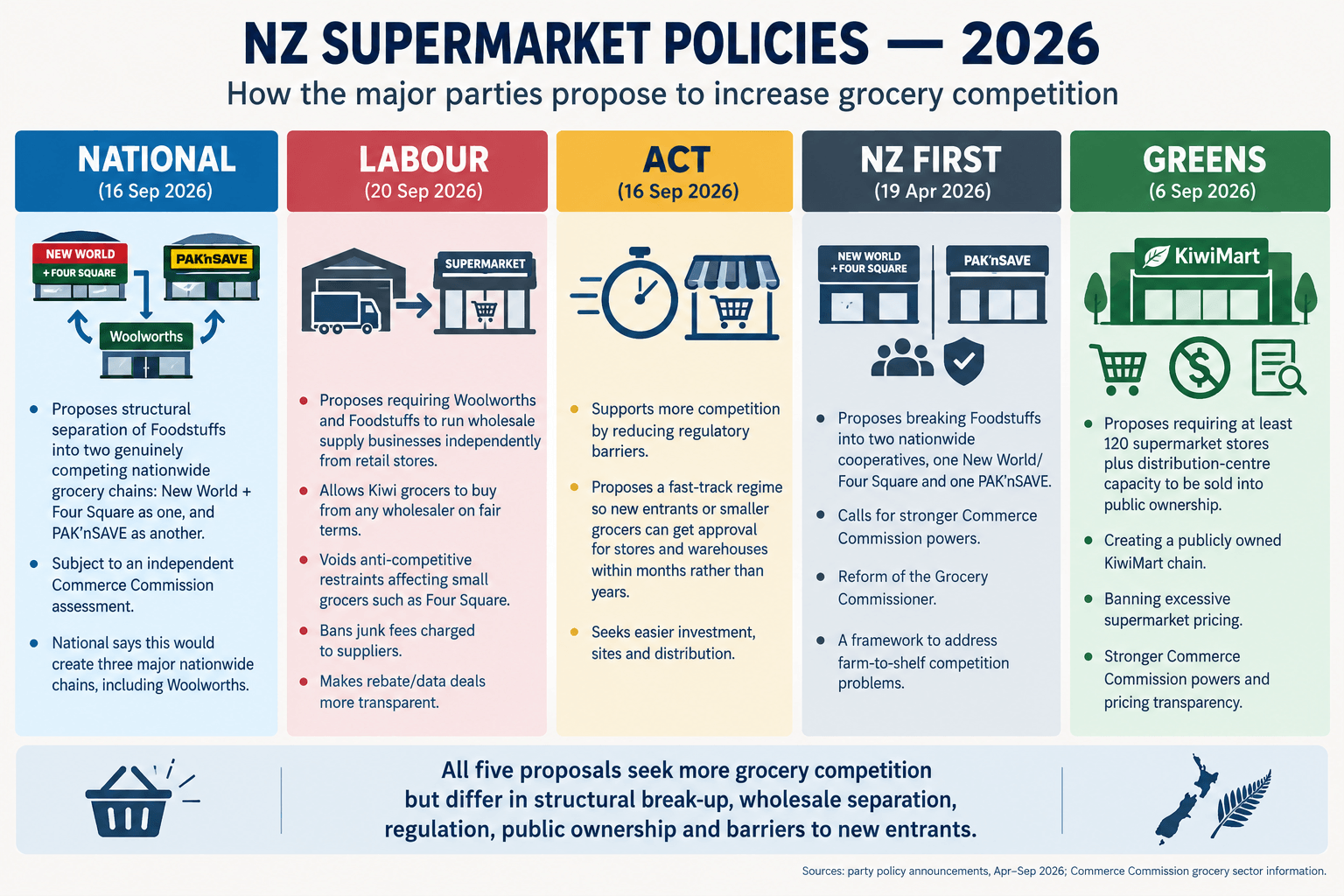
But is the supermarket industry actually the problem?
When I was working in Europe, I spent some time analysing listed supermarket stocks. Here are the current net profit margins, dividend yields, and 5‑year share price growth for several major operators:
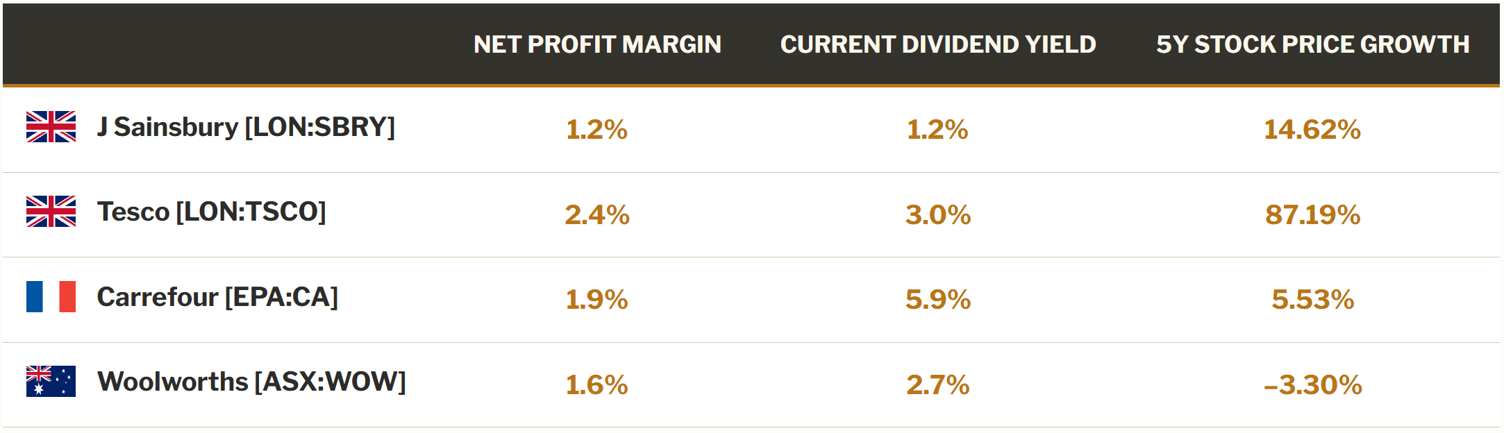
Source: Wealth Morning trading desk as at 23 September 2026
What struck me then — and still does now — is how razor-thin supermarket margins are. Occasionally, slightly higher margins are achieved, and that can drive business outperformance — as in the case of Tesco.
In Jersey, despite the small population, we had Waitrose, Marks & Spencer, Tesco Express, Co-op, and Iceland. Effectively, five supermarkets for a population of 105,000.
Although almost all products (except Jersey milk and potatoes) had to be shipped in, the prices weren’t much higher than in the UK. This was largely because the UK added VAT at 20%, while Jersey levied GST at just 5%.
In more populous regions, supermarkets are tough businesses because competition is fierce.
Yet here in New Zealand, according to a Commerce Commission report, some supermarket EBIT margins exceed 6%. Comparatively, this suggests a net profit margin of 4–5%. Potentially double that of Tesco or Carrefour.
But this ignores market scale and product variation.
UK-sourced packaged goods sold at Tesco, such as biscuits and canned food, were substantially cheaper than their equivalents in New Zealand.
Decent steak? That was more expensive in Europe. Geography does matter.
So is the solution to regulate, split operators,
or break up monopoly power?
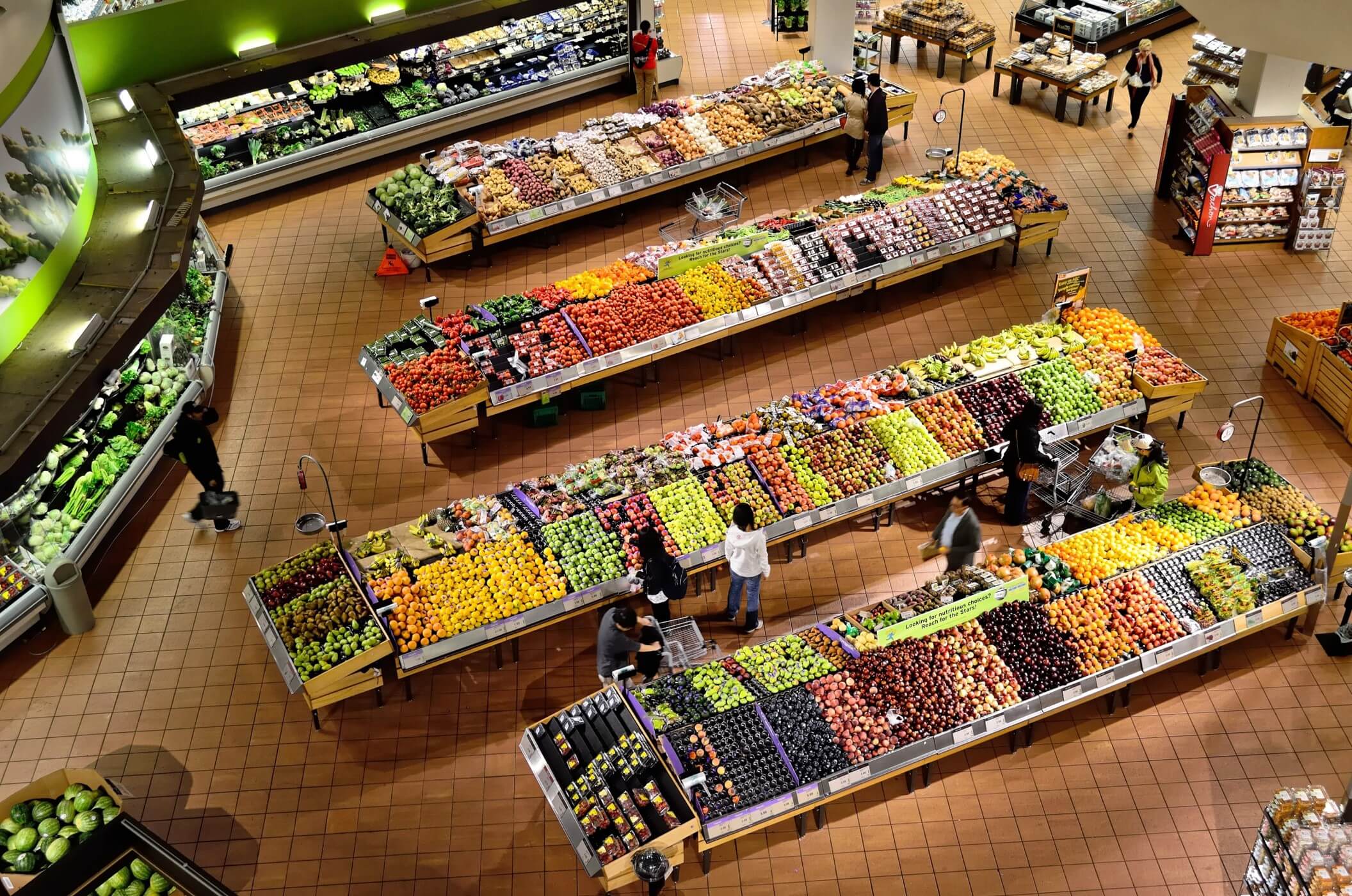
Supermarkets are large and ubiquitous, but their power may not be as significant as many assume.
Source: Image by ElasticComputeFarm from Pixabay
Monopolies interrupt the competitive working of markets. There can be a case for intervention when there is clear market failure.
But this ignores an important financial opportunity that is available to investors and consumers: arbitrage.
When we lived in Jersey — like many locals — we looked forward to regular trips to France on the car ferry. This two-hour journey took us to St Malo, which had a large Carrefour supermarket. Here, many foods were significantly cheaper. A bottle of reasonable French wine could be had from a couple of euros.
There were stories of Jersey-plate vehicles weighed down to their axles with crates of French supplies, struggling to drive back onto the ferry. Personally, I was delighted to get a jar of foie gras for €10.
Arbitraging groceries in New Zealand
While there are only two main supermarket chains here, there are a plethora of other options when it comes to food. Ethnic supermarkets, independent fruit shops, bakeries, butchers, and farmers’ markets.
For example, we seldom buy a baguette from a mainstream supermarket. Wild Wheat sells superior sourdough — factoring in size — at a competitive price.
When I’m out West, I’ll buy Italian cheeses and meats at much sharper prices from Euro Dell. Most fruit, vegetables, trays of eggs and milk are bought at better prices from the local fruit shop.
Last week, Farro had the cheapest aubergines by far. It’s possible to order fish direct from Sanford. Value dining options like First Table also make dining out stack up surprisingly well.
Yes, you still need the supermarkets for many packaged goods — but their monopoly power, if it truly exists, is probably thinner than politicians with the hammers suggest.
Further, the more you wield that hammer, the more you deter investors and competitors from entering the market. According to David Seymour, newcomer Costco only agreed to come to New Zealand after receiving a five-year exemption from rules requiring supermarkets to supply other retailers at wholesale prices.
New Zealanders are increasingly discovering that value lies in variety, not in punishing the mainstream operators.
Low-margin businesses are fragile
But there’s a much greater reason to leave the supermarkets alone.
When the government interferes with a business, it reduces that business’s incentive to invest, grow, and innovate. It puts off global investors, as if forcing them to step over fresh vomit on a pavement.
The poor performance of Woolworths stock over the last five years suggests the industry in Australasia hasn’t been easy. You would have needed to invest around a decade ago to see a meaningful return.
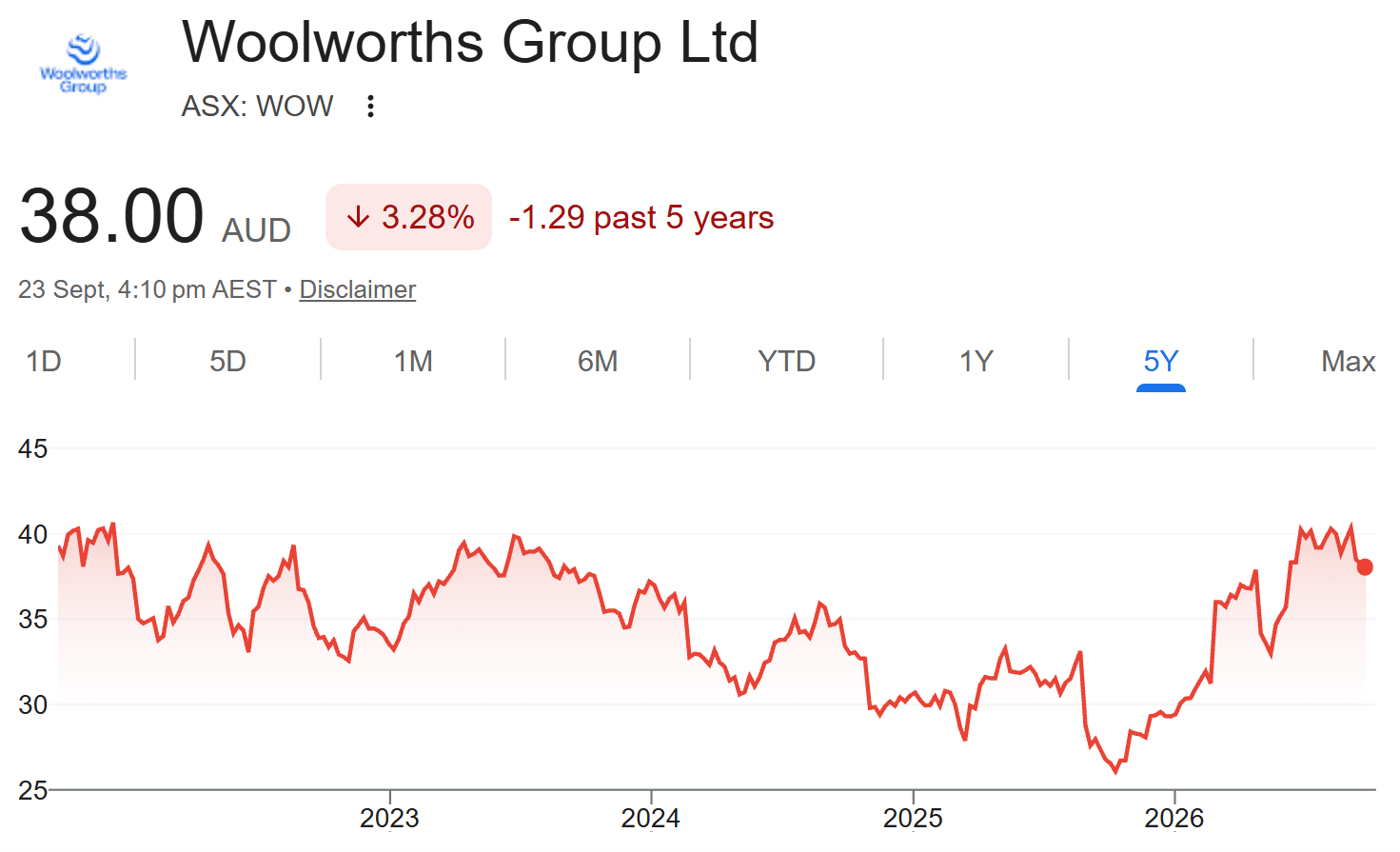
Source: Google Finance as at 23 September 2026
A far better approach would be to reduce the regulatory burden on new competing businesses. New Zealand is a food-producing nation. Unlocking opportunities for these businesses to develop, distribute, and retail their wares is key.
If we want lower grocery prices, the answer is stronger competition. Not penalising the businesses that already operate on relatively thin margins in a small, isolated market.
If politicians genuinely wanted to make groceries affordable,
they’d look beyond supermarkets entirely
New Zealand’s high tax burden and expanding state footprint reduce household purchasing power far more than supermarket margins ever could.
If politicians cut their own spending and reined back the client state, a tax-free threshold for the first $20,000 in annual income might be possible:
- This would easily cover the average of about $15,600 that New Zealand households spend on food.
- It would mean the poorest of households have more of their own money for essential groceries.
- The increased discretionary spend in this key part of the economy would further incentivise new players to enter the market.
Growing alternatives to the mainstream
Yes, we need the mainstream supermarkets. They should be able to compete with minimal interference to ensure their long-term viability.
There is a growing trend of arbitrage as consumers seek better value, options, and quality. More people are going beyond the traditional supermarket shop, and new brands are rising to serve their needs.
Lower grocery prices won’t come from punishing low-margin businesses. They’ll come from encouraging competition, reducing regulatory friction, and giving households more of their own money to spend.
New Zealand thrives when it opens the door to new entrants — whether in food, retail, or investment.
Just as consumers benefit from seeking value beyond the mainstream, investors benefit from strategies that do the same.
In our business, we serve a niche for Eligible and Wholesale Investors seeking a trusted and personalised service beyond managed funds.
It’s called the Quantum Income Strategy. It’s focused on achieving durable and lasting financial independence for individuals and families who share our values.
We’re currently offering a discussion to Wealth Morning readers who may be Eligible or Wholesale Investors.
Do register your expression of interest here.
We look forward to speaking with you.
Regards,
Simon Angelo
Editor, Wealth Morning
(This article is the author’s personal opinion and commentary only. It is general in nature and should not be construed as any financial or investment advice. Please contact a licensed Financial Advice Provider to discuss your personal situation. Wealth Morning offers Managed Account Services for Wholesale or Eligible investors as defined in the Financial Markets Conduct Act 2013.)


Simon is the Chief Executive Officer and Publisher at Wealth Morning. He has been investing in the markets since he was 17. He recently spent a couple of years working in the hedge-fund industry in Europe. Before this, he owned an award-winning professional-services business and online-learning company in Auckland for 20 years. He has completed the Certificate in Discretionary Investment Management from the Personal Finance Society (UK), has written a bestselling book, and manages global share portfolios.