
‘I am an old man and have known a great many troubles, but most of them have never happened.’
—Mark Twain
Do you remember what things were like in 2022?
Well, let me refresh your memory.
Back then, we were facing a sharp escalation in interest rates. In fact, it was the most aggressive hiking cycle we had seen since 1988. This was because central banks were trying to rein in the surge of post-Covid inflation.
Here in New Zealand, we were actually among the first in the world to start raising interest rates. We were the front-runners, hitting the nuclear button in October 2021. That placed us ahead of the United States. Ahead of the United Kingdom. Ahead of the European Union.
Yes, the price we paid was a heavy one. It certainly burst our Kiwi housing bubble. Vaporising mortgage affordability. Leaving everyone in a terribly sour mood.
By October 2022, that negativity only deepened. By that point, interest rates were peaking around the world.
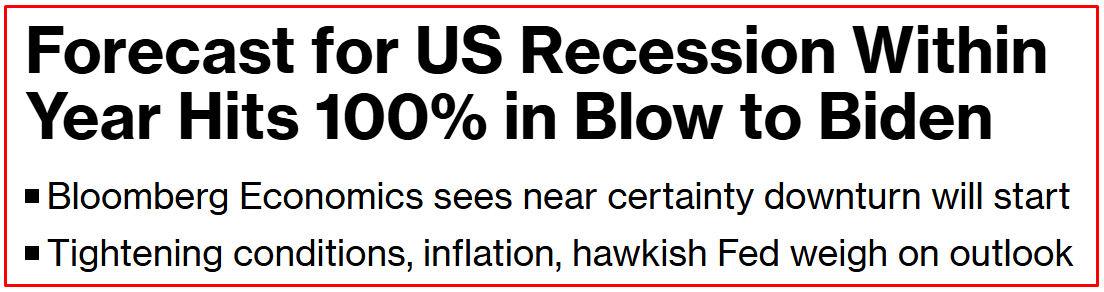
That’s when Bloomberg published a troubling story. They predicted that an American recession was coming.
The language they used left no room for ambiguity.
There were no ifs. No buts.
Their forecast was absolute…
Source: Bloomberg
So what happened next? Well, Bloomberg got it totally wrong. There was no recession:
- In the very month that they published their scary forecast, a new bull market was already emerging. It was starting to power up. Starting to accelerate.
- Unfortunately, Bloomberg failed to notice this. The ground was shifting dramatically beneath their feet, and they were blind to it.
Was this ironic? Oh yes. Was it surprising? Well, perhaps not. After all, economists have a history of making bad predictions:
- George Box once poked fun at this trend. He said: ‘All models are wrong, but some are useful.’
- Ezra Solomon was much more scathing. He said: ‘The only function of economic forecasting is to make astrology look respectable.’
So, for me, this raises an important question. If the pundits are so often wrong, why do people keep following their forecasts?
- Well, I think the explanation is a simple one: Fear makes for great entertainment. That’s why people enjoy watching horror movies or riding rollercoasters. They like the jump scares.
- Doomsday predictions offer that same adrenaline rush. It’s enjoyable on a primal level. Perhaps even addictive. But do such morbid emotions lead to good decision-making? Well, I doubt it.
- You see, building an investment portfolio is actually quite boring. It’s about being calm and calculated. Doing steady research. Forming a rational conviction. Then moving ahead to capture high-value assets.
- What you want to do is get from Point A to Point B. No distractions. Zero drama.
For this reason, the Navy SEALs have a mantra that I love: ‘Slow is smooth, and smooth is fast.’
- Certainly, this approach has served us very well. Since October 2022, our composite portfolio for Eligible and Wholesale Clients has achieved an aggregate return of over 75%.
- Past performance is not indicative of future results, and wholesale portfolios differ, but it’s worth noting that this period included multiple forecasts of impending doom.
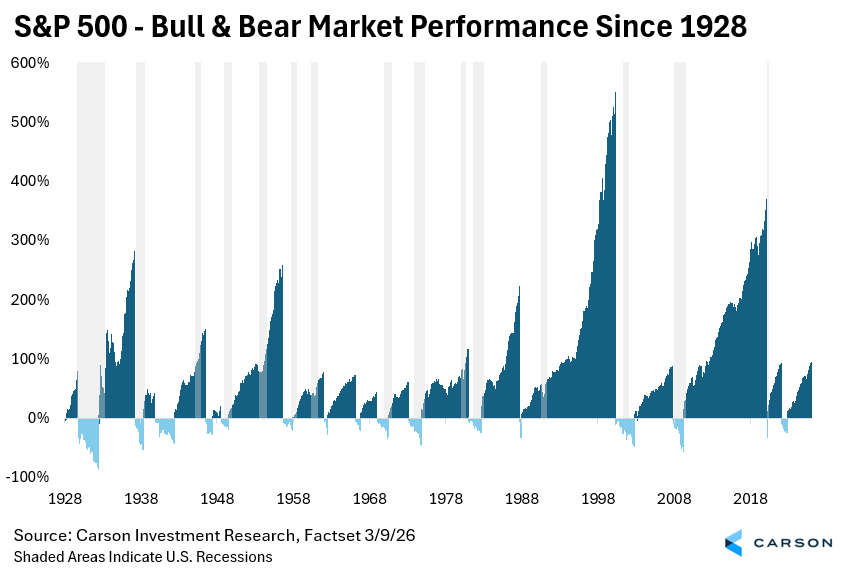
- Yes, for almost four years now, the pessimists have been screaming about an economic collapse. But the market has been resilient. It shrugs off the jump scares. It just continues to march forward, building wealth.
- If you look back on history, you will understand that this behaviour is to be expected. The market tends to adapt, improvise, and overcome.
Source: Ryan Detrick / X
Now, when you stop and think about it, human psychology can be contradictory. We do perceive things in strange ways:
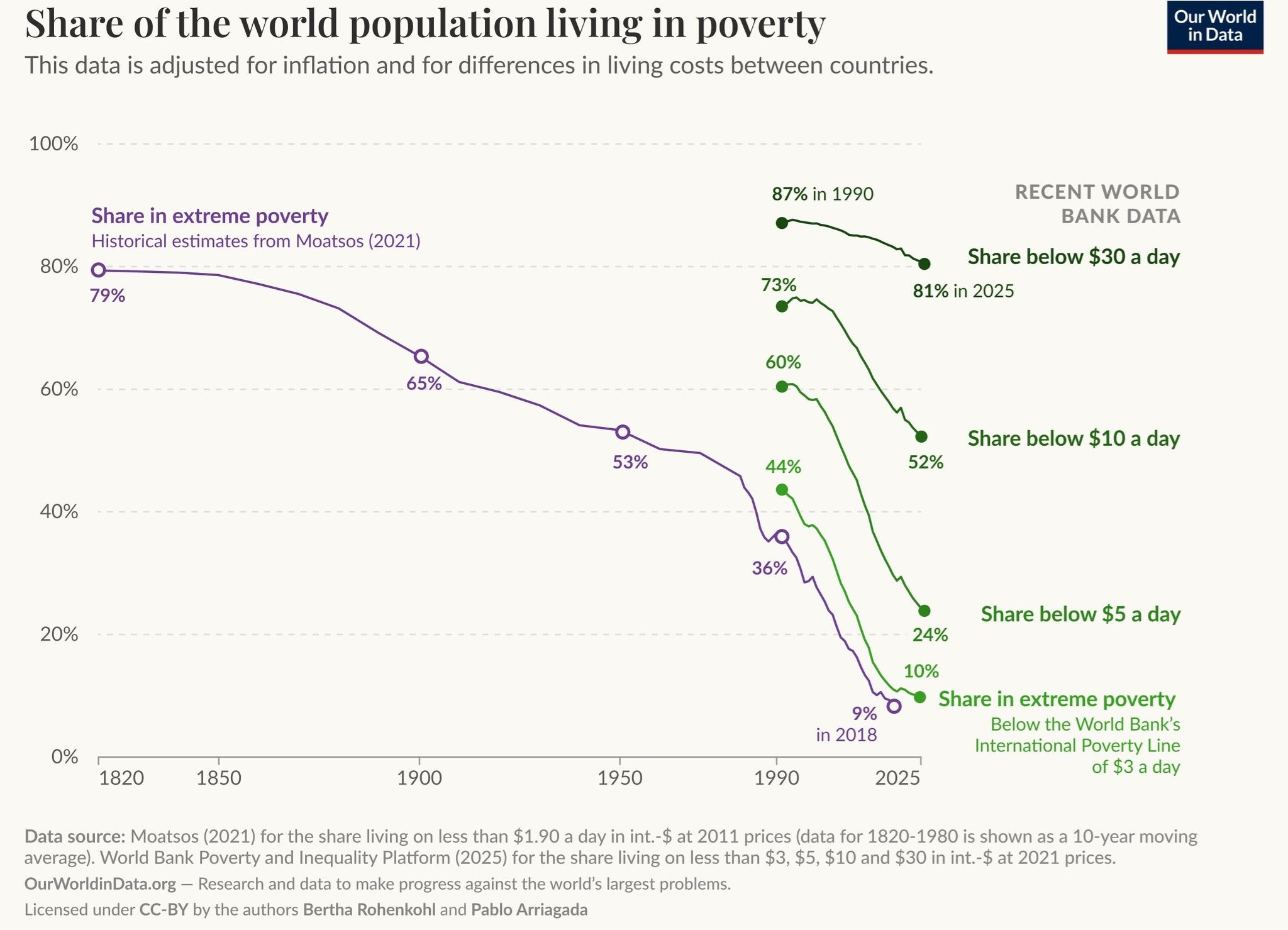
- Why are we so negative about the future? We spend so much of our time agonising about looming disaster. But I think it’s better for us to focus on something more productive. Like looking ahead at the next positive megatrend that’s going to make our lives better in the long run.
- Why are we so obsessed with headlines? We allow so much of our headspace to be dominated by pundits who sell controversy in return for clicks. But I think it’s better for us to study something more rational. Like the efforts of innovators who are actually creating future prosperity.
Source: Peter Mallouk / X
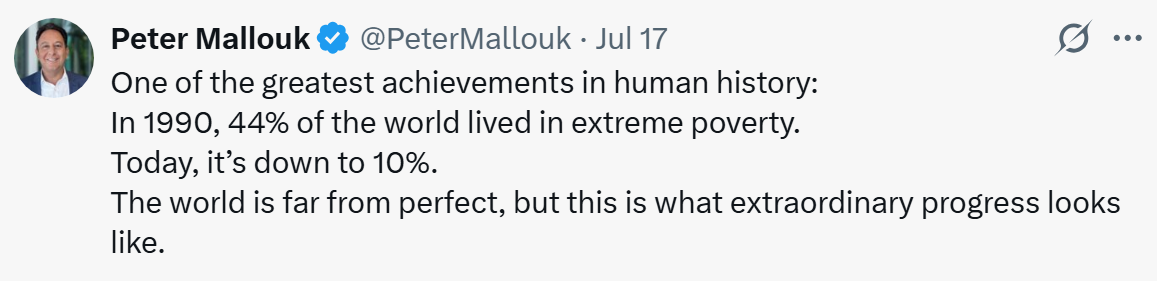
Here’s what I believe. Bad things happen in the short term. But good things happen in the long term:
- The market is the sum total of mankind’s ingenuity and courage. It contains millions of entrepreneurs, working day and night, pushing forward relentlessly.
- If something breaks in the system, rest assured, it doesn’t stay broken for long. You will always get heroic people jumping in. Tackling the issue head-on. Getting things moving again. They do this because problem-solving is hardwired into their DNA.
- For this reason, the market is the growth engine of our planet. It has real propulsive power. It will channel free enterprise to where it’s needed the most. There’s nothing else quite like it.
Source: Macro Charts / X
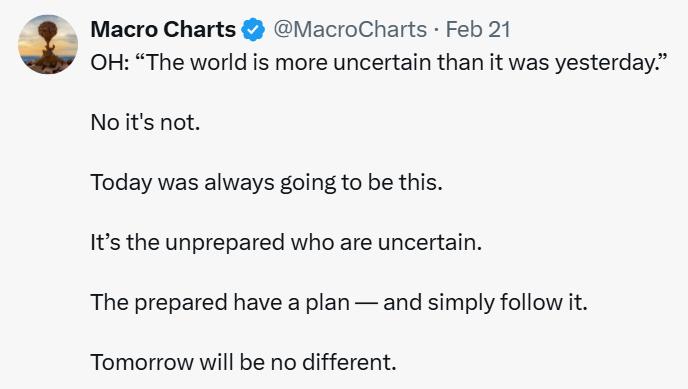
Yes, volatility will always be part of our investment journey. The bumps we experience on the road — whether real or imagined — are part of the deal:
- This means that, every so often, we’ll get an economist making a doomsday prediction. No doubt, he will get media attention. He will get his 15 minutes of fame. There will be a lot of sound and a lot of fury.
- But watch out. Dwelling too long on pessimism does come with an opportunity cost. It can distract us from our future runway, which is to build sustainable prosperity.
- Our best bet, as it always has been, is not to be distracted. Instead, we have to be rational optimists.
- In spite of fear, in spite of doubt, we believe there will be brighter horizons ahead. So we will plan and invest accordingly. We will remain steadfast in our conviction. We will keep powering forward.
Are you looking for someone to stand up for you?
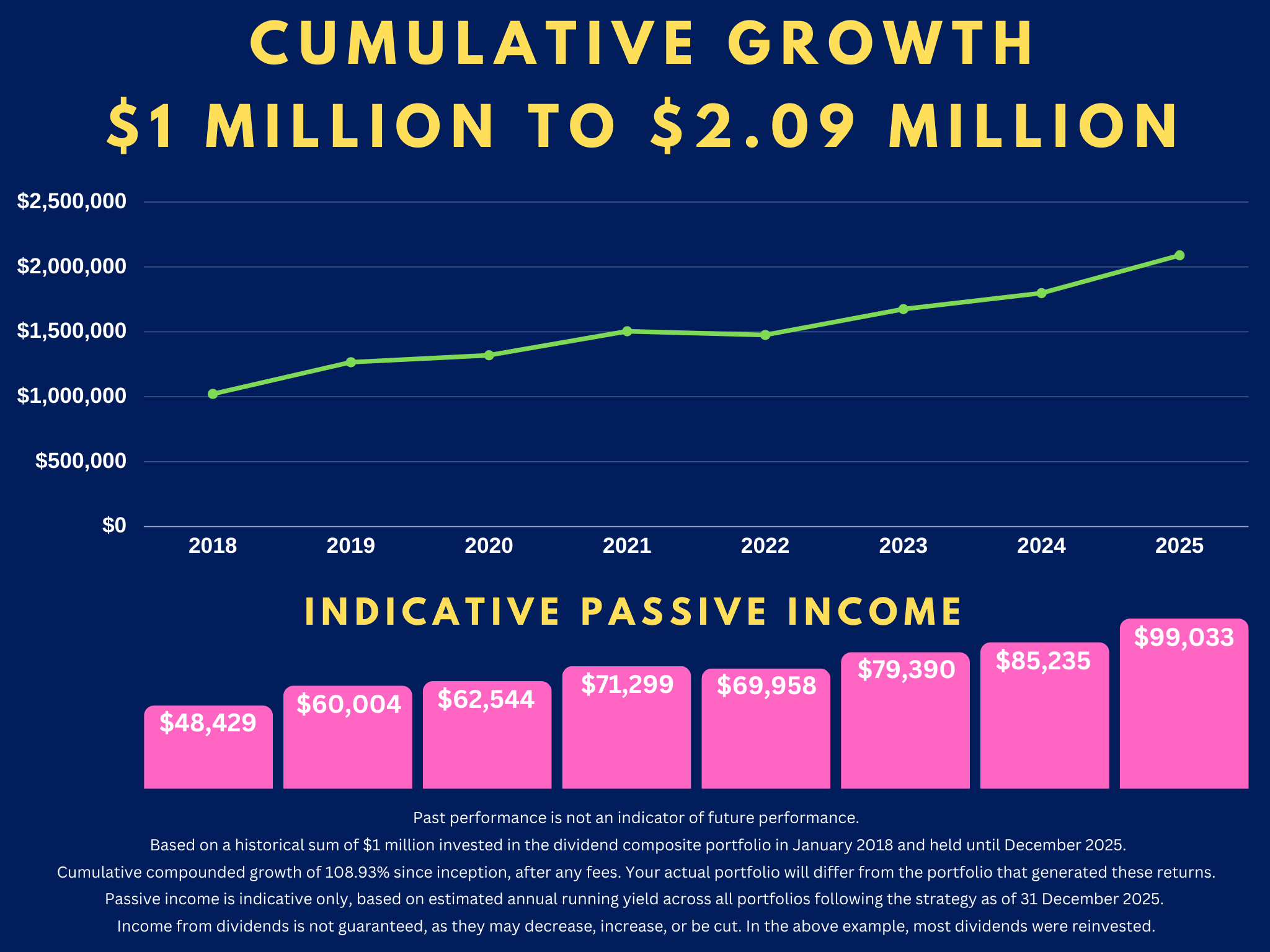
Here at Wealth Morning, we run a night-trading desk. We focus on building up robust and profitable portfolios for our Eligible and Wholesale Clients:
- We seek to stay ahead of the curve and position our clients for income and growth for the next stage of the cycle.
- Are you interested?
Regards,
John Ling
Analyst, Wealth Morning
(This article is the author’s personal opinion and commentary only. It is general in nature and should not be construed as any financial or investment advice. Wealth Morning offers Managed Account Services for Wholesale or Eligible investors as defined in the Financial Markets Conduct Act 2013.)
John is the Chief Investment Officer at Wealth Morning. His responsibilities include trading, client service, and compliance. He is an experienced investor and portfolio manager, trading both on his own account and assisting with high net-worth clients. In addition to contributing financial and geopolitical articles to this site, John is a bestselling author in his own right. His international thrillers have appeared on the USA Today and Amazon bestseller lists.