
When you stop and think about it, it’s shocking. Absolutely shocking.
Around the world, millions of ordinary people are struggling with fear and uncertainty.
Things are looking precarious. They are living from paycheque to paycheque. Struggling to buy groceries. Struggling to fill up their petrol tanks.
They barely have any savings. They are close to breaking point. They can’t see any light at the end of the tunnel.
And yet… despite it all… the global stock market keeps climbing. Smashing records. Hitting all-time highs.
It seems that not even the Iran war can derail the market’s long-term momentum.
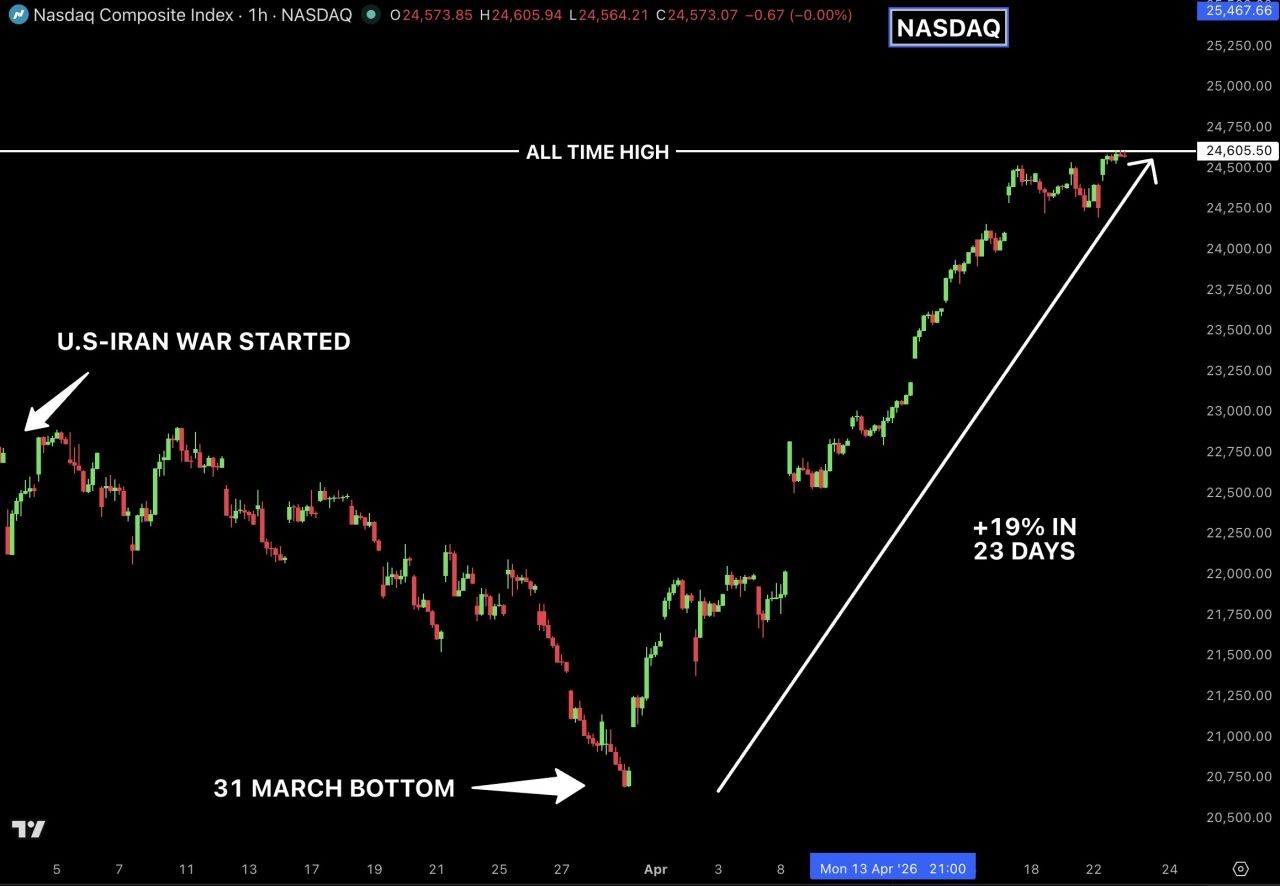
They say a picture is worth a thousand words. So just take a look at this graph. It shows you how the Nasdaq Composite Index has behaved recently:
Source: Charles-Henry Monchau / LinkedIn
This is a stunning bounce. You can see how the war actually served as a springboard, launching the market to a new all-time high.
- Well, good grief. What on earth is happening here?
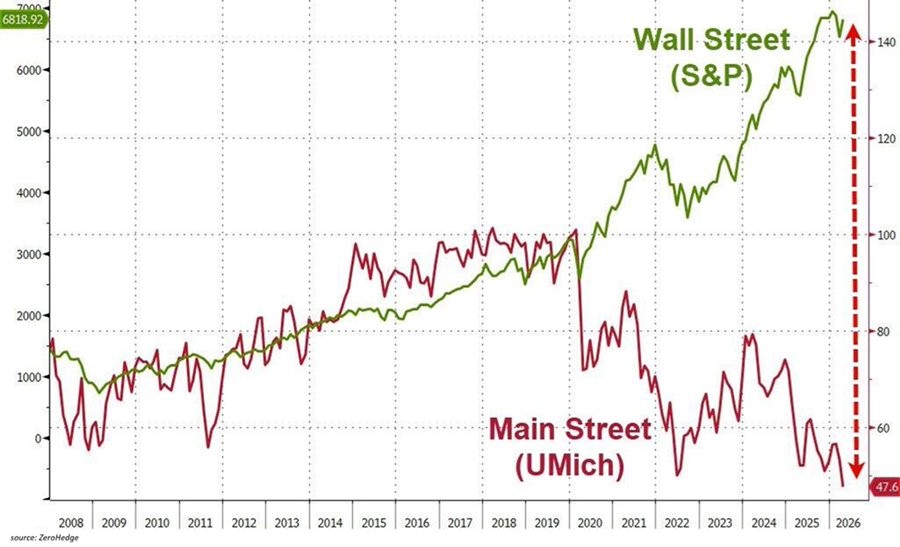
- How is it possible that millions of people are struggling to survive on Main Street, even while stock prices are surging on Wall Street?
- Why is there such a profound disconnect? Is this insane? Is this immoral?
Source: The Kobeissi Letter / X
Well, say hello to the K-shaped economy. Or as I like to call it: the winner-takes-all economy.
- Since February 2020, consumer sentiment on Main Street has plunged by over 50%. To this day, it has never recovered. And yet, since the pandemic low, the S&P 500 on Wall Street has soared by almost 200%.
- Why is there such a huge gap? Well, I’ll give you a simple explanation here: the people who are prospering in the stock market are far removed from the people who are struggling to buy groceries.
- Indeed, what we are dealing with are two separate demographics. And therefore, two separate economic destinies.
- Just take a look at what this means…

Source: Charlie Bilello / X
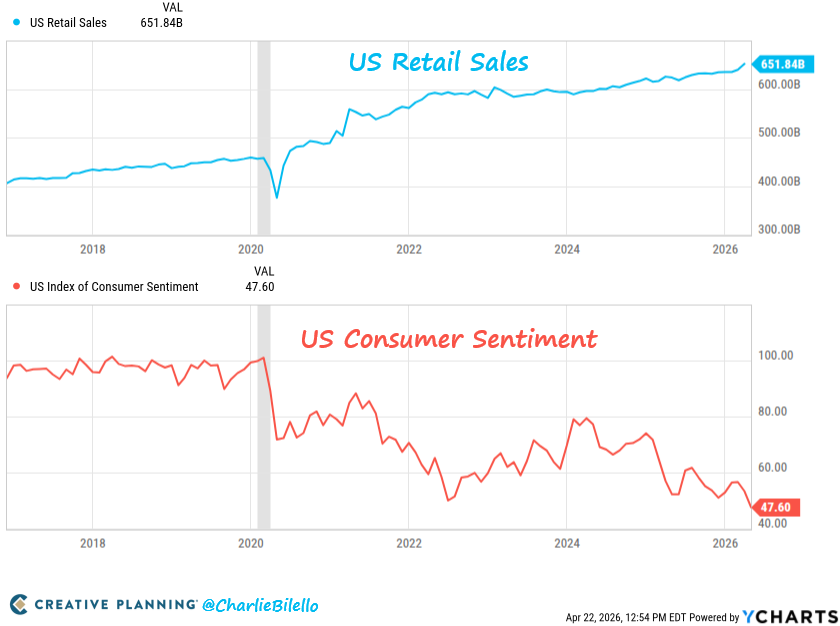
Yes, that’s right. Retail buying in America is skyrocketing, even as general sentiment is nosediving.
- Is this a wild contradiction? Well, maybe not. It’s just another sign of the K-shaped economy.
- David Kelly, a strategist at J.P. Morgan, says: ‘The spending of the rich is fine. It’s the spending of everyone else that is pretty weak.’
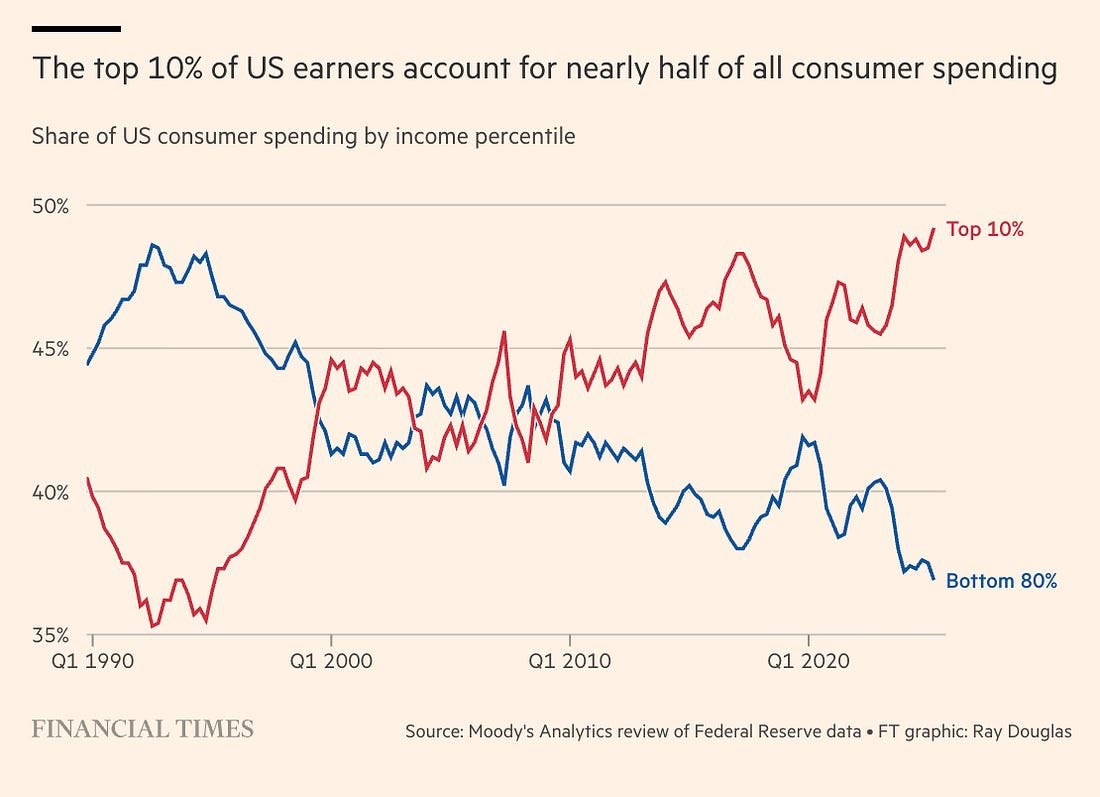
Source: The Kobeissi Letter / X
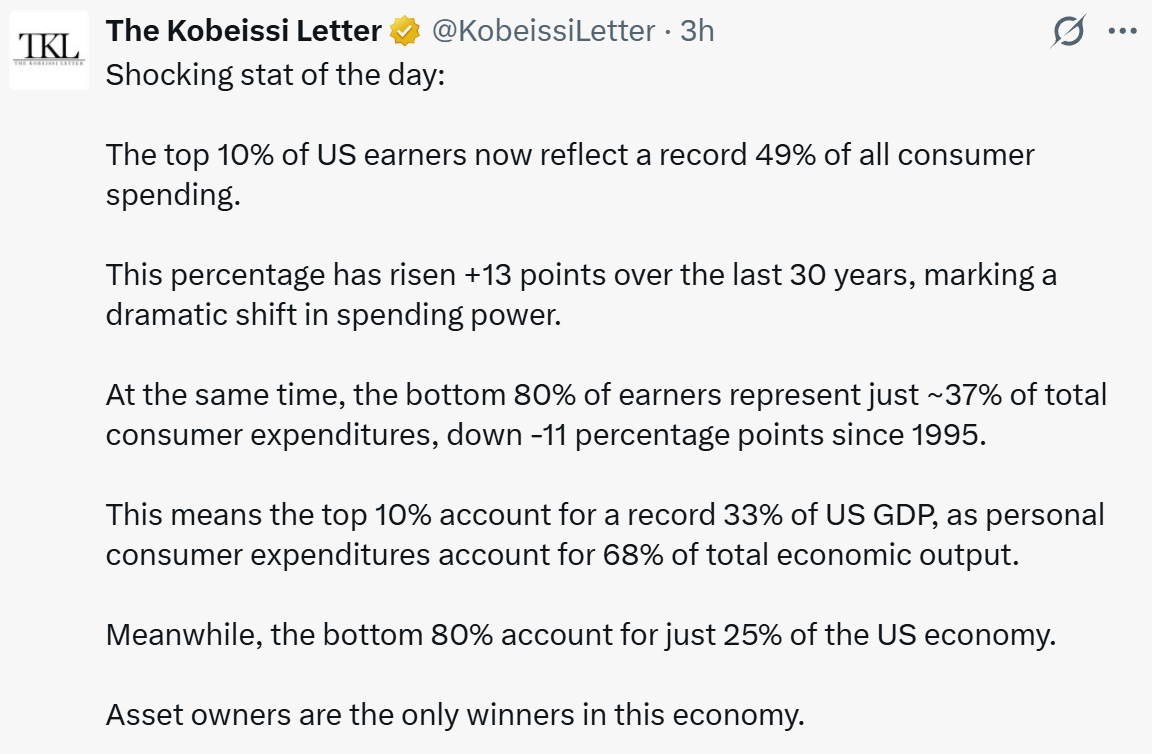
I think the implication here is pretty clear. The top 10% of households feel wealthy because of their exposure to the stock market. And this encourages them to keep spending in a big way.
- Now, to belong to the top 10% in America, a household needs a net worth of US$1.8 million — or an annual income of US$210,000.
- Does that sound surprisingly modest? Well, yes, it is.
- Over 12 million households fit this profile. And in terms of economic influence, they are punching way above their weight.
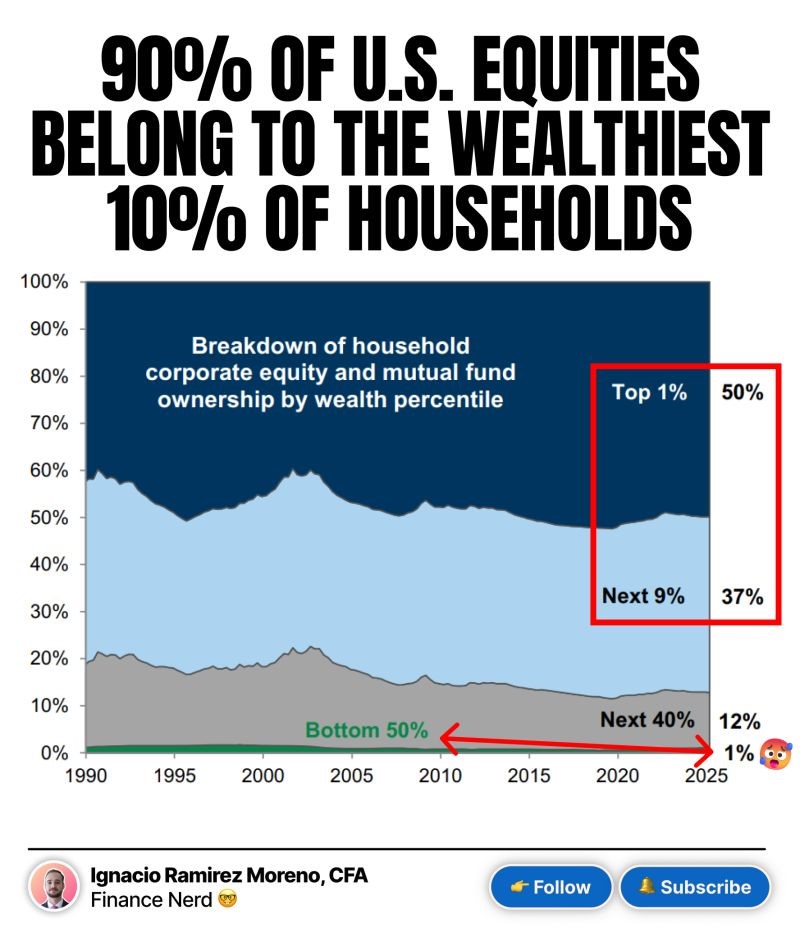
Source: Ignacio Ramirez Moreno / LinkedIn
What is true in America is also true here in New Zealand.
- If you know someone who belongs to the top 10% of Kiwi households, then you already know what their spending patterns look like.
- Despite negative headlines, these folks aren’t flinching. They are still going on luxurious holidays. They are still paying for premium products and services. They are still securing more assets for their children and grandchildren.
- You might argue that these people are the new aristocrats of our time. But unlike the feudal lords of old, the wealth that these modern millionaires have built is mostly self-made. They have worked hard. They have planned well. And they have invested wisely.
- Their portfolios now give them an exceptionally high level of liquidity and mobility. Perhaps unmatched in the history of the world.
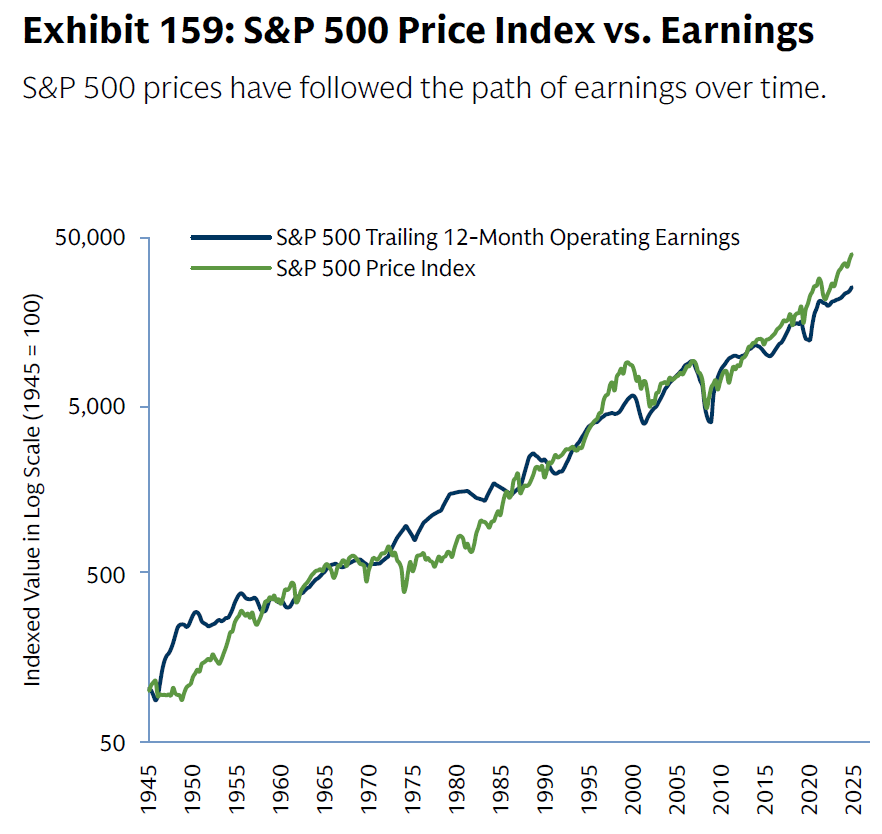
Source: Goldman Sachs
There’s no denying it: the trajectory of the market and the prosperity of the top 10% of households are closely linked.
- It goes like this. If the top 10% are feeling happy, they will spend. This boosts company earnings. This, in turn, elevates the stock market. Which, in turn, amplifies the net worth of the top 10%. The result? They continue feeling happy and keep spending even more.
- Psychologically speaking, it’s a circular loop. An unbreakable chain. A nexus of prosperity.
Of course, social-justice warriors will look at this pattern and say: ‘It’s unfair. The government should step in and intervene. How can we allow rich people to enjoy life while poor people are suffering?’
- Unfortunately, such comments reflect a deep ignorance of economics. Left-wing wokesters assume that capitalism must only favour the rich and victimise the poor.
- But that notion is false. Because here’s the truth: the market doesn’t discriminate. In fact, it’s incredibly inclusive. Anyone can participate in the market, and if they do so wisely, they can reap the benefits of its compounding power.
- For example, if a parent chooses to invest a nominal sum of $2,500 for their newborn child in Year Zero, that money can snowball to over $1.2 million by Year 65. This can happen with an average annualised return of 10%.
- It’s the kind of momentum that can uplift someone from poverty. Transform their life. Perhaps even propel them into the ranks of the top 10% of households.
- So why doesn’t everyone do this? Well, it’s because most people are failing to plan for a long-term future. Instead, they are allowing themselves to get distracted by short-term ideology.
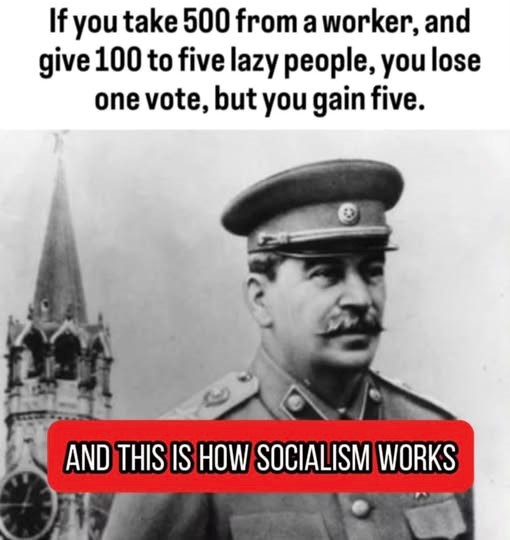
Source: Trudeau Memes / Facebook
What is the greatest threat to the market’s long-term success?
- Well, I’ll be frank here. It’s not war. It’s not tariffs. It’s not even recession.
- The greatest threat is, in fact, the politics of envy and grievance.
My grandfather used to say: ‘Communism is the best system for lazy people.’
- Harsh words? Yeah. But is it true? Absolutely.
- Right now, there are a lot of lazy people around. They have abandoned Judeo-Christian values. They have forsaken Greco-Roman intellect. Instead, they have chosen to embrace ideological nihilism.
- They are so lazy that they make no effort to invest and build their own wealth. Instead, they prefer to take a radical path: seizing other people’s assets.
- The problem with such an approach is that it only ends up disrupting the market. Breaking the chain of prosperity. Strangling forward momentum. Which is bad news all around.
Fortunately, I’m an optimist. I do have faith that most people have common sense. And if push comes to shove, they will defend the sanctity of a free market.
- You must remember: the market is neither moral nor immoral. It is amoral.
- Also, the market is neither liberal nor conservative. It is apolitical.
- Ideology and dogma hold no sway here. The market is a force of nature. An untamed animal driven by primal instincts. It hungers only for growth and yield. It’s built to run. It’s built to hunt. And it must be allowed to continue doing what it does best. That’s the formula for greater prosperity.
Our Upcoming Coffee & Capital Event
Does financial freedom matter to you? Are you looking for common sense? Well, I want to extend an invitation for you to come join us at our next live event. Here’s what we’ll cover:
- Your questions.
- The long-term impact of the Iran war.
- The long-run potential of the stock market.
- What the future of our prosperity looks like.
- We look forward to engaging with you in person!

COFFEE & CAPITAL
Friday, 5 June 2026
11:00am to 12:00pm
❌ This Event Is Now Sold Out
Fields Café (Function Room)
4 Appian Way, Albany, Auckland
$37 per person / limited spaces
Includes any menu item, coffee
[ Special Member Price ]
For Managed Account clients & Quantum Wealth subscribers
❌ This Event Is Now Sold Out
$27 per person / limited spaces
Includes any menu item, coffee
Regards,
John Ling
Analyst, Wealth Morning
(This article is the author’s personal opinion and commentary only. It is general in nature and should not be construed as any financial or investment advice. Wealth Morning offers Managed Account Services for Wholesale or Eligible investors as defined in the Financial Markets Conduct Act 2013.)
John is the Chief Investment Officer at Wealth Morning. His responsibilities include trading, client service, and compliance. He is an experienced investor and portfolio manager, trading both on his own account and assisting with high net-worth clients. In addition to contributing financial and geopolitical articles to this site, John is a bestselling author in his own right. His international thrillers have appeared on the USA Today and Amazon bestseller lists.