
When I was at university years ago, I had a friend who was a party animal.
He really made the most of the student life in Dunedin.
He loved to drink. He loved to dance. He loved to go wild.
He was extroverted. A real ball of energy who never knew when to stop. For him, 10pm was considered ‘early’.
He lived in a flat just three streets away from mine. He was an enthusiastic organiser of parties. More than once, noise-control officers had to be called in to shut him down because his events were getting too boisterous. The thumping of his bass-heavy music irritated the neighbours.
In one notorious incident, partygoers dragged an old couch out of the flat and onto the footpath. They set it on fire, cheering. It was quite a sight. That is, until an angry neighbour pushed through the crowd, dousing the flames with a fire extinguisher. Cheers became boos.
In the aftermath, my friend received a stern visit from the local police. He didn’t actually participate in the couch burning. But the cops singled him out anyway because they considered him the ringleader.
After that, his parties became less frequent. Then they ceased entirely.
I asked him: ‘Were you getting tired of paying all those fines?’
He groaned and scrunched up his nose: ‘I just realised that everybody loves to go to a party. But no one actually wants to stay and clean up. I’m tired of being the bad guy.’
It was a remarkable moment of introspection from a guy who rarely stopped to reflect.
After all these years, his words have stuck with me.
It’s human nature, isn’t it? Everybody wants the highs. But nobody wants the lows…
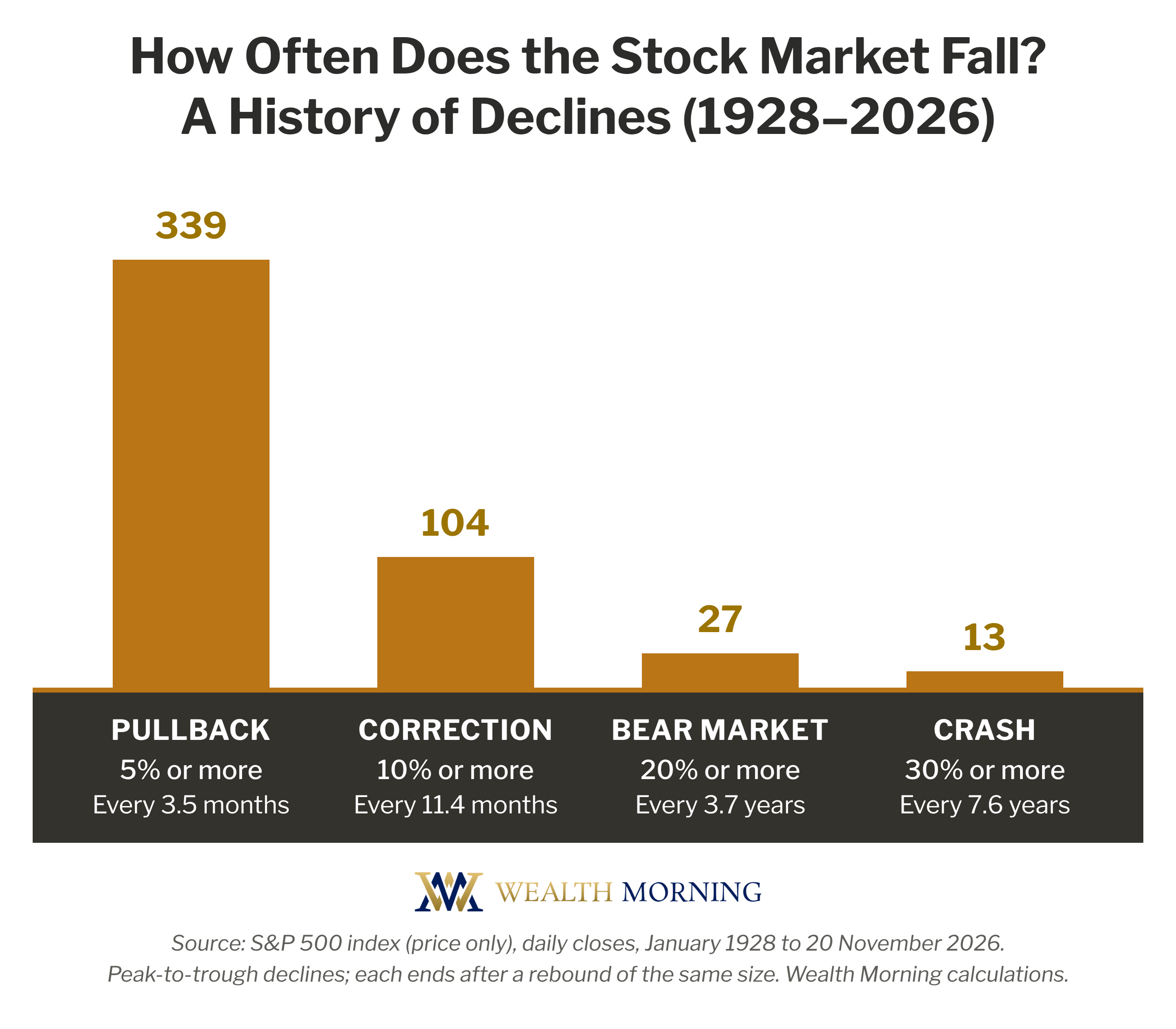
Now, what is true about uni parties in Dunedin is also true when it comes to the stock market:
- As investors, we all love the idea of securing easy gains. But almost none of us want to endure the hard yards that come with it.
- Corrections. Crashes. These events are regular signposts along our investment journey, even if we hate seeing them.
So this does raise a provocative question:
- Should you try timing the market? For example, why not sell stocks when you believe a crisis is about to hit, then buy back in once the turbulence passes?
- Could this be the best way to avoid the emotional pain of a drawdown while making a profit during an upswing?
Well, let me tell you, doing this might be a fool’s errand. Here’s why:
- From January 1928 through November 2026, I counted nearly 25,000 trading days on the stock market.
- Just imagine this: you’re an investor blessed with extraordinary longevity, allowing you to participate for nearly a century. Even so, successfully timing the market is incredibly difficult.
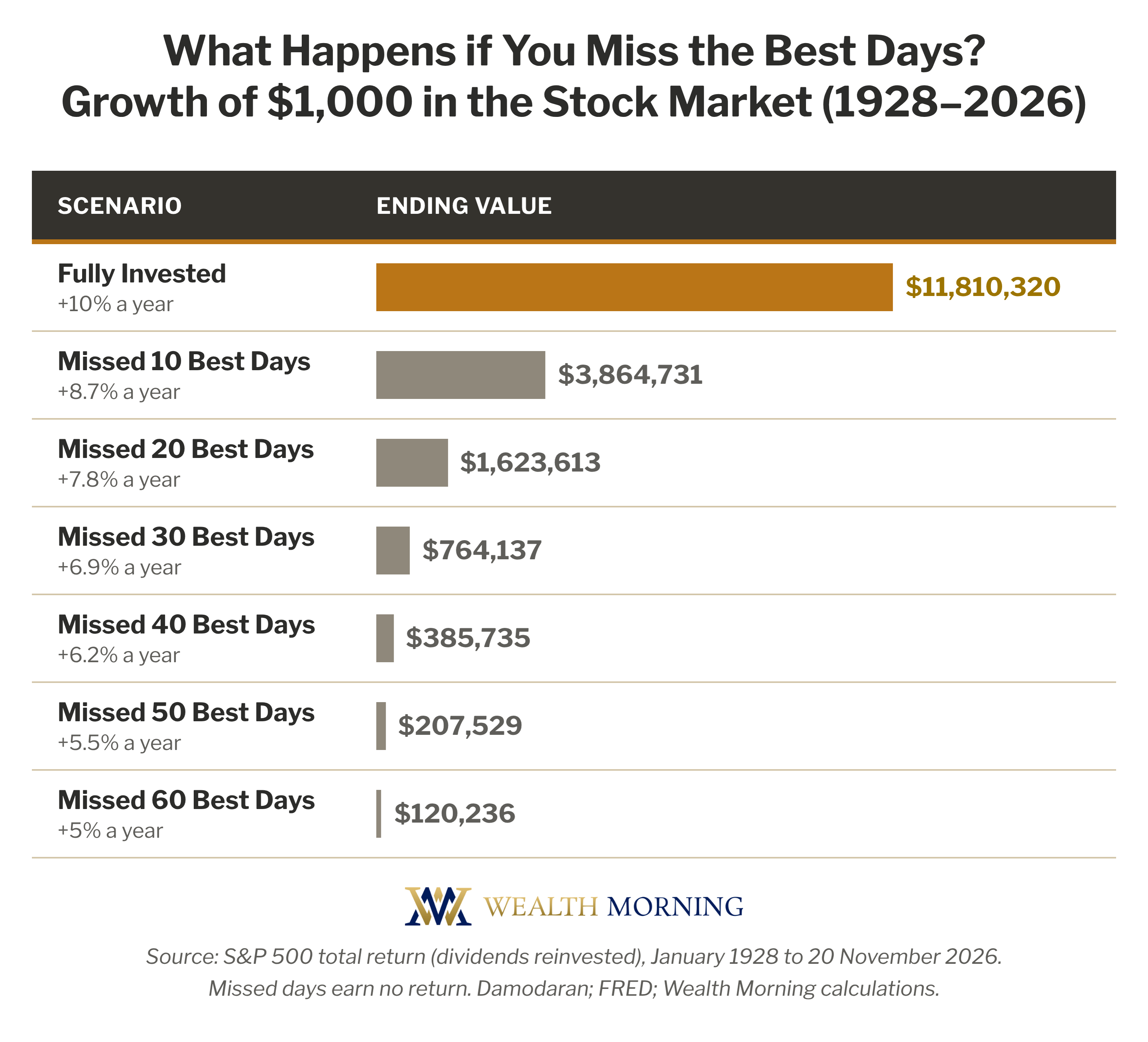
- Why? Well, here’s a sobering fact: if you missed just 10 of the best trading days on record, the total return on your investment would be slashed by over 67%. In other words: you’d miss out on roughly two-thirds of your potential gains.
- Here’s what the numbers actually look like…
It’s astonishing, isn’t it?
- Indeed, missing out on just a few days can have a huge impact on the final outcome. But that’s exactly how the market works. Over the long run, it rewards discipline rather than speculation.
- Historically speaking, portfolios have survived turbulent events. However, what they cannot survive is human frailty.
- For example, I once read about a New Zealand investor who panicked during the Covid drawdown of 2020. He sold off his entire portfolio. He went to cash, locking up his money in a term deposit.
- Yes, his fear was understandable. But his decision turned out to be a disastrous one…

Source: Google Finance
Tragically, he missed out on one of the greatest market rallies in history:
- I can’t help but wonder: would he have been better off just sitting on his hands? Choosing to do nothing? Well, as it turns out, doing nothing can sometimes be the best move of all.
- Decades from now, I imagine that historians will still be debating the merits of our society’s response to Covid. Was it a pandemic? Or was it actually a scamdemic?
- Well, either way, the market cared not. It just powered ahead, achieving a V-shaped bounce.
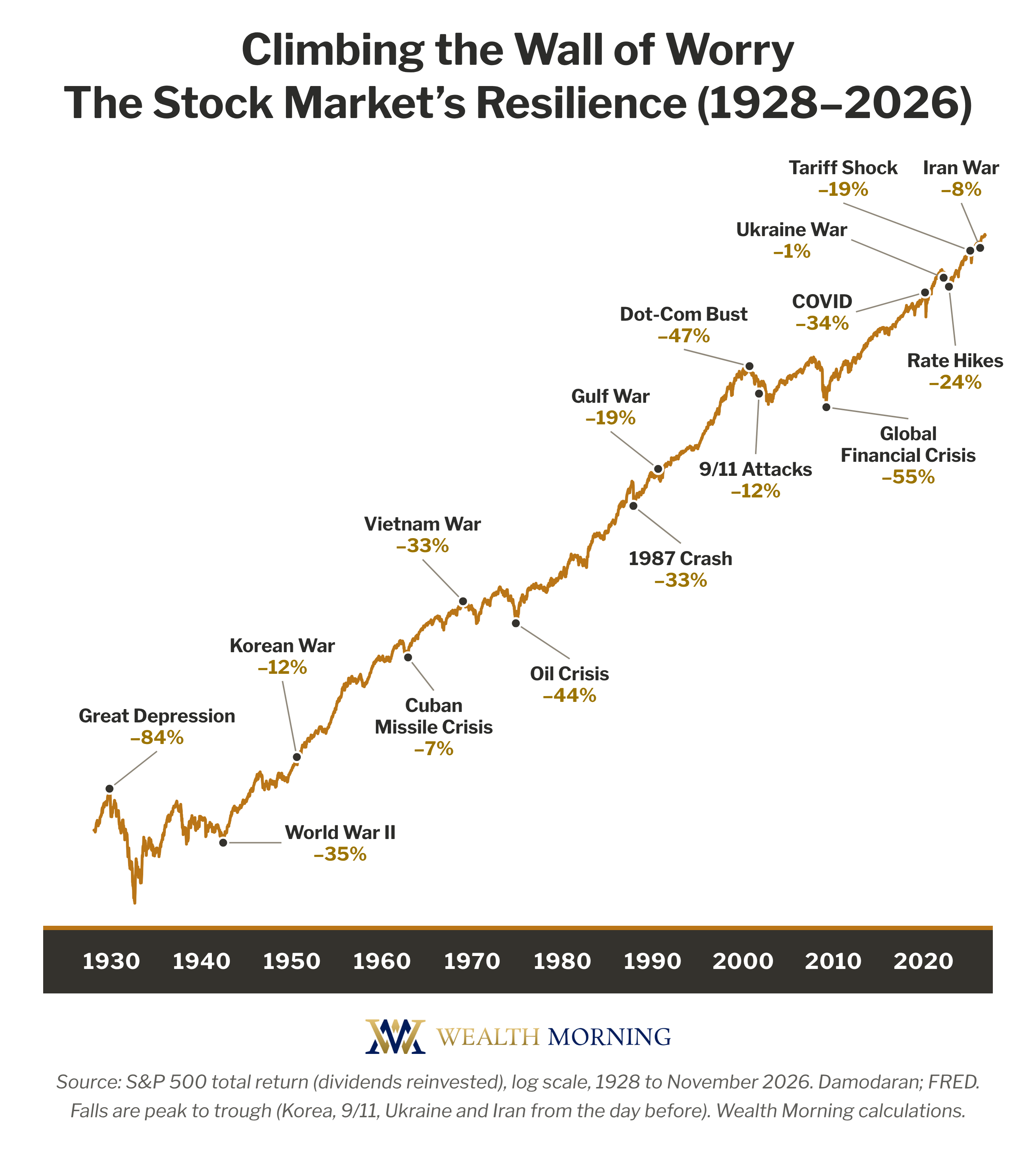
Pullbacks. Corrections. Crashes. These events are regular signposts along our investment journey, even if we hate seeing them:
- For most people, their knee-jerk reaction is to avoid the pain. Sometimes at all costs. But here’s the irony: by pursuing an avoidance strategy, they end up damaging their portfolios. Destroying wealth.
- So here’s the inconvenient truth: you have to be willing to take the good with the bad. You have to be courageous. You have to be steadfast. You have to hold your nerve, even when things look dark.
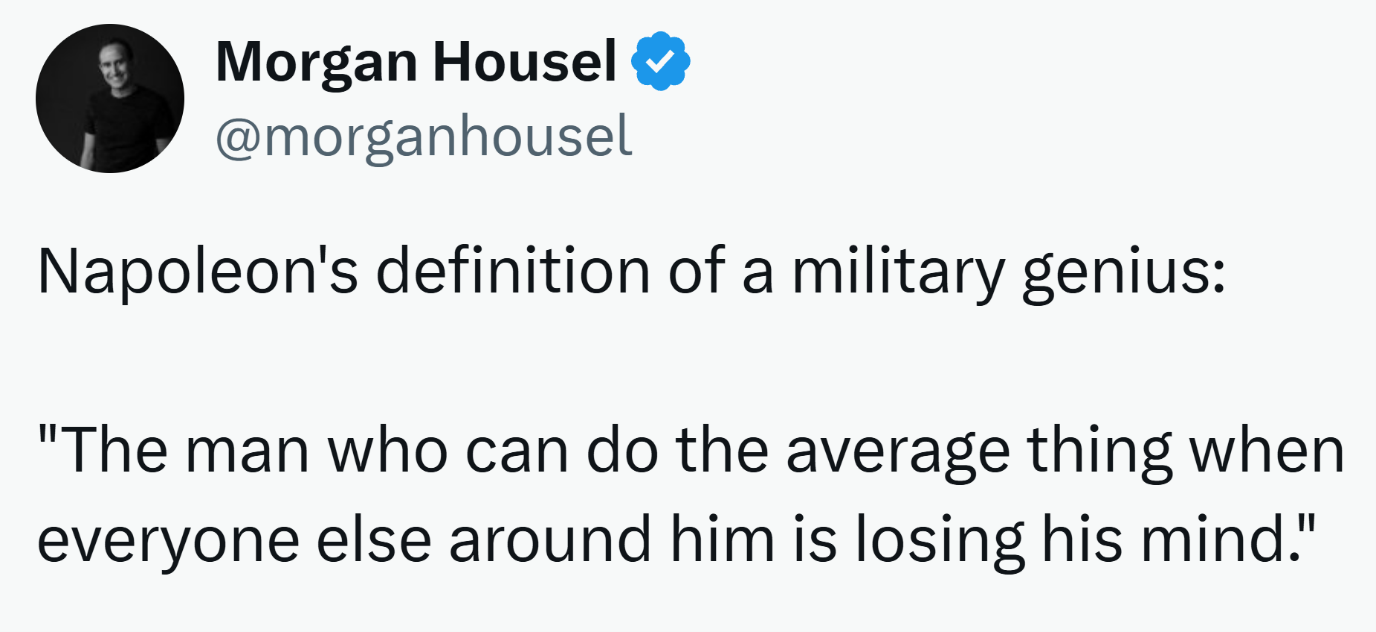
Source: Morgan Housel / X
So the next time you feel rattled by bad news, just take a breath. Remember to put things in perspective:
- Fear is a natural part of investing. There will be ups and downs. But rest assured, human frailty can be tempered by human resilience. Our innate ability to overcome is what keeps us going.
- Don’t flinch. Stay invested. Stay positive.
Regards,
John Ling
Analyst, Wealth Morning
(This article is the author’s personal opinion and commentary only. It is general in nature and should not be construed as any financial or investment advice. Wealth Morning offers Managed Account Services for Wholesale or Eligible investors as defined in the Financial Markets Conduct Act 2013.)

John is the Chief Investment Officer at Wealth Morning. His responsibilities include trading, client service, and compliance. He is an experienced investor and portfolio manager, trading both on his own account and assisting with high net-worth clients. In addition to contributing financial and geopolitical articles to this site, John is a bestselling author in his own right. His international thrillers have appeared on the USA Today and Amazon bestseller lists.