
Do you enjoy reading about ancient European history?
Well, if you do, then you already know this: Plato was one of the greatest thinkers ever.
He lived over 2,300 years ago, during the Classical period in Greece. He rose to fame by exploring the nature of human morality. He travelled. He studied. He taught. He debated. Then he died at the ripe old age of around 81.
The history books will tell you how influential Plato’s ideas are. His greatness stems from the fact that he did not just contribute to Western thought. He essentially built its scaffolding.
But here’s what the history books won’t tell you: Plato was only able to devote himself to philosophy because he lived a privileged life.

Source: Image by Gordon Johnson from Pixabay
You see, Plato had the good fortune of being born into an aristocratic family in Athens:
- As a child, he was given a superior education: gymnastics, music, poetry. Then, as an adult, he enjoyed what the Greeks called scholē — the freedom to pursue academic study without actually having to work for a living.
- Plato was surrounded by good food and fine clothing, even as he pondered the nature of truth. He had all the free time in the world to study and philosophise. If I had to choose a word to describe his journey, it would be leisurely.
I want to put this into historical perspective for you:
- During the Classical period in Greece, the average life expectancy at birth was only 25 to 28. Half of all children died before they reached adolescence. The lucky few who did survive to the age of 30 had a decent chance of reaching 50. But even so, it was dicey.
- Nutrition was poor. Sanitation was lousy. Healthcare was abysmal. To borrow a phrase from Thomas Hobbes, life back then was nasty, brutish, and short.
- It was against this backdrop that Plato reached the grand old age of 81. What an amazing feat. This placed him in the top 1% of Athenian society.
- But when you stop and think about it, maybe it’s not so amazing at all. You have to remember: Plato was already born into an easy life. He simply cruised along.
- For me, the irony is this: Plato spent so much of his time talking about the human condition, but he never actually had to contend with the bitter reality of it.

Source: Image by expresswriters from Pixabay
So, let’s fast-forward to the present. Now, in 2026, we’re seeing the rise of wannabe philosophers. You will know them when you see them:
- Influencers. Campaigners. Activists.
- These are usually middle-class people born into a cushy life. They have never tasted hunger. They have never tasted sweat. Yet they act like they know it all.
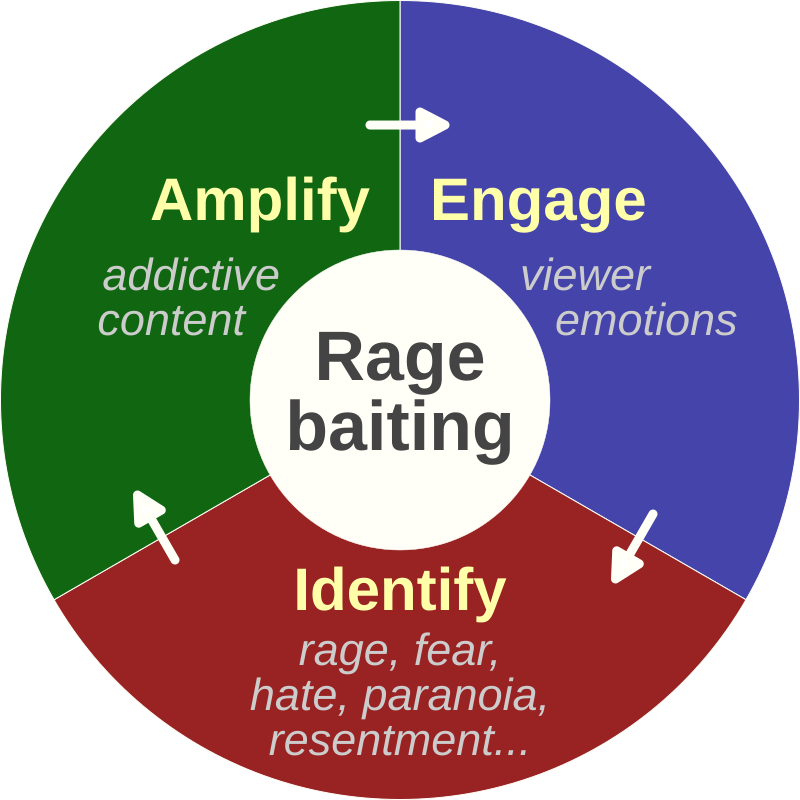
- Where will you find them? Well, they’re usually on social media, competing for eyeballs in what’s become known as the ‘attention economy’. They present themselves as experts, virtue-signalling about a range of hot-button issues.
- It’s all highly emotive. Highly performative. But does it just serve to disguise the fact that these people are simply lazy and risk-averse?
- Just think about it. These activists don’t actually hold a real job. They don’t create any value. They just vent and provoke. The only thing they succeed in doing is producing angertainment.
Source: RCraig09 / Wikimedia Commons
Now, here’s how I imagine a conversation might go between an activist and a realist:
Activist: ‘I need to raise awareness of social justice. There’s just so much unfairness in the world today. I feel like I need to make a difference…’
Realist: ‘Oh okay. So you wouldn’t want to become a farmer? Growing food? Feeding people?’
Activist: ‘What? No, of course not. That’s not my calling.’
Realist: ‘All right. What about becoming an engineer? Building roads? Building bridges?’
Activist: ‘No way. That’s certainly not my passion.’
Realist: ‘What about setting up a business? Inventing new products? Creating jobs?’
Activist: ‘Hey, absolutely not. That’s not my skill set.’
Realist: ‘Okay. So you just want to focus on raising awareness?’
Activist: ‘Yeah, that’s what I want to do!’
Realist: ‘You want to be a voice for social justice?’
Activist: ‘Yes! Social justice is my highest calling in life!’
Realist: ‘I can see you’re getting really worked up about this. You’re clenching your jaw. Your face is turning red.’
Activist: ‘Why can’t you support me? I’m doing a moral thing. There’s so much unfairness in the world.’
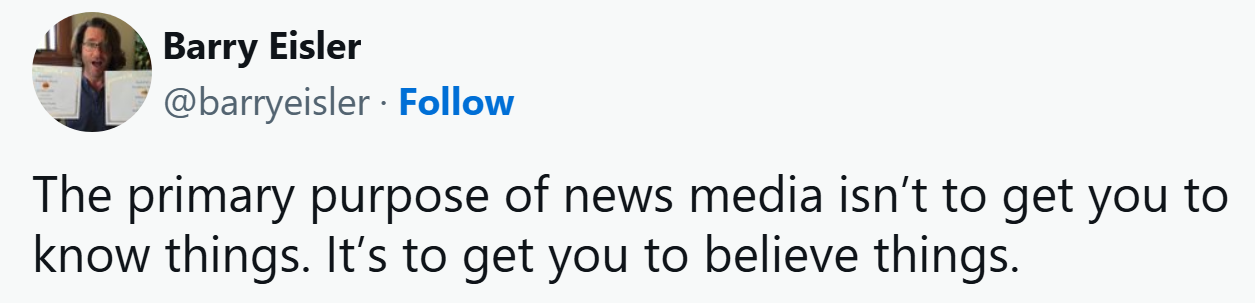
It’s amusing, isn’t it? You will notice that these activists are following an ideology that is contradictory, if not hypocritical:
- They will criticise the current state of Western civilisation. But when offered the chance to actually go out there and do some hard yards, they will always find an excuse not to.
- Can you measure their productivity? Or their efficiency? Well, no, you can’t. Because what they are doing is so hollow, so frivolous, you’d find it impossible to measure anything.
Source: Barry Eisler / X
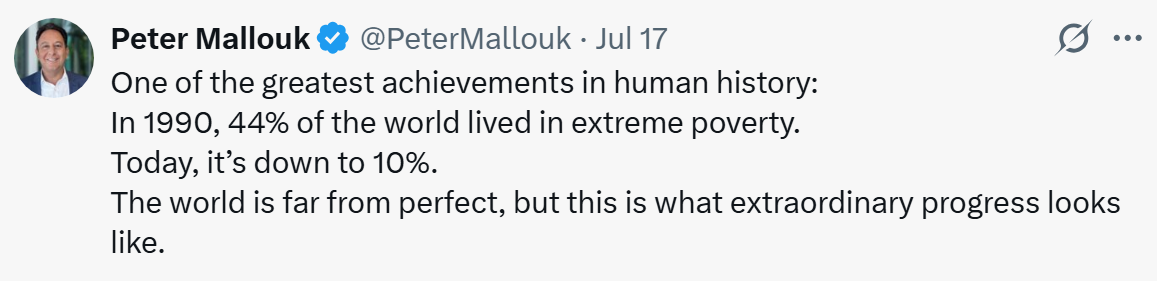
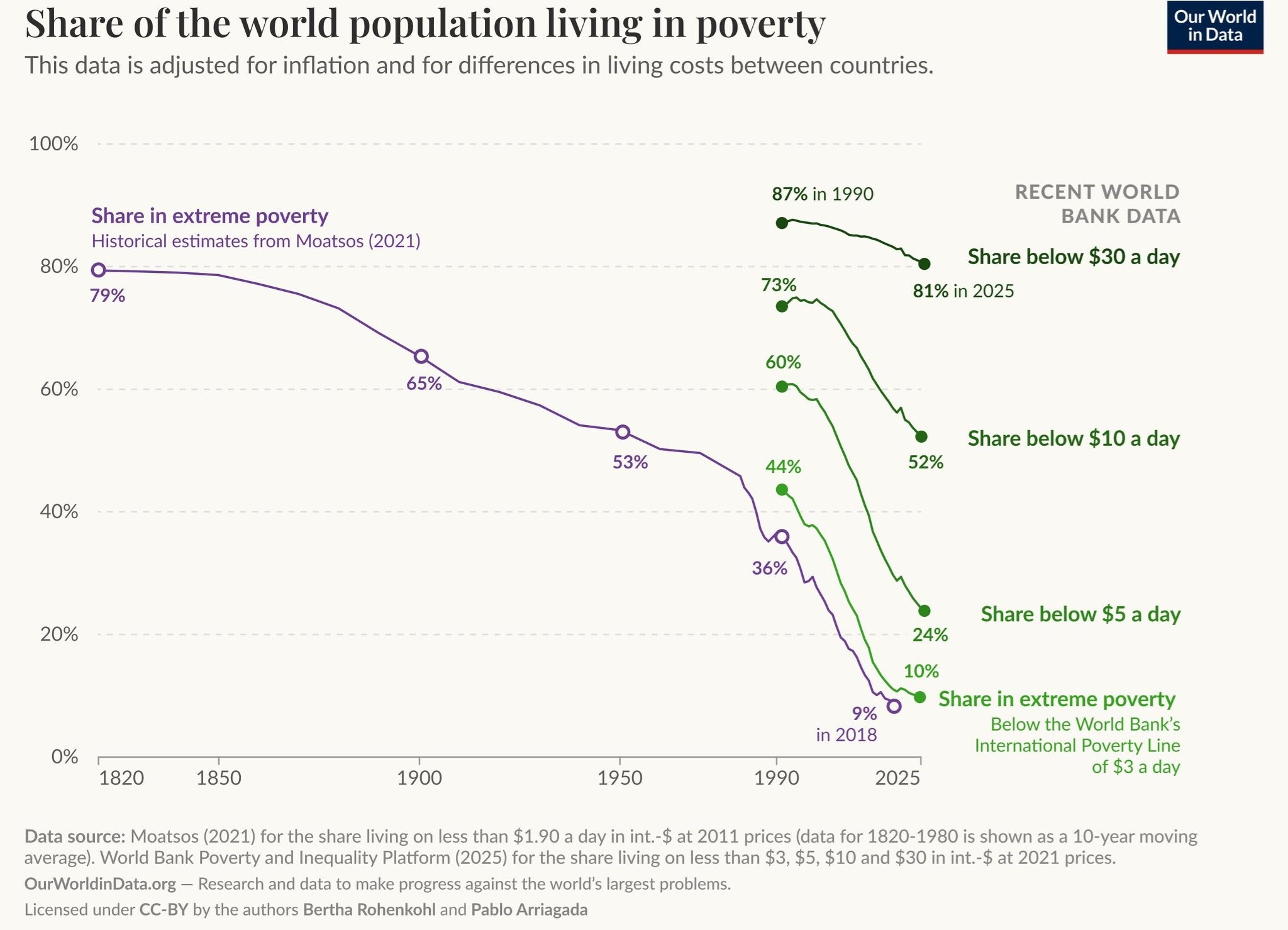
The great irony here is that the attention economy is driven by 24/7 streaming media. And that’s only possible because poverty is at its lowest point in human history:
- You no longer have to be born into an aristocratic family like Plato to pursue your whims and fancies. You just have to be middle class. And it’s never been easier to be middle class.
- In less than two generations, we’ve seen our quality of life improve by leaps and bounds. It’s stunning when you consider the scale of it.
Source: Peter Mallouk / X
Yes, I’m aware that activists are complaining that our world is getting poorer. But is this just a psychological disconnect?
- Well, consider this: if our world is truly getting poorer, then we would actually be seeing a sharp decline in activism.
- Financial hardship would be hitting these people hard. They would be forced to drop out of social media. They would be forced to get a real job. Doing the hard yards with actual toil and actual sweat. They wouldn’t have any choice in the matter. Because survival would take priority over philosophy, wouldn’t it?
- But, of course, that’s not what’s happening at all. In fact, what I’m seeing is new activists appearing every day. Their numbers are mushrooming, exploding. Honestly, I find it hard to keep up.
Source: Ben Carlson / A Wealth of Common Sense
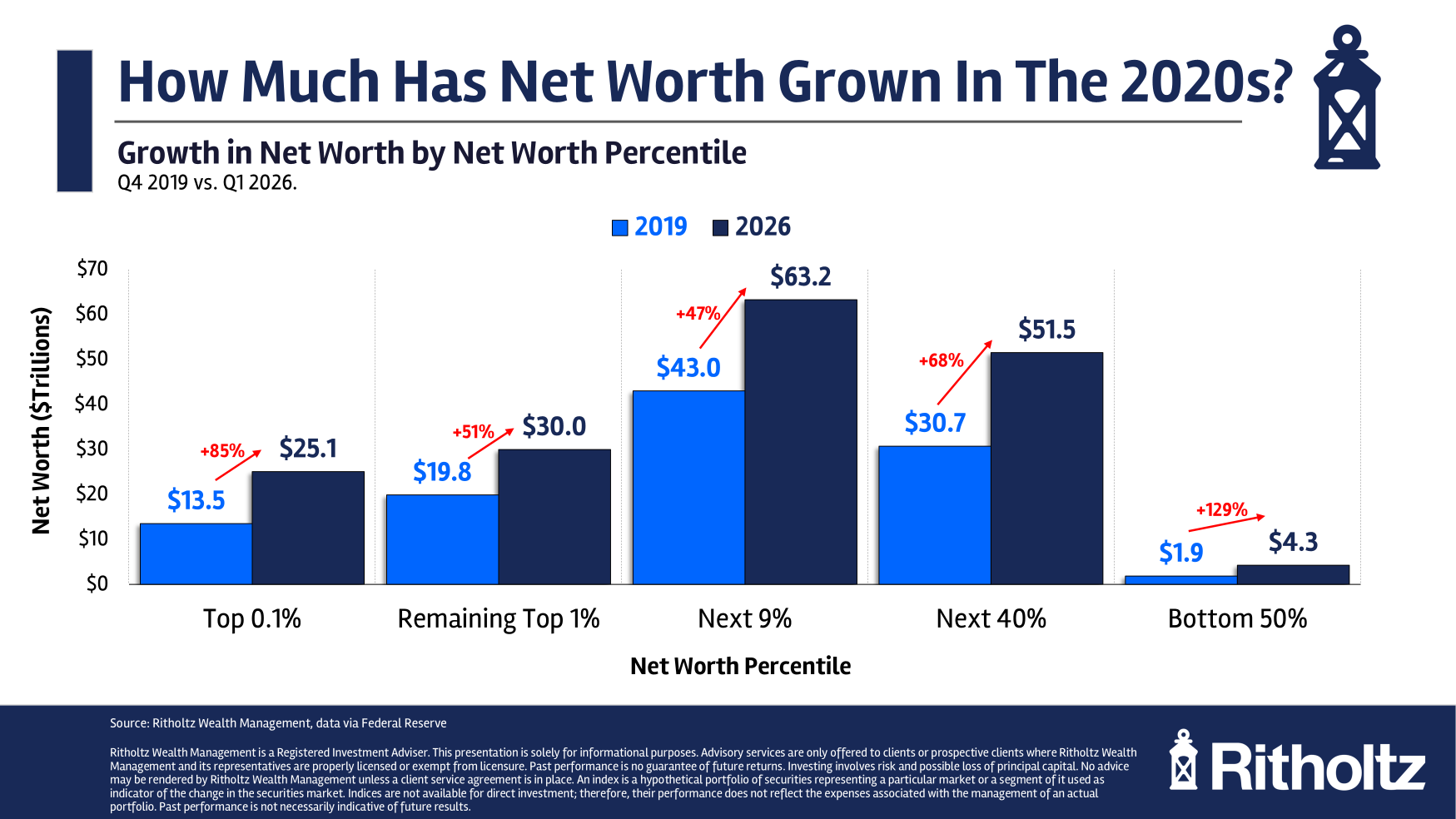
Modern life, as we know it, has never been so good. People have full stomachs. They have an abundance of choices. Household wealth is rising:
- The economic data that has emerged over the past few years is fascinating. In terms of financial growth, what it shows us is that it’s not the top 1% of society that’s benefited the most.
- Surprisingly enough, it’s the bottom 50% that’s enjoyed stronger gains. This runs contrary to what the activists have been claiming. The wealth gap isn’t widening. It’s actually narrowing.
Source: Brian Feroldi / X
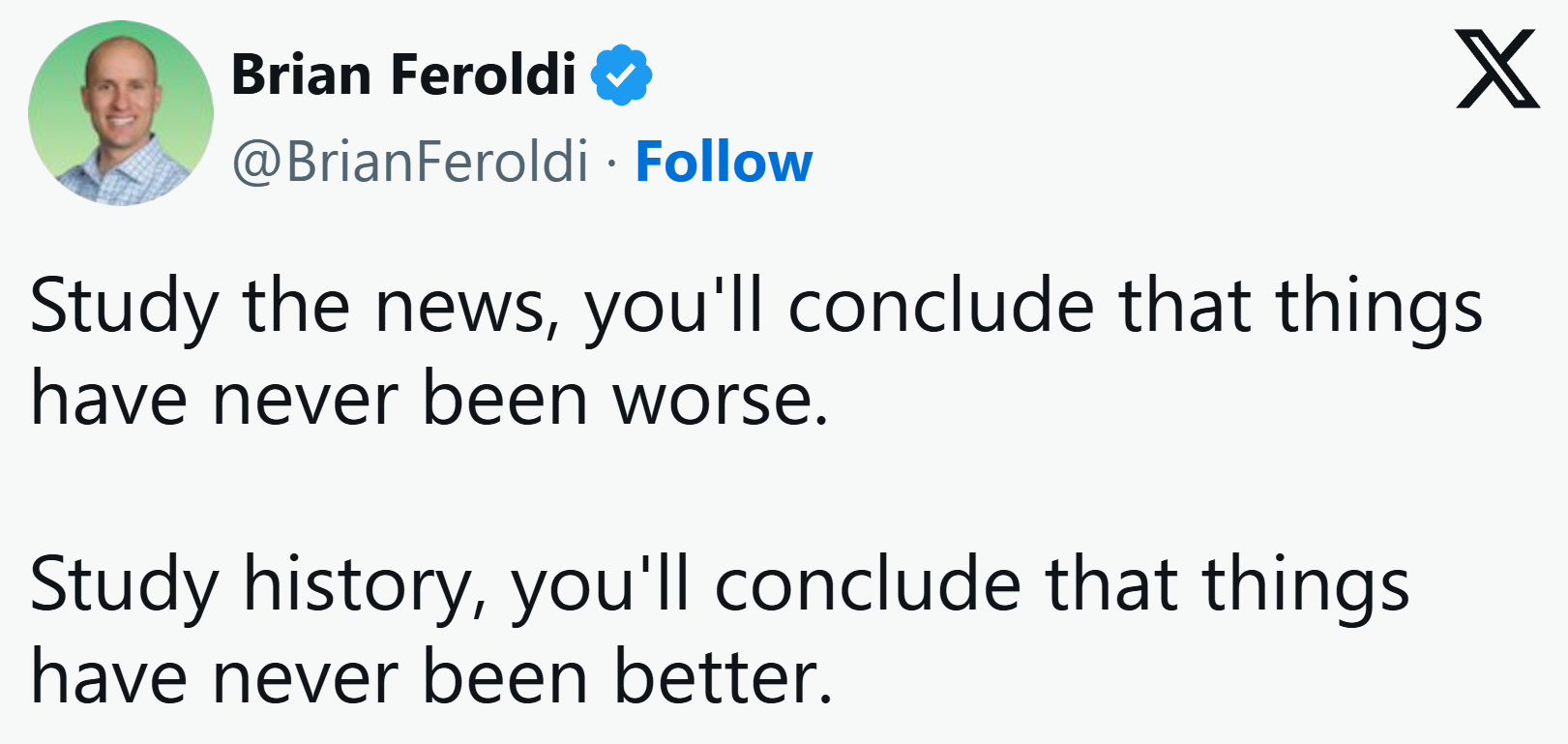
What I have observed is an inverse relationship between ideological negativity and real-world positivity:
- The more activists grumble, the better life actually is. This is a strange mirror image. Call it yin and yang, if you will.
- Still, that shouldn’t distract us from the truth: the future belongs to those who strive and build with urgency. Not to those who nitpick and complain at leisure.
- Yes, somewhere out there, yet another privileged kid aspires to be the next Plato. But philosophy only gets you so far. It can never replace the measurable progress that comes from real economic advancement.
- So, the next time you see an activist stir up emotional outrage, ask yourself: ‘What has this person actually built lately? What value have they actually created? How privileged are they?’
- The answers to these questions will prove most enlightening. They will help you cut through the noise.
Are you looking for someone to stand up for you?
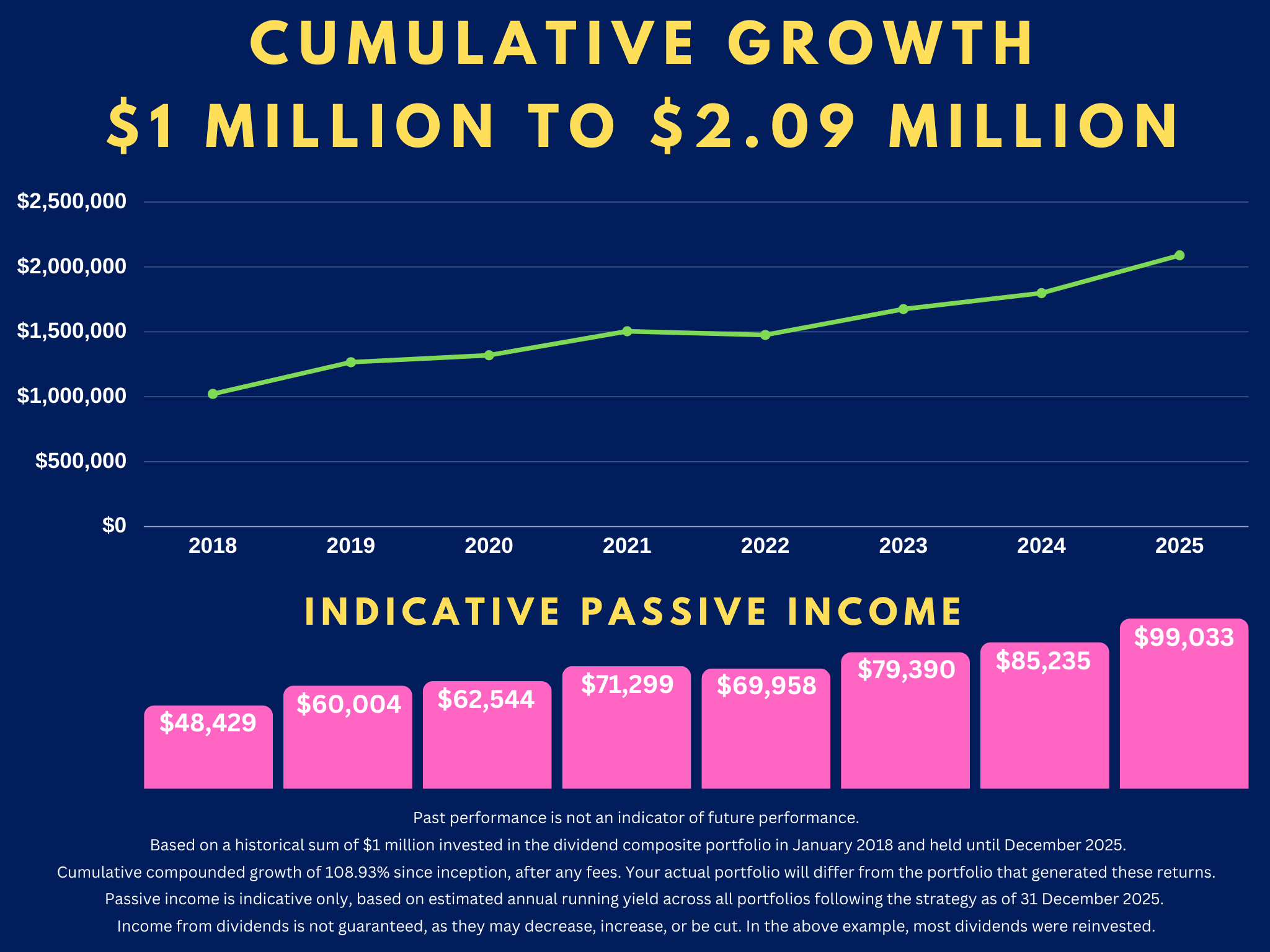
Successful investors tend to be resilient:
- They are regular folks who have painstakingly built up their wealth. They are helping the world to change for the better. They are investing in companies that are creating new jobs, new products, new services.
- In fact, if there’s a problem out there, you can bet your bottom dollar: there’s already an entrepreneur working hard at figuring out a creative solution for it. And that, in turn, will generate even more wealth in the long run.
Here at Wealth Morning, we believe it’s the builders who create value, not the activists. This is why we run what may be the only active night-trading desk in New Zealand for our Eligible and Wholesale Clients:
- Every week, we aim to buy into exceptional companies in Australia, Europe, and America.
- Our focus is on sectors that offer the perfect balance of growth and income.
- Our mission? To capture pockets of outstanding opportunity where we can.
- Where others see doubt, we see clarity — and we aim to use it as a springboard to build a better future.
- Are you interested? 👉 Click here to book a consult with us. Find out more about our Quantum Income Strategy, available exclusively to Eligible and Wholesale Investors.
Regards,
John Ling
Analyst, Wealth Morning
(This article is the author’s personal opinion and commentary only. It is general in nature and should not be construed as any financial or investment advice. Wealth Morning offers Managed Account Services for Wholesale or Eligible investors as defined in the Financial Markets Conduct Act 2013.)
John is the Chief Investment Officer at Wealth Morning. His responsibilities include trading, client service, and compliance. He is an experienced investor and portfolio manager, trading both on his own account and assisting with high net-worth clients. In addition to contributing financial and geopolitical articles to this site, John is a bestselling author in his own right. His international thrillers have appeared on the USA Today and Amazon bestseller lists.