
‘Price is what you pay. Value is what you get.’
—Warren Buffett
The other week, I went out for dinner at a new Italian restaurant in the city. It was filled with beautiful people. But I should have known when the waiter came to warn us that the signature meatball dishes (~$30) came with only three meatballs.
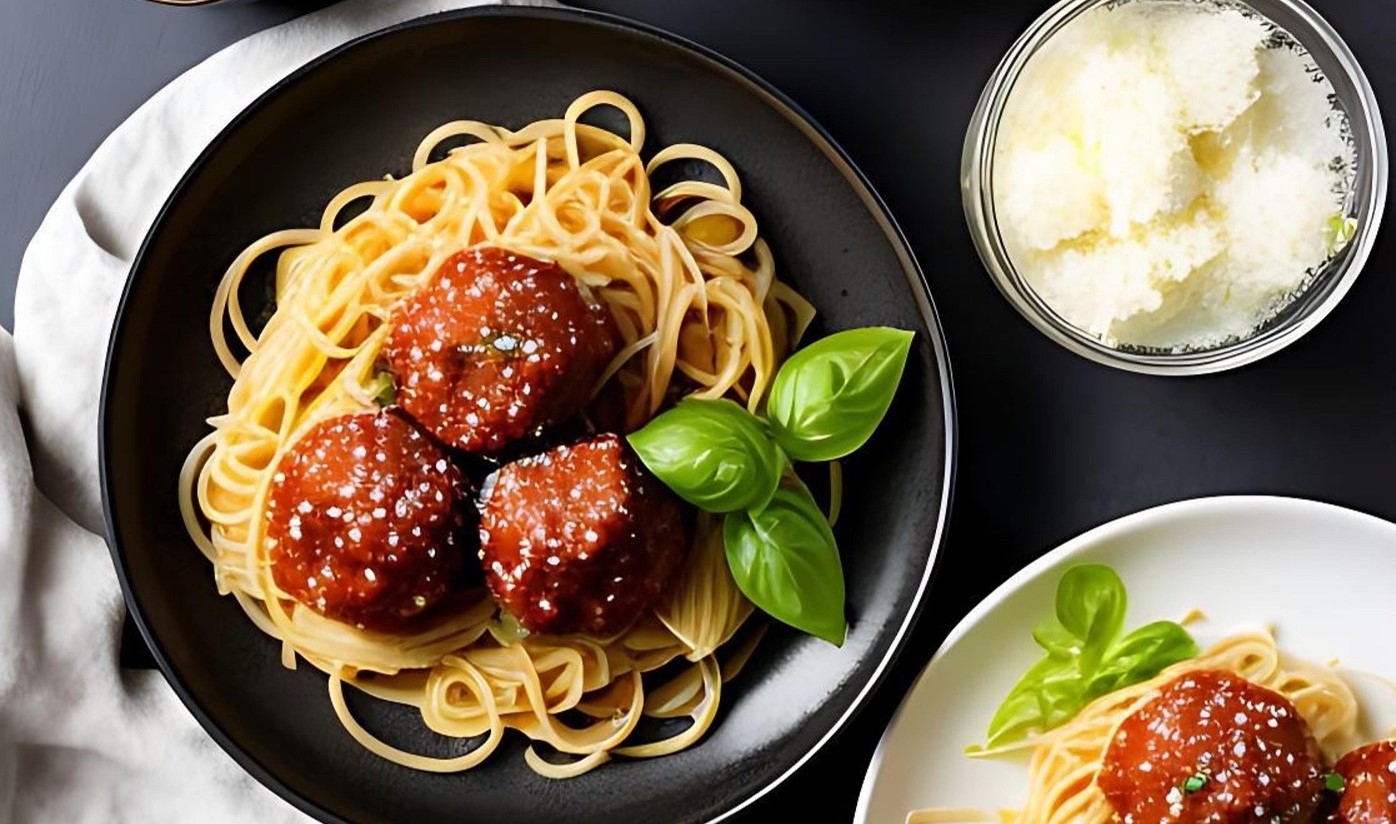
Source: Image by A. M. Cranston from Pixabay
Of course, the reviews said this was one of the best Italian restaurants in Auckland. Don’t get me wrong — presentation and service were superb — but this was not among the best in my book. That would go to a simple, neighbourhood joint that only opens in the evenings and still sells a bottle of Chianti for $40.
A mistake we so often make is to assume price equates to value: ‘You pay for what you get.’
But value is a far more democratic phenomenon.
At times, in restaurants and in financial markets, fantastic value is revealed at very good prices.
Top-shelf US tech vs. Australasian and European value
Many local growth funds are focused on the big US tech businesses. Think Google, Microsoft, and the Magnificent Seven.
We performed nicely last year (+29% across wholesale portfolios*) targeting European value. Simple businesses such as undervalued real estate companies, banks, and resource miners revealed their value.
Had we focused — like the media — on high-tech growth, we’d likely have achieved less return with more risk.
Value tends to come with a margin of safety. In markets, it’s often found in boring businesses with potential — the ones that reward patience.
Ricardo’s comparative advantage

David Ricardo, economist and former MP. Source: Wikimedia Commons
David Ricardo’s theory of comparative advantage states that countries can mutually benefit from trade by specialising in goods they can produce at a lower opportunity cost, even if one country is more efficient at producing everything.
Modern trade policy for most of the developed world has focused on this theory.
Like many theories and assumptions, they sometimes don’t find the favour expected in the real world.
The idea, for a country like New Zealand, is that we should focus solely on our advantage in primary production — dairy, beef, and logs. For the US, high-tech digital products.
This theory becomes unstuck when an event like Covid hits. You actually need a manufacturing ecosystem to help your economy move forward.
It also ignores the fact that innovation needs such ecosystems to prevail. While the US might be leading the AI race, can it gear up to produce as many humanoid robots as China?
Once again, we’ve followed a theory that doesn’t always match up with real-world value.
The Left’s plan to ‘invest’ in New Zealand
Which brings me to politics. It’s very easy to buy five votes by promising benefits paid for by taxing one very productive voter.
New tax initiatives from the Left bloc include capital gains on property, wealth taxes, inheritance taxes, and land taxes.
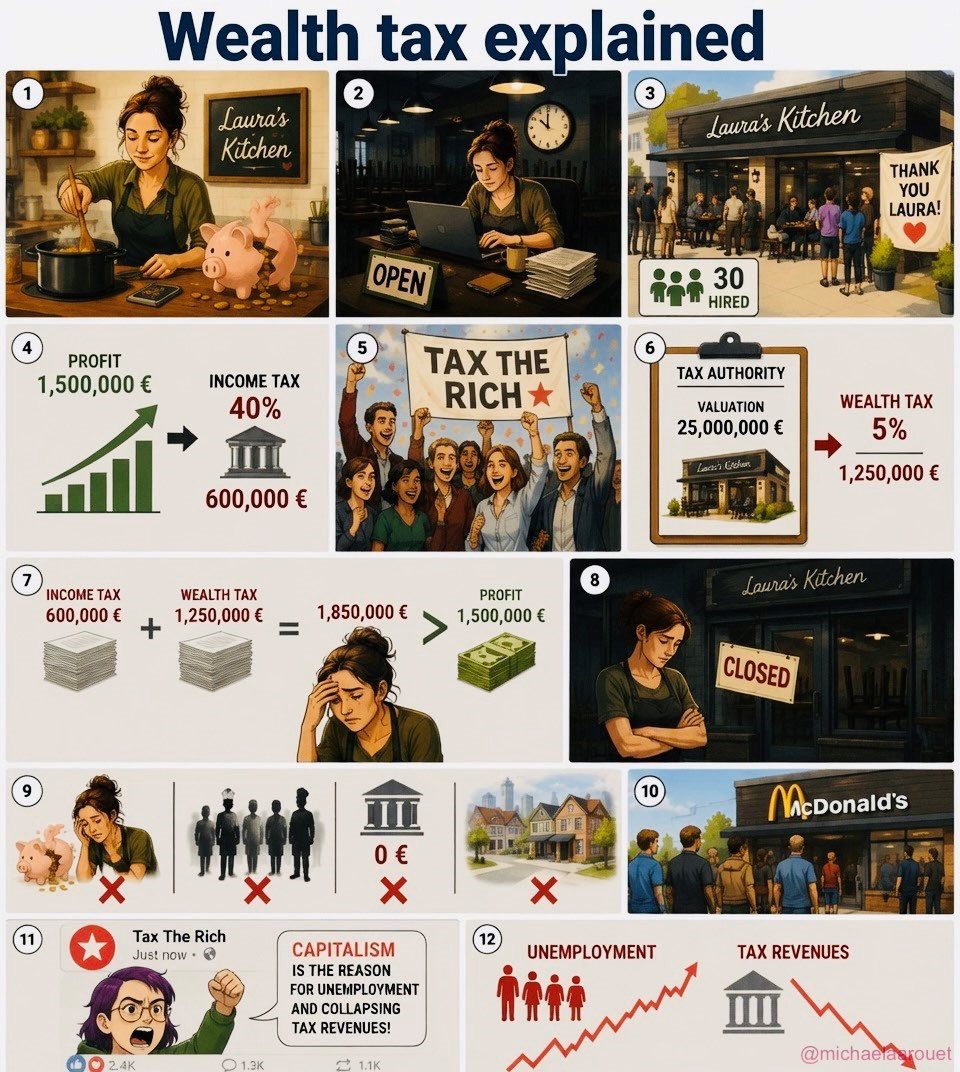
Michael Arouet explains the impact of wealth taxes very well:
Source: Michael A. Arouet / X
Here, Laura builds a successful restaurant and pays her income tax. Then a new wealth tax bills her more than she earns. She’s forced to shut down, loses her savings, her staff lose their jobs, and the community suffers.
What is misunderstood is that productive people lose their incentive. And incentives drive all behaviour.
In a small, open economy, productive people tend to leave.
Part of our wealth structuring involves global portfolios that are agnostic to tax residency.
Punitive taxes on capital, family, and land will make it harder for New Zealand to retain — let alone attract — the people and investment it needs. It’s a case of taxing the very things you need, rather than the things you don’t.
The most overlooked consequence of an election victory for this side may be the impact on bond prices. Through my years in investing, I’ve always kept something in mind: ‘The bond market knows everything.’
Following the election of a socialist tax mix, bond markets will immediately reprice confidence in New Zealand.
Bonds are, of course, how governments finance their debt. That’s exactly why they matter.
We already struggle with low productivity, weak capital investment, brain drain, and unsustainable fertility. This is not unnoticed by global lenders and investors.
If confidence falls, they will demand higher interest rates on bonds. When bond yields rise, bond prices fall, and equities often weaken.
Taken to a coalition extreme (capital + wealth + land taxes), the country will face higher debt-servicing costs and starved investment. Immigration may be one of the few levers left to grow the economy, but New Zealand will be far less attractive to wealthy migrants.
New Zealand has enormous potential with the right policy mix.
Taxing capital and wealth is not part of that.
Is it time to think about diversification and a global portfolio?
Our Wholesale Managed Accounts Strategy focuses on income and growth positions for financial freedom.
We’re currently offering discussions to Wealth Morning readers who may be Eligible or Wholesale Investors with $200,000 or more to invest.
Do register your expression of interest here.
We look forward to speaking with you.
Regards,
Simon Angelo
Editor, Wealth Morning
(This article is the author’s personal opinion and commentary only. It is general in nature and should not be construed as any financial or investment advice. Please contact a licensed Financial Advice Provider to discuss your personal situation. Wealth Morning offers Managed Account Services for Wholesale or Eligible investors as defined in the Financial Markets Conduct Act 2013.)
Simon is the Chief Executive Officer and Publisher at Wealth Morning. He has been investing in the markets since he was 17. He recently spent a couple of years working in the hedge-fund industry in Europe. Before this, he owned an award-winning professional-services business and online-learning company in Auckland for 20 years. He has completed the Certificate in Discretionary Investment Management from the Personal Finance Society (UK), has written a bestselling book, and manages global share portfolios.