
Do you remember what it was like in October 1981?
Well, it was a historic moment.
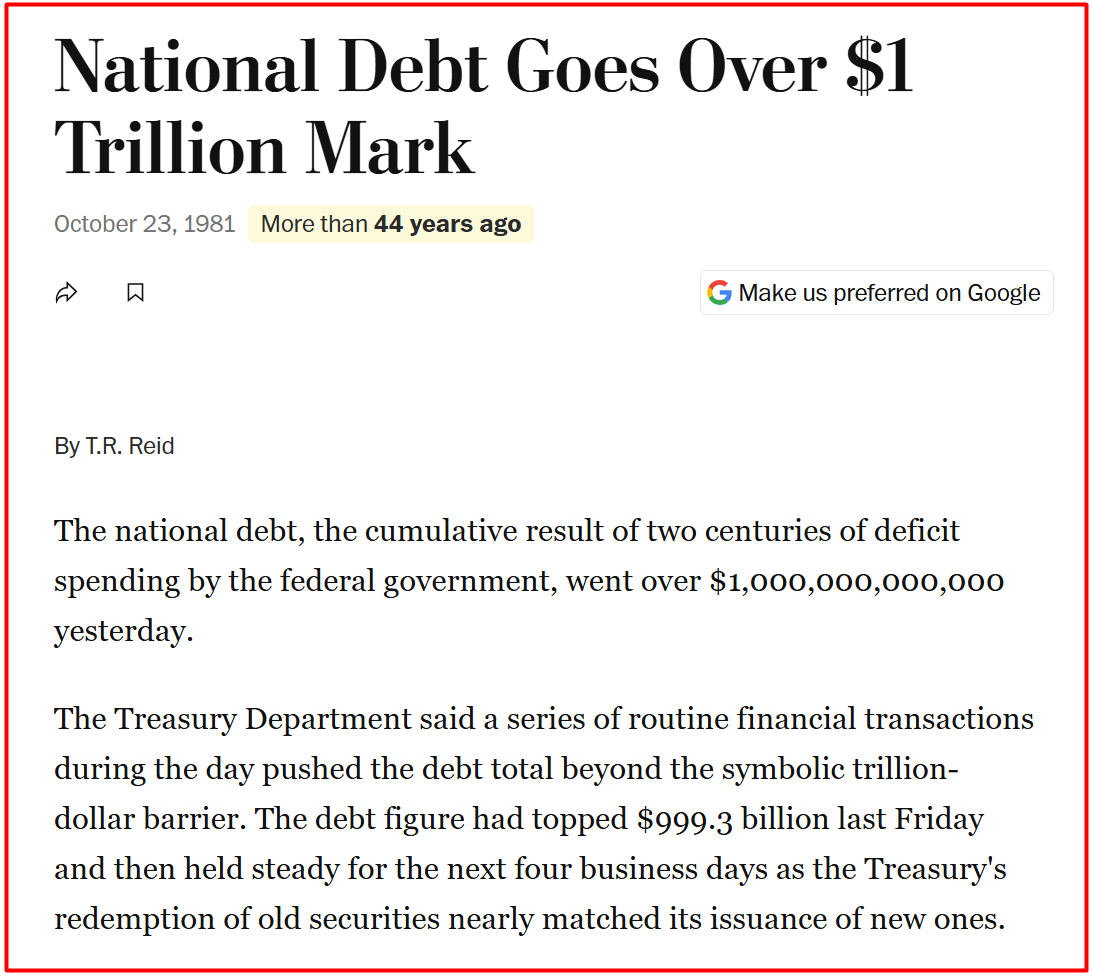
That’s when America crossed an important threshold, hitting $1 trillion in national debt.
When I look back at the old headlines, I feel a sense of morbid fascination. From The New York Times to The Washington Post, everyone was talking about this milestone.
Here’s an example from the archives…
Source: The Washington Post
At the time, I note that the collective mood among economists was sour:
- They thought this was the end of the road for America. How could the nation survive the fiscal cliff, let alone prosper? How indeed? It was an apocalyptic scenario.
- But, of course, it wasn’t the end. As it turned out, it was just the start of an extraordinary journey…
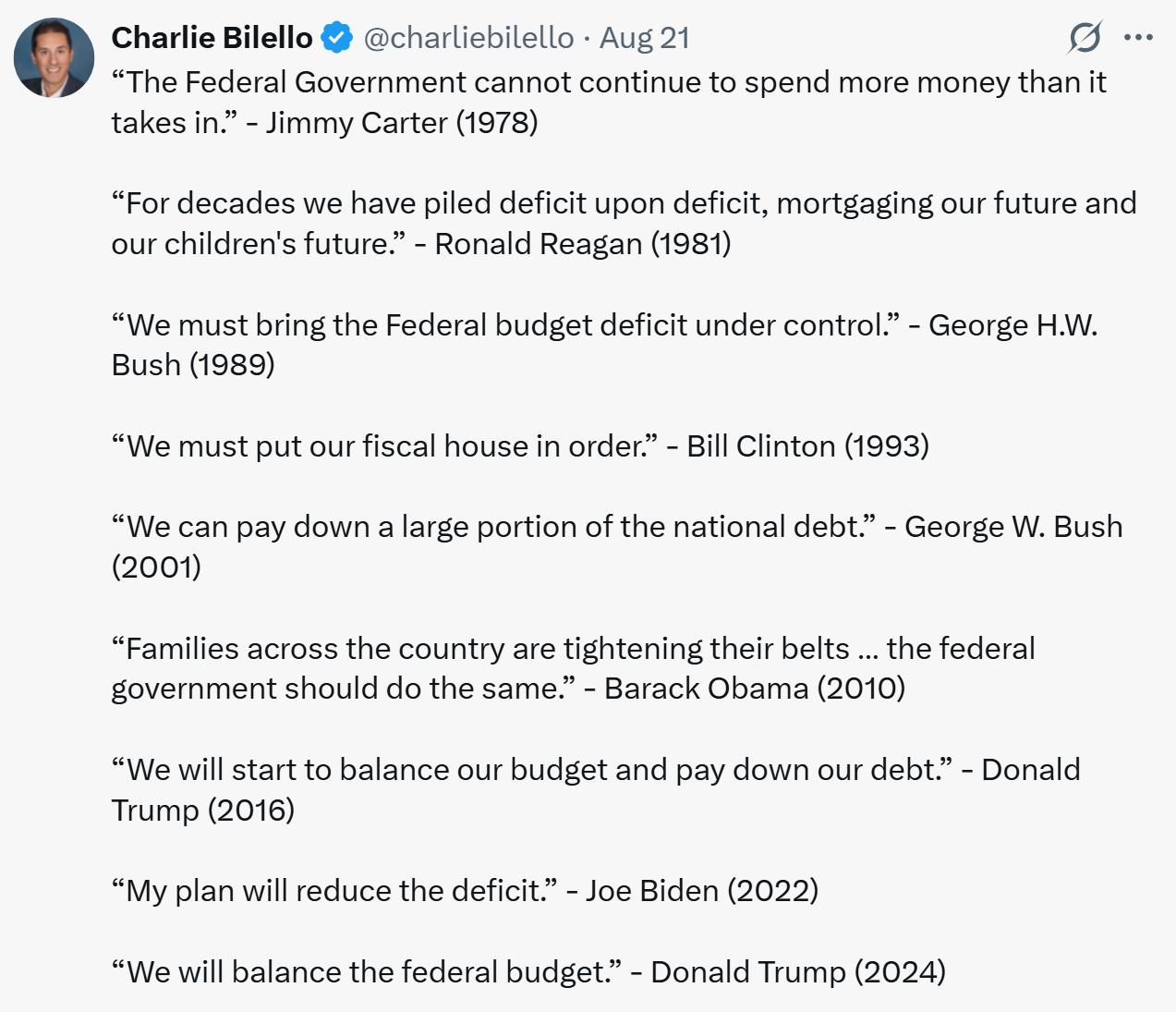
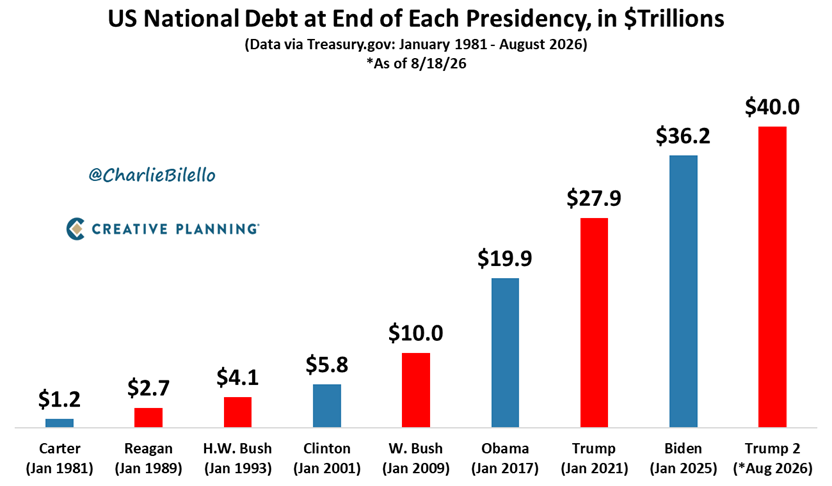
Source: Charlie Bilello / X
So, here we are now. It’s August 2026, and America has crossed yet another threshold, hitting $40 trillion in national debt:
- This number feels huge. Threatening. It’s enough to make economists break out in a cold sweat.
- Once again, the scary headlines are back. They are suggesting that America is about to suffer a fiscal heart attack. All the talk about rising bond yields and Treasury intervention is creating unease.
- But how much of this is real? And how much of this is exaggerated fear?
Source: Al Jazeera
Well, for the sake of sanity, I think it can be helpful to pause. Take a breath. Then examine the numbers. Here’s what it looks like:
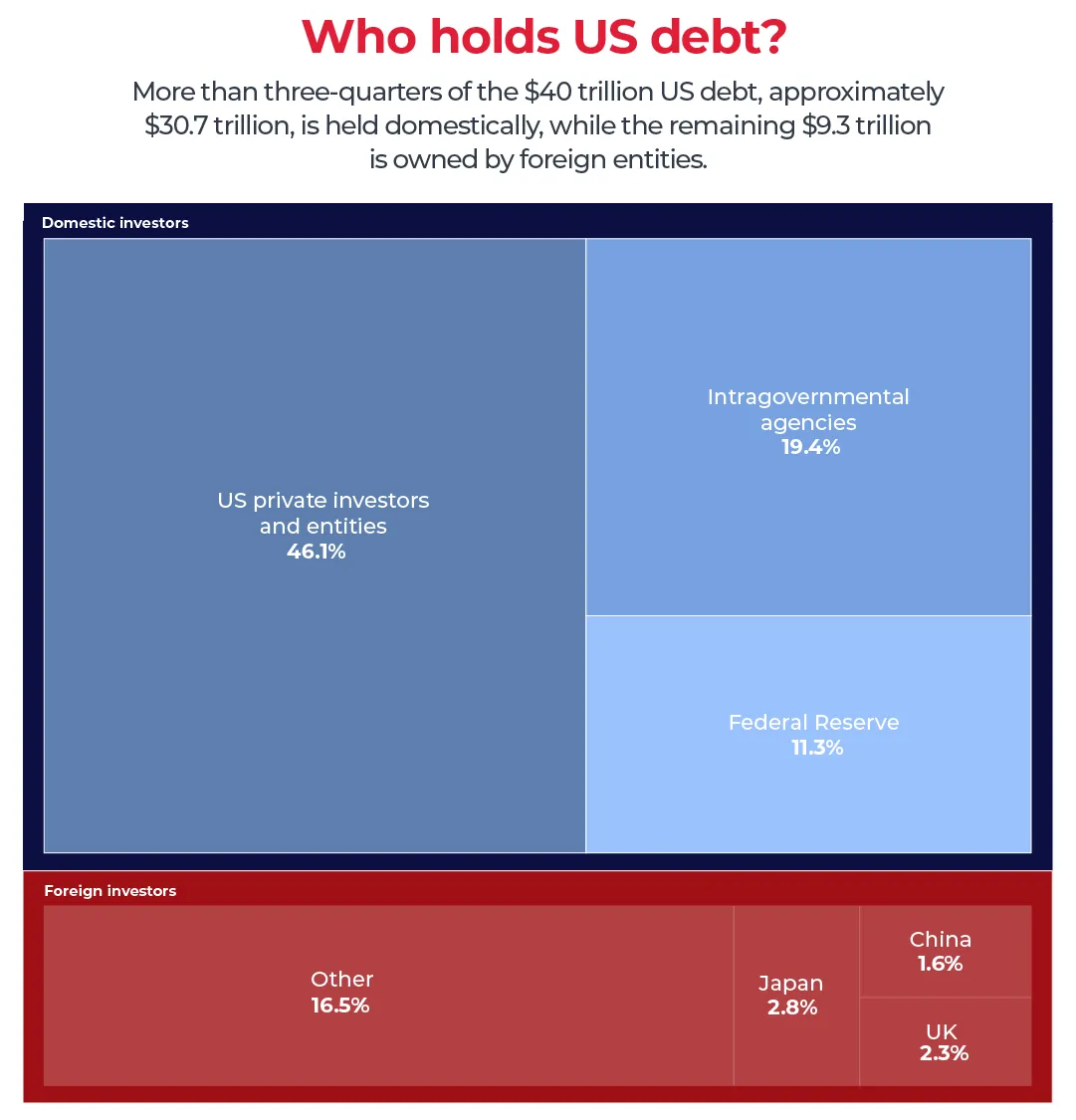
- At the moment, over 76% of American debt is actually owned domestically. It’s being held by government agencies, pension funds, commercial banks, insurance companies, and individual investors.
- Surprisingly enough, only 23% of the debt is owned by foreigners. It’s worth noting that China doesn’t have much of a presence here. It only controls 1.6% of the pie, well behind Japan and the UK.
- So, long story short, the vast majority of America’s debt is held at home — either by government accounts or by domestic investors. This means the threat of foreign disruption is minimal.
Source: Federal Reserve Board
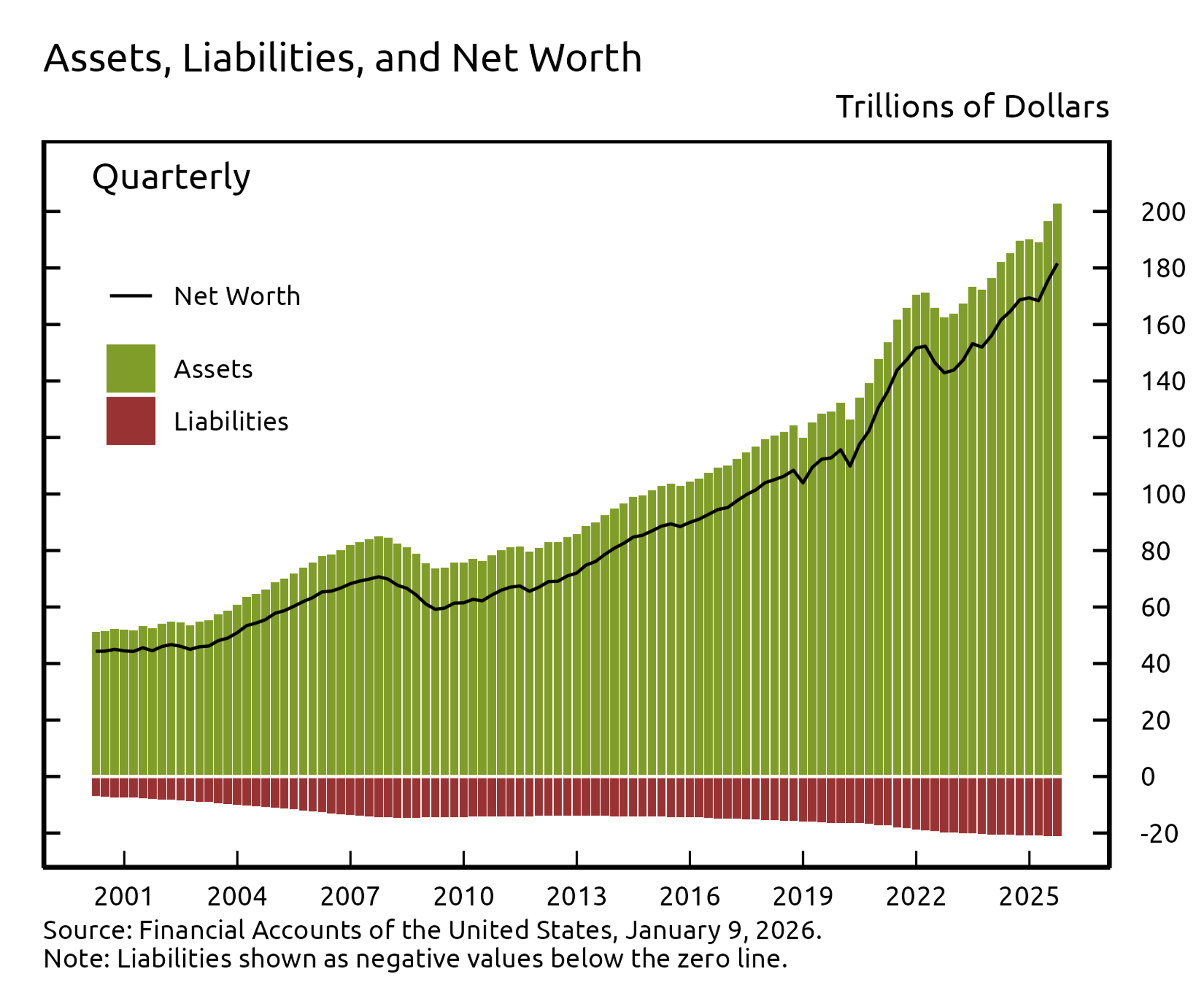
I think it can also be helpful to zoom out even more. Look at the bigger picture. Study the balance sheet as a whole:
- At the moment, American households hold almost $200 trillion in net wealth. This is much larger than the $40 trillion in government debt. In other words: American wealth far exceeds American liabilities.
- Yes, the media keeps warning us that Treasury bonds serve as liabilities for Washington. But what they fail to mention is this: Treasury bonds also serve as assets for the American investors who own them. It’s important to consider both sides of the ledger.
Source: DC Economics / Instagram
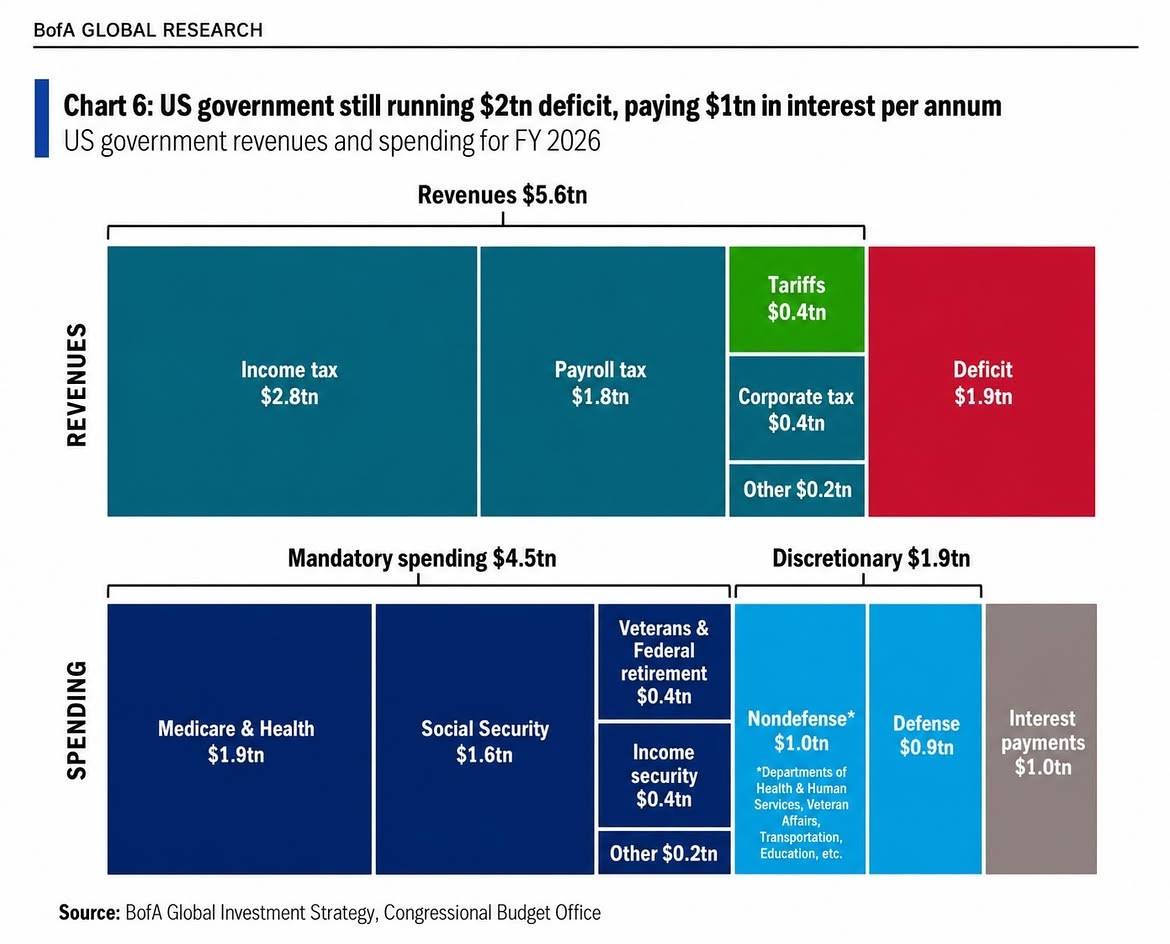
Still, is it necessary for the American government to accumulate so much debt? What exactly are they spending all that money on? Are they being wasteful? Well, the answer here might surprise you:
- At the moment, healthcare, retirement, and income security represent the largest chunk of government expenditure. By my calculation, they make up well over 60% of the federal budget. These are big-ticket items, and it can be easy to overlook how entrenched they are.
- Let me give you an example of why this matters. Just last year, Elon Musk was pushing ahead with the Department of Government Efficiency. He wanted to cut the bureaucratic fat. Get up to $2 trillion in savings.
- But perhaps Musk was overly optimistic. To date, DOGE has only achieved $215 billion in savings. Is this disappointingly small? Well, yes. As it turned out, Musk ran into a brick wall. There was only so much he could realistically cut.
I want you to think about that. Let’s assume that America could turn back the clock. Return to 1981. Lower the debt level significantly. Would that actually be desirable? Well, maybe not:
- I’m reminded of what economist Thomas Sowell once said: ‘There are no solutions. There are only trade-offs.’
- Back in 1981, the average American had a life expectancy of 74 years. Today, it’s 79. A lot has changed over the decades. Now, more than ever, people expect to enjoy a longer retirement and a wider social safety net.
- Of course, nostalgia for the past is a nice thing to indulge in. But let’s be honest: No American — Republican or Democrat — would ever agree to sacrifice five years of their life expectancy in order to return to 1981.
- Given the choice between lower government debt versus a higher quality of life, people will always choose the latter. Every single time.
- For this reason, spending on healthcare, retirement, and income security will continue to rise. But that’s not necessarily a bad thing.

Source: Ryan Detrick / X
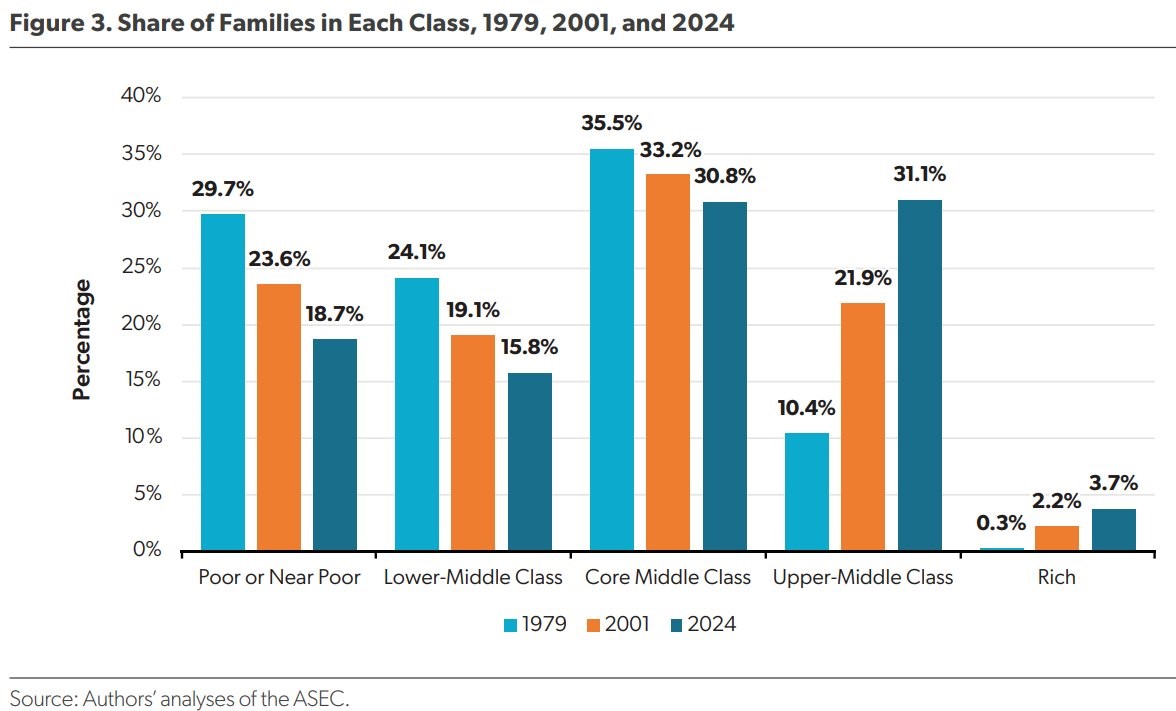
When you look at how households are doing, the long-term trajectory is positive:
- Americans are increasingly affluent, increasingly ambitious. Indeed, what they enjoy today are luxuries that previous generations could scarcely dream of.
- What was life like before Medicare? What was life like before Social Security? Well, here’s a hint: It wasn’t that great.
- So, yes, critics will continue to grumble about the merits of government spending. But I believe that such expenditure has built a certain level of social cohesion in America. This matters because it provides a foundation for how the future may unfold.
Source: McKinsey Global Institute
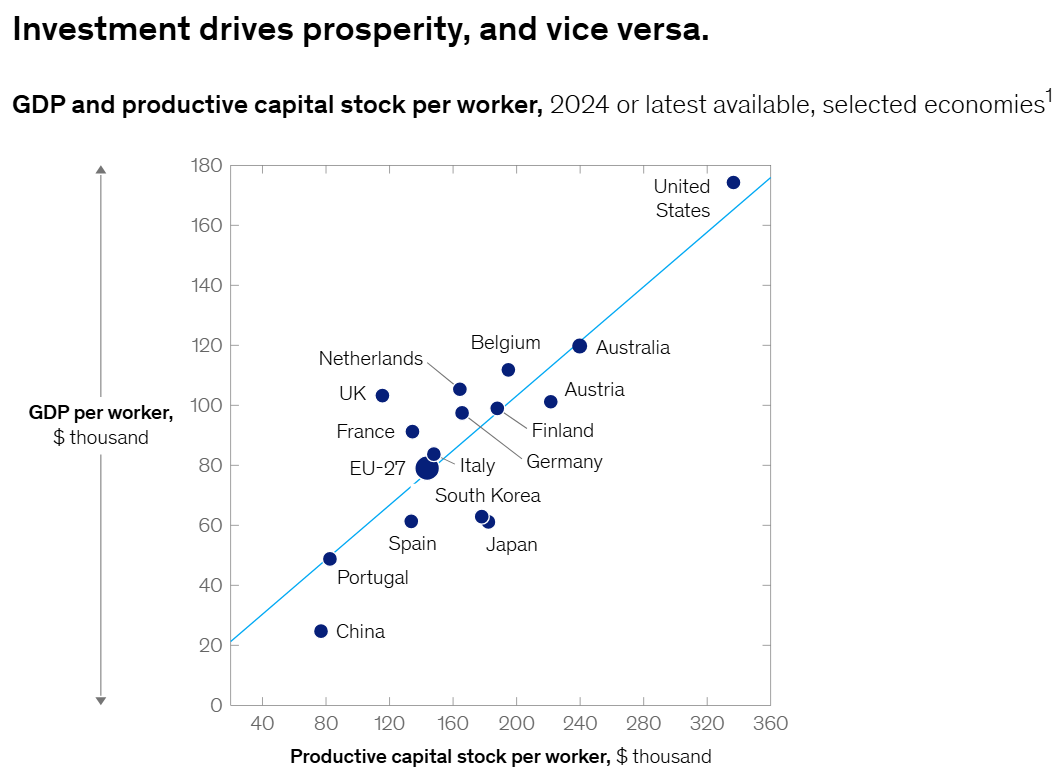
As an investor, I believe it’s worth watching the wealth trends that actually matter:
- Is America continuing to invest? Well, the evidence suggests that it is. The United States has an extraordinarily high level of productive capital per worker. This is no coincidence. Investment creates productivity. Productivity creates income. And income creates wealth.
- Are American businesses continuing to innovate? Again, the answer is yes. The country remains home to some of the most dynamic companies on the planet. They are investing heavily in artificial intelligence, automation, semiconductors, energy, healthcare, and advanced manufacturing. These are productive assets that have the potential to compound for decades.
- Are American households becoming poorer? Well, despite all the gloomy headlines, the long-term evidence suggests the opposite. Household net worth has climbed from just over $11 trillion in 1981 to almost $200 trillion today. That’s an incredible accumulation of wealth.
- Is the American economy still growing? Yes, it certainly is. Progress is never easy. There will always be recessions. There will always be shocks. There will always be moments of political dysfunction. But over the decades, the overall direction has been clear: more output, more productivity, more innovation, and more wealth.
Of course, I have no doubt there will be another debt milestone somewhere down the road:
- $50 trillion? $60 trillion? Perhaps even $100 trillion one day? When that happens, the headlines will scream again. The pundits will blame the American government.
- But such media negativity may be exaggerated. After all, federal spending represents less than 25% of the total US economy. That’s relatively small in the grand scheme of things.
- I suspect the more useful question will remain the same: How wealthy and productive has America become in the meantime?
- That’s the number I will be watching. Because, ultimately, I believe wealth is not created in Washington. It is created by entrepreneurs. By businesses. By courage.
- As long as America continues to excel in those areas, I will continue to keep the faith.
Regards,
John Ling
Analyst, Wealth Morning
(This article is the author’s personal opinion and commentary only. It is general in nature and should not be construed as any financial or investment advice. Wealth Morning offers Managed Account Services for Wholesale or Eligible investors as defined in the Financial Markets Conduct Act 2013.)


John is the Chief Investment Officer at Wealth Morning. His responsibilities include trading, client service, and compliance. He is an experienced investor and portfolio manager, trading both on his own account and assisting with high net-worth clients. In addition to contributing financial and geopolitical articles to this site, John is a bestselling author in his own right. His international thrillers have appeared on the USA Today and Amazon bestseller lists.