
Do you remember where you were in November 1989?
Do you remember what it felt like?
Well, I remember it quite vividly.
Back then, I was a child growing up in Malaysia. And in those days, there were no smartphones. No social media. No digital distractions.
All we depended upon was good old-fashioned analogue media.
We had a dozen national newspapers. A dozen radio stations. And, of course, three television channels to tune into. Just three. These TV channels served as our only visual medium. A window on what was happening in the world.
This was how I witnessed an extraordinary event taking place in November 1989.
It was breaking news.
The Berlin Wall was falling.
This was the beginning of the end of the Soviet empire.
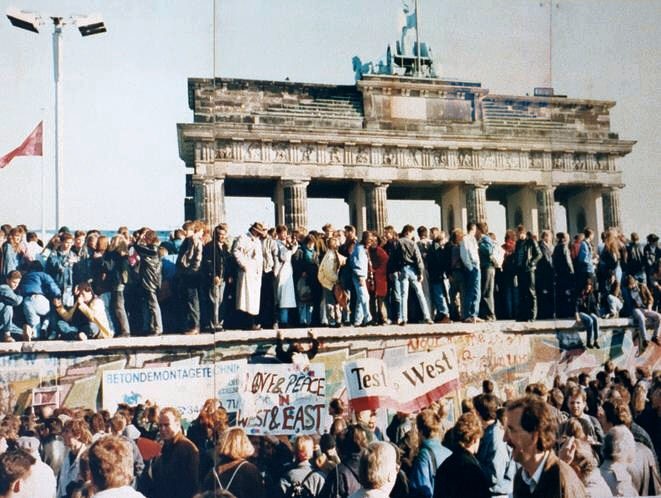
Brandenburg Gate, 10 November 1989. Source: Wikimedia Commons
As I watched the historic scenes play out on television, I could feel the buzz of excitement, even if I didn’t totally grasp the significance of what was happening.
- Wide-eyed, I turned to my dad and asked him: ‘Why are these people so happy?’
- My dad tipped his chin, smiling: ‘They have wanted freedom for so long. And now they are finally getting it.’
Freedom. What a big word. Yes, I was young, but even I knew that this was desirable. Something to aspire to.
- Later, in the aftermath of the Soviet collapse, American political scientist Francis Fukuyama would come to call this period ‘The End of History’. The West had won the Cold War. Securing the status of liberal democracy. This was a decisive victory. For all time.
- Or… was it? Was it really?
Of course, history didn’t actually end. What’s happened in the three decades since then has been a rollercoaster.
- Some countries have embraced free enterprise and used it to prosper beyond imagination. Meanwhile, other countries have embraced rigid bureaucracy and sabotaged their own potential.
- In short: there have been winners and losers. The mileage varies, according to ideology and ability.
However, what fascinates me is that the tide can suddenly turn, especially when you least expect it to.
- Right now, I’m watching one poor country in Eastern Europe. Up until recently, it’s been treated like an ugly duckling. No one had anything good to say about it.
- There’s no hiding the fact that it has a weak economy that has faced its fair share of structural problems. It has taken a very long time for it to achieve any kind of momentum.
- However, 2026 could be a turning point for this nation. It’s trying hard to revamp its financial system. Accelerate its prosperity. Make up for lost time.
- This nation now appears poised to emerge from the oppression of the past. Should speculative investors be looking closer at this opportunity beyond the radar?
Your first Quantum Wealth Report is waiting for you:
⚡🌎 Start Your Subscription: NZ$37.00 / monthly
⚡🌎 Start Your Subscription: US$24.00 / monthly

John is the Chief Investment Officer at Wealth Morning. His responsibilities include trading, client service, and compliance. He is an experienced investor and portfolio manager, trading both on his own account and assisting with high net-worth clients. In addition to contributing financial and geopolitical articles to this site, John is a bestselling author in his own right. His international thrillers have appeared on the USA Today and Amazon bestseller lists.