
If you come across a business that has scaled — but is not yet listed on the stock market — chances are it was funded by angel investors in its genesis.
Here in New Zealand, Halter is one example.
I attended one of the early pitches for Halter and was impressed with the potential of the business.
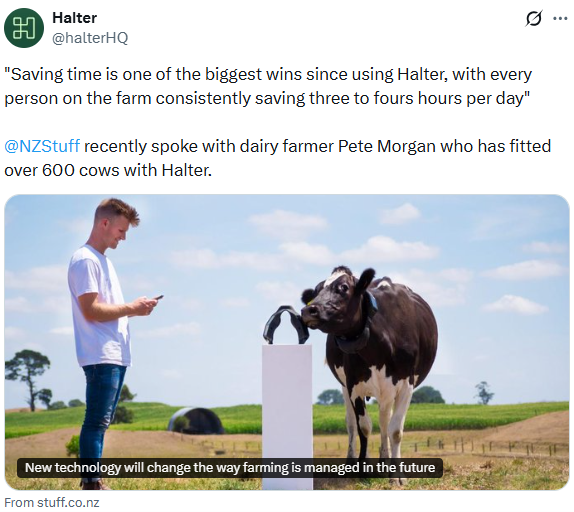
Source: Halter HQ / X
Halter achieved unicorn status in 2025 with a $1.65 billion valuation. This after raising $165 million in funding since Craig Piggot and Max Olson founded the business in 2016.
Yet Halter is not the norm.
A very experienced angel investor from the US was invited to speak to the local network. He had been investing for over 30 years.
His average return over the years? Around 20% annualised.
Of course, this is a great return. But let’s consider the risk.
- A couple of great tech exits skewed the many failures.
- The successful exits took at least seven years — with no liquidity or income until then.
- Active involvement took many unpaid labour hours.
- The risk-to-return ratio is very high. Consider the Sharpe ratio. Most angel deployments would be below 1.0 — suggesting suboptimal investment due to the high likelihood of total loss.
So it’s no surprise that angel investment networks now package portfolios of opportunities. These portfolios deliver a managed return.
Our wholesale portfolios in listed equities have delivered strong returns without these sorts of risks and drawbacks.
So, are there more scaled ways to access the most promising new businesses?
Businesses that could disrupt whole industries and become the next unicorns?
Your first Quantum Wealth Report is waiting for you:
⚡🌎 Start Your Subscription: NZ$37.00 / monthly
⚡🌎 Start Your Subscription: US$24.00 / monthly

Simon is the Chief Executive Officer and Publisher at Wealth Morning. He has been investing in the markets since he was 17. He recently spent a couple of years working in the hedge-fund industry in Europe. Before this, he owned an award-winning professional-services business and online-learning company in Auckland for 20 years. He has completed the Certificate in Discretionary Investment Management from the Personal Finance Society (UK), has written a bestselling book, and manages global share portfolios.