
Lately, I’ve been thinking a lot about my grandfather.
I’ve been reflecting on his journey through some of the most turbulent periods of the 20th century.
I’ve been pondering how that experience shaped his thinking and beliefs.
Here’s why I think it matters so much.
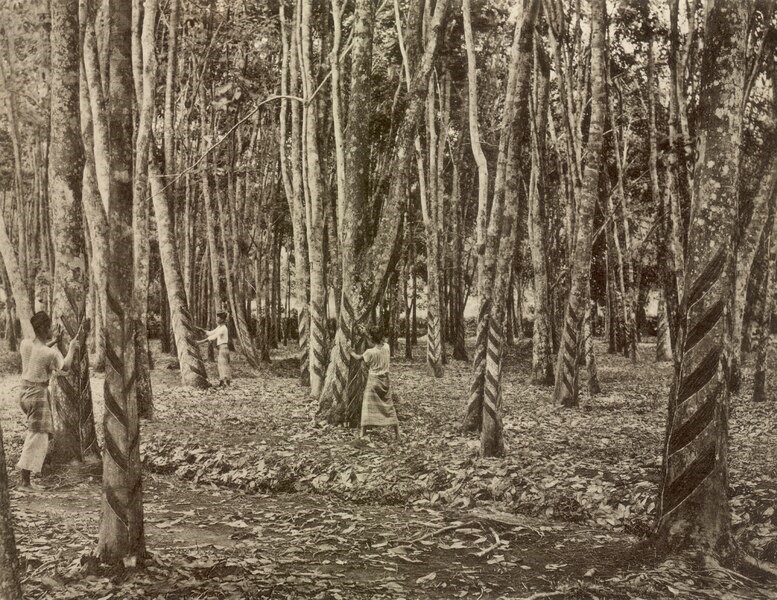
Malayan peasants tapping rubber trees at a plantation.
Source: Leiden University Library / Wikimedia Commons
My grandfather was 13 years old when the Great Depression hit in 1929.
- At the time, his home state of Perak in British Malaya was almost entirely dependent on two commodities for survival: tin and rubber.
- So when commodity prices declined by up to 80%, the collapse was traumatic. It plunged rural communities into poverty and deprivation.
- That’s when my grandfather learned a bitter economic lesson: deflationary pressure is bad. Very bad.
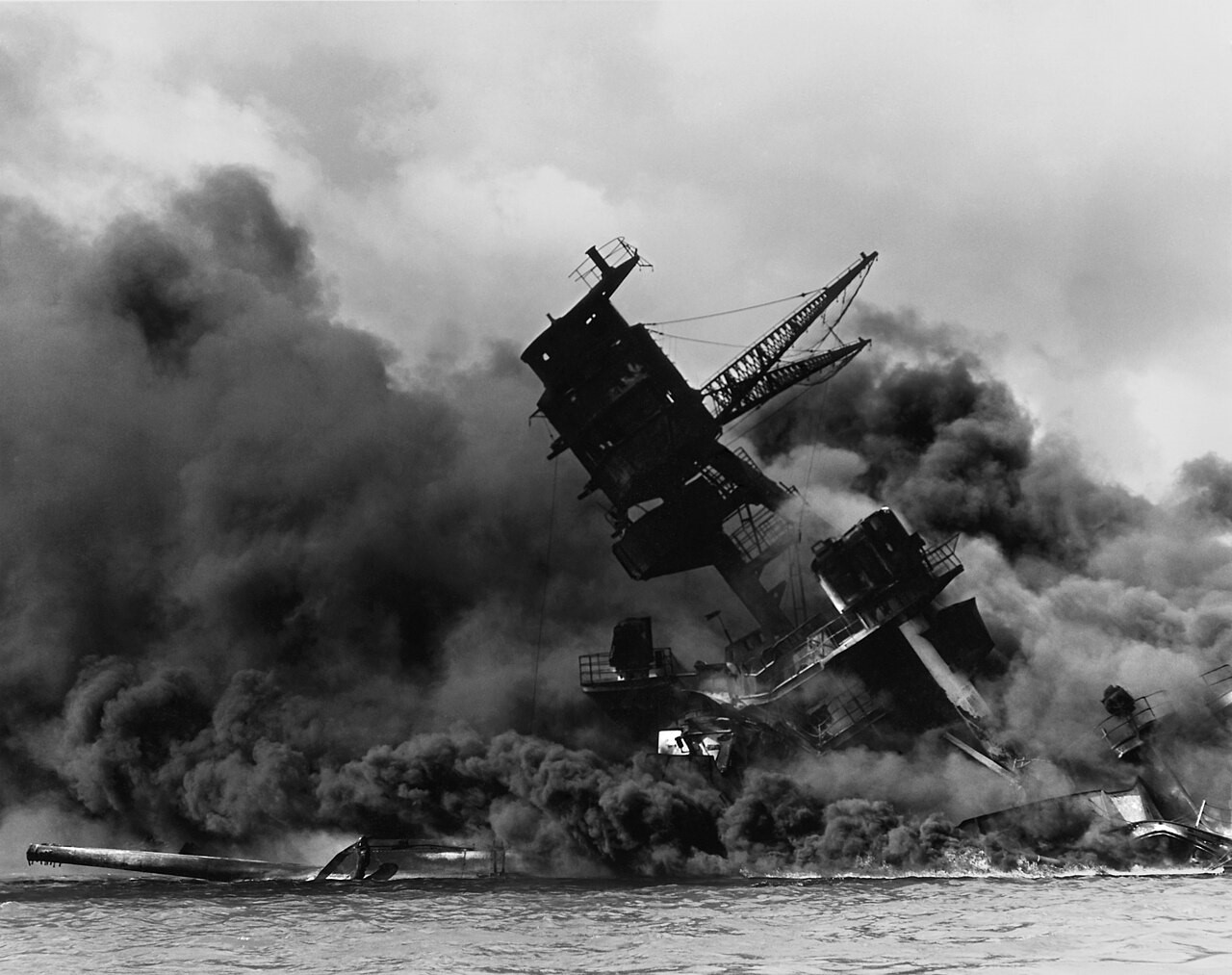
The Japanese air raid on Hawaii paved the way for a wider invasion of Asia. Source: Wikimedia Commons
As my grandfather grew up and entered adulthood, things didn’t necessarily get better. He was 25 when the Empire of Japan launched an attack on Pearl Harbor in 1941, disabling the American Pacific Fleet.
- Simultaneously, the Empire landed its troops on the Malay Peninsula. Advancing southward. Eventually toppling the British colonials in Singapore. This campaign unfolded in just 70 days. Winston Churchill called it ‘the worst disaster and largest capitulation in British history’.
- My grandfather would endure three and a half years of Japanese occupation. It was a cruel time, marked by severe food shortages and price hikes of over 1,000,000%. It forced him to learn another bitter economic lesson: inflationary pressure is bad. Very bad.
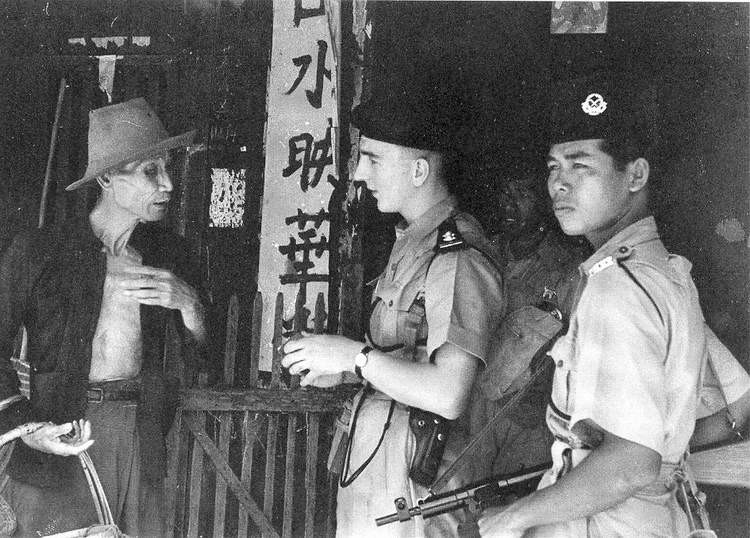
Malayan police officers on patrol. Source: Bert Hardy / Wikimedia Commons
Eventually, World War II ended, and the British colonials returned to Malaya to reassert control. Unfortunately, peace didn’t last. My grandfather was 32 when the Malayan Emergency erupted in 1948, with communist insurgents trying to topple the government to set up a socialist state.
- Harold Briggs, a British general, would respond with a decisive plan. He forcibly uprooted over 500,000 rural peasants. Then he placed them into concentration camps known as ‘new villages’.
- The goal? To isolate the civilians from the insurgents. In doing so, the British would cut off material support to the communists, as well as weaken their ideology.
- Curfews of up to 22 hours a day were imposed. The villages were fortified with barbed wire. Mass surveillance was carried out. Food was rationed. All citizens had to carry identification cards. No one was allowed to enter or leave without permission.
- Paramilitary troops were on constant patrol, watching for signs of communist infiltration. They carried out spot checks and interrogations. If push came to shove, they would shoot to kill.
- During this period, my grandfather lived under quarantine lockdown. That’s when he learned another bitter economic lesson: freedom doesn’t come free. Someone is always paying for it.
So when I look back on my grandfather’s formative years, I start to get a sense of what shaped his worldview.
- It was a combination of poverty, turbulence, and war.
- What did he ache for the most? What did he crave? Well, I think it was stability.
- So it’s no wonder that he became a strict disciplinarian when he raised a family. He was deeply committed to frugality and hard work.
My grandfather’s words still echo to this day. They have become part of our family lore. I’ll give you a sample of his greatest hits here:
- ‘Communism is the best system for lazy people.’
- ‘If hard work can kill you, then you should go ahead and die.’
- ‘Don’t tell me how much you earn. Tell me how much you save.’
Harsh? Absolutely. But you have to remember: my grandfather was a product of his time.
- He only had six years of primary school education. This meant that he learned most of his lessons from the ‘School of Hard Knocks’.
- His outlook on life was almost entirely utilitarian. Indeed, he had no time for anything else. He was too busy trying to survive. Trying to achieve stability.
Sadly, my grandfather died before I was born. So he never got a chance to taste the prosperity of our modern era.
- I do wonder: what would he think of life in the 2020s? We have advanced healthcare. Generous social benefits. Universal education. Endless gadgets. Booming opportunities for wealth-building.
- Even the poorest person in New Zealand today is enjoying a better life than the average person would have had a century ago.
- And yet… despite all these wonders… I imagine my grandfather would be stunned at the number of people who complain that life is tough.
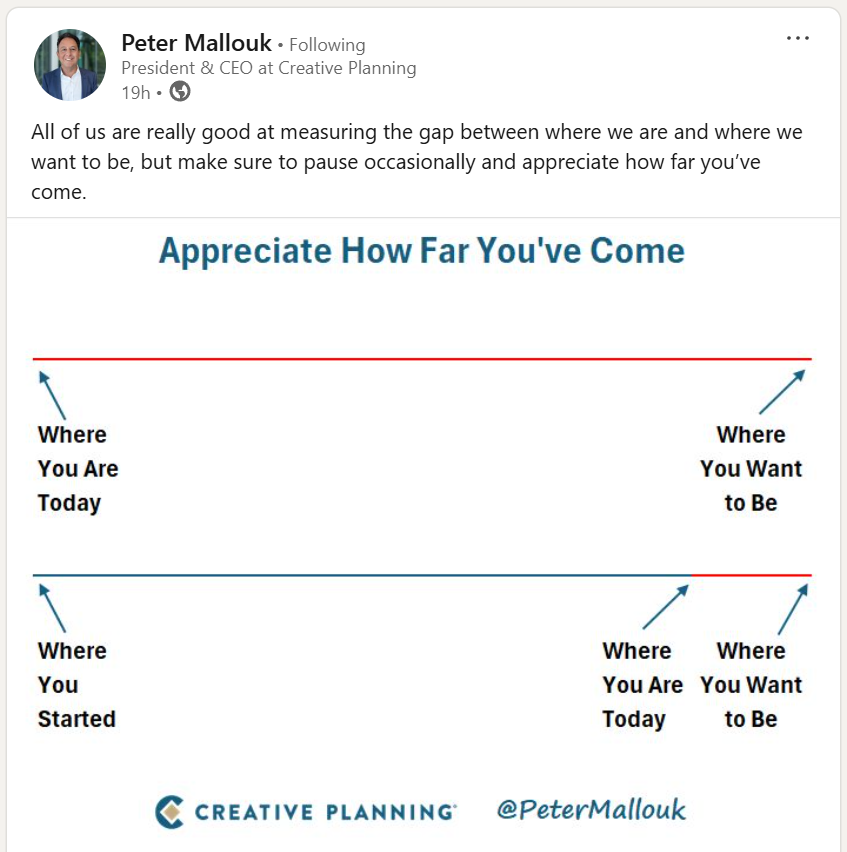
Source: Peter Mallouk / LinkedIn
Of course, there’s no hiding it: we live in a world where the news is fixated on angertainment and drama-queening.
- But occasionally, amidst the media outrage, I think it’s worth pausing. Taking a breath. And marveling at the miracle of how far we’ve come in terms of quality of life.
- In my opinion, my grandfather graduated with first-class honours from the School of Hard Knocks. The least we can do (with our softer curriculum) is to stay awake in class. Work honestly. Save wisely. Invest courageously. And every once in a while, we should look around. Admit to ourselves that we are already living the idealised life that my grandfather spent his youth fighting to achieve.
- Indeed, given how blessed we are today, a little bit of gratitude never hurts.
Our Quantum Income Strategy
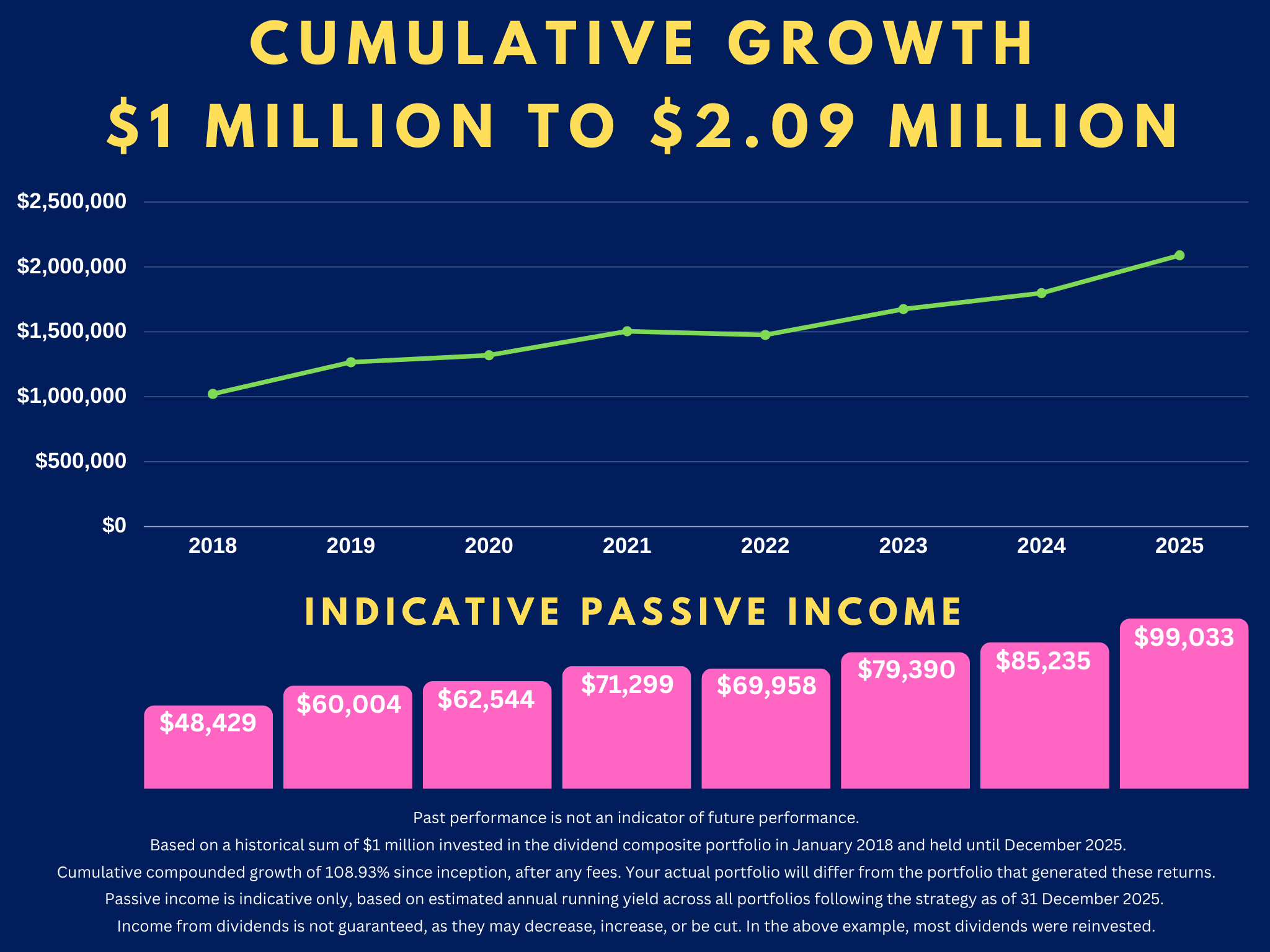
Tough times never last, but tough people do. Even in the midst of war, there is opportunity.
- Do you qualify as a Wholesale and Eligible Investor?
- If you do, we have a Quantum Income Strategy that’s designed to protect your wealth. Grow your wealth. Deliver you passive income.
- We go beyond New Zealand — targeting the best and brightest opportunities around the world. Our main hunting grounds for value are Australia, Europe, and America.
- Are you interested?
Regards,
John Ling
Analyst, Wealth Morning
(This article is the author’s personal opinion and commentary only. It is general in nature and should not be construed as any financial or investment advice. Wealth Morning offers Managed Account Services for Wholesale or Eligible investors as defined in the Financial Markets Conduct Act 2013.)

John is the Chief Investment Officer at Wealth Morning. His responsibilities include trading, client service, and compliance. He is an experienced investor and portfolio manager, trading both on his own account and assisting with high net-worth clients. In addition to contributing financial and geopolitical articles to this site, John is a bestselling author in his own right. His international thrillers have appeared on the USA Today and Amazon bestseller lists.