Sometimes it takes missteps and failure to spark real improvement.
Hopefully, you’ve seen this in your own life. Things don’t work. They fall apart. You refine, rebuild, and become stronger.
The root of failure usually stems from bad ideas.
For car fanatics, consider the Mercedes C-Class.
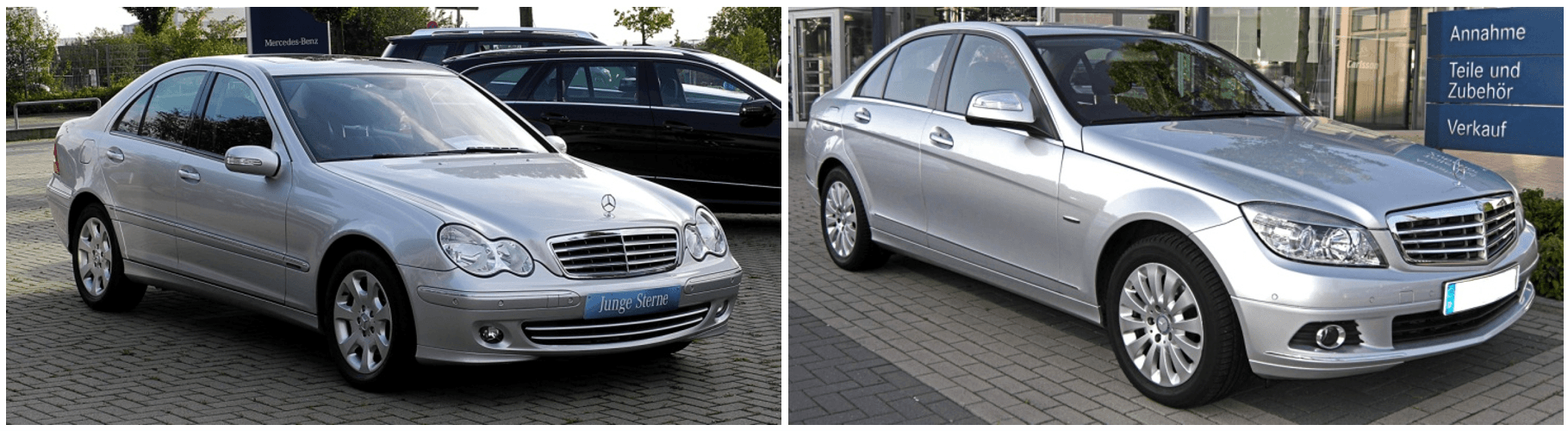

W203 vs W204. Source: Wikimedia Commons, Wikimedia Commons
The early‑2000s C‑Class reflected Daimler‑Chrysler’s cost-cutting, using cheaper materials that affected reliability. After the split, Mercedes launched the W204 in 2007, intentionally over-engineering it to reclaim the brand’s reputation. It went on to become one of the most dependable and successful compact luxury sedans of its time.
Just as Mercedes rediscovered discipline after a period of drift, Europe now faces its own moment of reckoning.
Europe today feels weighed down by the legacy of the past two decades: high taxes, stagnant wages, welfare systems that have grown too heavy to sustain growth, and uncontrolled migration flows that have created cultural and integration challenges.
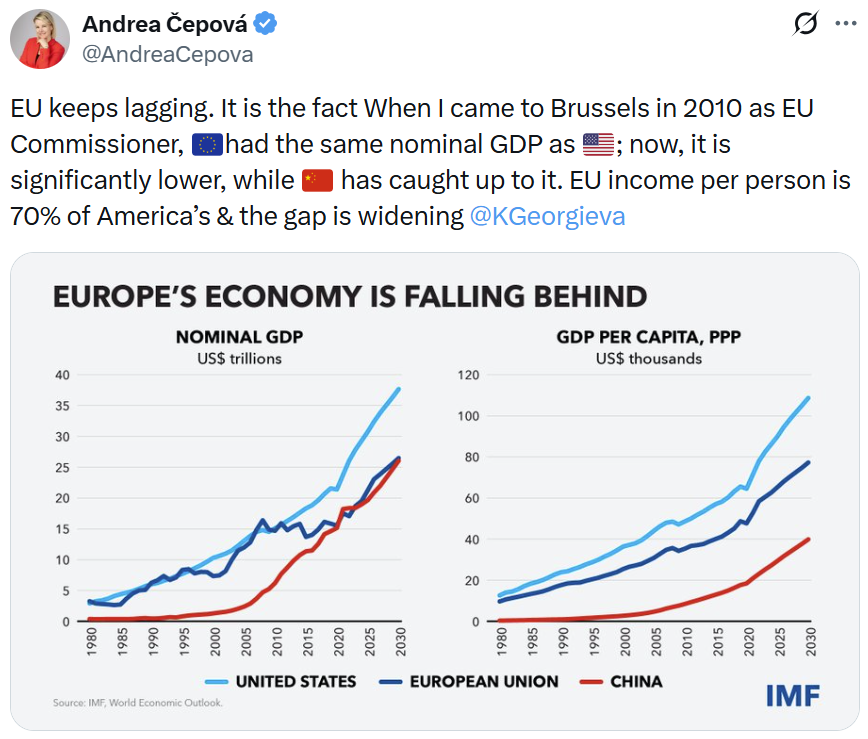

Source: Andrea Cepova / X
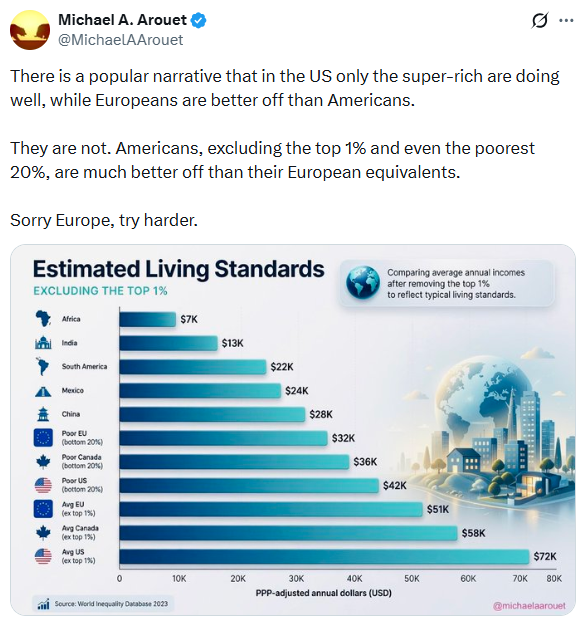
For the average European, the choices made have led to even starker outcomes:

But could years of underperformance finally push European leaders to cut taxes and refocus immigration? My view is that the bureaucratic EU can’t be relied upon to achieve much beyond dealing with illegal immigration. It has recently streamlined and improved deportation provisions for illegal entrants, after many years.
Because major decisions require consensus among 27 member states, the EU struggles to act quickly or push through ambitious reforms. It’s up to individual member states to drive their own economies. We have seen this with Italy (and others) offering favourable tax programmes to attract the wealthy.
Still, there are some tailwinds in Europe’s favour right now:
- Reshoring and nearshoring — Europe benefits from geopolitical diversification away from China.
- Industrial capacity revival — Germany, Poland, and the Czech Republic are seeing renewed manufacturing investment.
- E‑commerce expansion — logistics, warehousing, and last‑mile infrastructure are booming.
Ultimately, I believe in Europe. Through plagues and wars, it has adapted, endured, and prospered across centuries.
But growth is not going to come easy today. The EU is escalating trade defence actions against China at a record pace, especially in electric vehicles and industrial goods.
China is retaliating. Brussels now expects a full-spectrum trade confrontation, unless Beijing compromises — which analysts say is unlikely.
This risks raising input costs for European manufacturers at the very moment they are trying to regain competitiveness.
Europe has suffered from years of missteps. But the pressure of underperformance is forcing a rethink. Member states are cutting taxes, competing for capital, and resetting policies with an eye on America’s growth model.
Periods of policy reset often create asymmetric opportunities — especially in sectors tied to industrial revival and logistics, where physical assets become strategic again.
Where policy shifts, capital follows.
One sector stands to benefit more than most — and at the forefront of this shift is a large European real estate business…
Your first Quantum Wealth Report is waiting for you: