

People are afraid of money.
They’re afraid to spend it. They’re afraid of running out. They’re afraid of the risks of investing it.
So when some politician says, ‘Let us lock up 12% of the money you earn every year until you’re 65,’ they feel safe.
I am, of course, referring to the National Party’s proposal to make KiwiSaver compulsory and to lift contributions to a combined 12% by 2032.
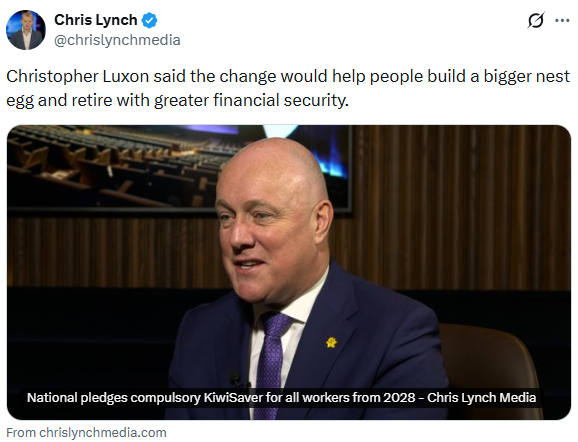

Source: Chris Lynch / X
The reason? To match Australia, apparently. I was far more comfortable with the idea when wily Winston proposed 10%, with savers and employers receiving tax cuts to cover the increases.
Salaries are lower in New Zealand than in Australia. I’m already hearing about ‘salary sacrifice’ and ‘total remuneration’ packages.
At the moment, default KiwiSaver contributions are set at 3.5%. (Your employer contributes 3.5%, and you have 3.5% deducted from your pay packet.)
Some employers are now packaging the combined deductions. So if your total remuneration package was to be $100,000 — you end up with just $93,000 in hand. Under 12% KiwiSaver, that could be just $88,000.
Is this a safe and effective path to a comfortable retirement?
Not so fast. Those of us who’ve been watching the money world for years see some hooks.
It’s your money!
When the government controls what you do with it, we’re on a slippery slope. Australia is already facing economic fragmentation, with growing numbers of Kiwis now moving home.
It paves the way for a manipulative raid on Super.
Yes, once average KiwiSaver balances get up there, it’s much easier to means-test Super as they do across the Tasman.
Universal Super is a cashback deal that stops governments from wasting money.
They say it’s becoming unaffordable. It’s about $25bn per year now — forecast to rise to $31bn by 2030. But the Taxpayers’ Union found Wellington could save $59bn by eliminating waste — though this did include lifting the age of eligibility and linking it to life expectancy.
Younger households will have less money. Less to buy a home. Less to have kids. Less to raise a family.
Like other countries with heavy raids on pay packets — you’ll get failure to launch. Why are there so many 40-year-old Italian guys still living with their parents? It’s not just for the meatballs.
Could some investors do better than KiwiSaver?
A family close to Wealth Morning had to contribute 25% a year in a similar scheme in Asia. They finally got the money out when moving to New Zealand. Looking back, they feel there was a lot they could have done with that money.
The real beneficiaries will be the banks (it’ll take longer to repay mortgages) and the KiwiSaver funds.
But many of these funds are relatively passive. They’re not particularly defensive. What if there’s a meltdown just before a large cohort wants to retire? In our Wholesale Managed Accounts, we focus on the downside — which is why in March and April, when indexes plummeted on Iran, our oil positions provided some valuable offset.
All of this comes back to the age-old dilemma:
How do you grow your wealth ahead of inflation?
Once, money was like water. It disappeared very quickly.
In the 18th century, money was a real mix. Precious metal coins, paper bills of credit, and even commodity substitutes like tobacco. Some were still using coins from the defunct Holy Roman Empire.
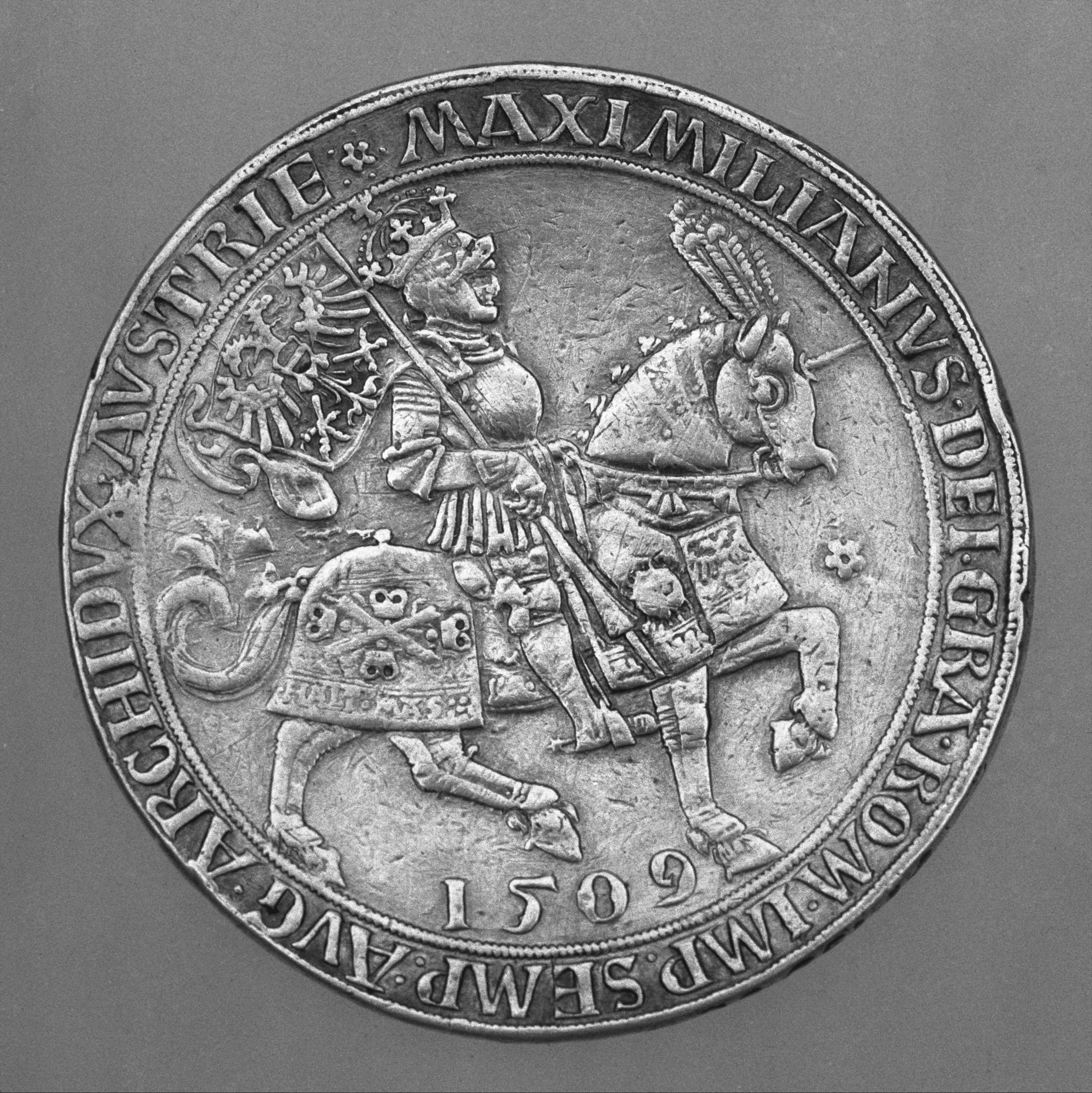

Maximilian I coin. Source: Wikimedia Commons
If you had money, your job was to get rid of it as quickly as possible. The only real stores of value were land or gold.
Interestingly, 18th-century money was decentralised. It was produced at multiple points across the economy. Eventually, it failed.
I see parallels with cryptocurrency. It’s also decentralised. And of course, it’s meant to circumvent governments. Yet when people have their wallets hacked, who do they contact? The police or the FBI.
Modern money is more like a giant ice cube. It melts away slowly at 3% p.a. (or a bit more) dictated by central banks. There’s a view that it can be ‘saved for a rainy day’. Well, you’d better hope that rainy day is not too far away.
Instead, the real challenge with modern money is to beat inflation. It means growing your wealth, protecting your nest egg, and ideally living well with good income along the way.
This is why, over decades of watching markets, I’ve come to see resilience in quality shares.
Over time, companies raise prices. So their revenues, earnings, and dividends grow. That inflation pass-through is built into their cash flows.
Property doesn’t always behave the same way — which many Kiwis are now cottoning on to. Rents can lag, and outgoings often rise faster than inflation. Leverage, especially with shifting interest rates, adds uncertainty.
Over the very long run, these dynamics have played out across asset classes like this:
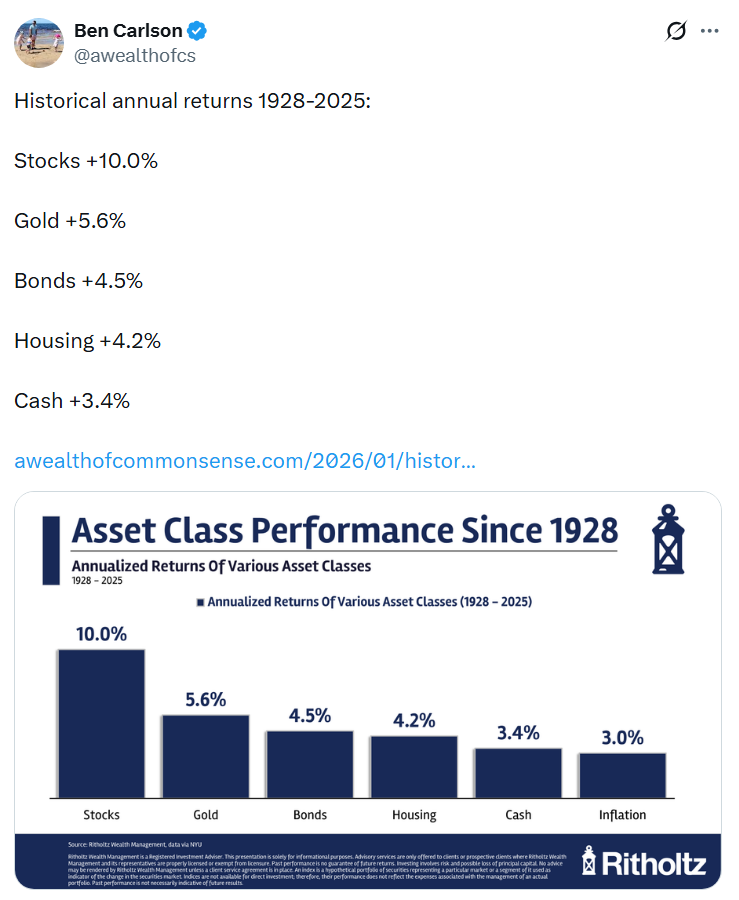

Source: Ben Carlson / X
Past performance does not reflect the future.
Are you looking for someone to stand up for you?

Our Wholesale Managed Accounts Strategy focuses on income and growth positions for financial freedom.
We’re currently offering a discussion to Wealth Morning readers who may be Eligible or Wholesale Investors.
Do register your expression of interest here.
We look forward to speaking with you.
Regards,
Simon Angelo
Editor, Wealth Morning
(This article is the author’s personal opinion and commentary only. It is general in nature and should not be construed as any financial or investment advice. Please contact a licensed Financial Advice Provider to discuss your personal situation. Wealth Morning offers Managed Account Services for Wholesale or Eligible investors as defined in the Financial Markets Conduct Act 2013.)