

So we begin the countdown to the election.
I need to be frank with you. Some of our readers and clients have expressed real dismay at the policies emerging from the Left. They’re far more radical than anything we’ve seen in decades.
It’s not just public transport or free doctors’ visits for all. If you look across the potential coalition partners, there are capital gains taxes, wealth taxes, inheritance taxes, and even land taxes.
These risks are painting a picture that is deeply unsettling for anyone who has worked hard, saved diligently, or built a business from scratch.
New Zealand is already prone to capital flight and brain drain. With these policies, I’m quite sure the economy would go into a shock it may never recover from.
And then there’s your personal freedom.
When I was growing up in the 1980s, there was one British leader who warned us. Her words are more pertinent than ever:
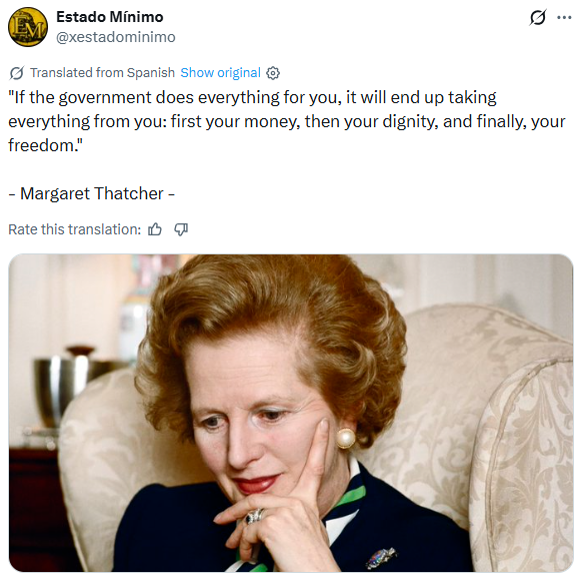

Source: Estado Minimo / X
It’s a dangerous time indeed!
Yet Kiwi investors are grappling not only with shifting politics, but also with shifting ground beneath their feet.
We’re fighting for freedom and opportunity on two fronts.
Building wealth in New Zealand is changing
The last property cycle saw rising values from the late 1990s until the peak of 2021.
Since 2021, in real terms, values have fallen around 35%. There are many theories behind the crash.
One townhouse developer on the North Shore told me that, at one point, 70% of his sales were to buyers from China. That has now dried up. His other strand of local, often first-home buyers in the $100,000–$150,000 income band, have been moving to Australia.
But the most likely reason is one that eventually comes to all markets. Property had defied fundamentals and reached ‘tulip mania’ proportions. We predicted a fall was coming a few years ago and were roundly rebutted by some readers.
Yet by any measure of rental yield or income affordability, the Kiwi housing market has been out of step for a very long time.
Unlike sharemarkets, which can bounce back with liquidity and global capital flows, housing markets are structural. They are slow and sticky. They are illiquid.
History shows this clearly.
In the early 1970s, my parents moved to London. Family members told them to secure a property before leaving. Unfortunately, they didn’t follow this advice. When returning in 1974, home prices had soared. They ended up building in a small Taranaki town.
Then, as now, the bubble eventually deflated.
After peaking in late 1975, home prices entered a long period of malaise. In real terms, they didn’t return to their 1975 peak until 1995.
A similar phenomenon was seen in New York following the Great Depression. Between 1929 and 1932, real estate values in Manhattan fell 67% from peak to trough. Prices wouldn’t fully recover until 1960.
This is why so many Kiwi investors now feel trapped. Their wealth is tied up in an asset that is both illiquid and politically exposed. They can’t move it easily. They can’t diversify quickly. And they can’t ignore the policy risks gathering on the horizon.
Call me biased, but I like the liquidity of stock markets
From the Depression, to the GFC, to Covid, stock markets have flexed back within a few years — and in the case of Covid, in just under six months.
Sometimes these shocks and drawdowns have offered remarkable buying opportunities. They reward those who stay calm when others panic.
Now some investors believe the best way to gain exposure to stock market returns is via an index, like the S&P 500.
There are a couple of drawbacks with this:
- The S&P 500 has become highly concentrated, with a handful of tech names making up the bulk of the index. This means more exposure to risk than many realise.
- The current dividend yield is around 1%. Investors who need money to live on will probably have to sell down their stake. Not ideal in volatile markets.
Personally, I prefer passive income from stronger yields so I don’t have to touch the golden goose
Let me give you an example of how this can work.
April 2024. I observed the Italian economy improving under the stable leadership of Giorgia Meloni. Yes, I know — the things some people watch. Still, the banks seemed very cheap.
We settled on taking a stake in UniCredit [BIT:UCG] in April 2024. It was the country’s second-largest bank. I particularly liked the management and aggressive growth strategy.
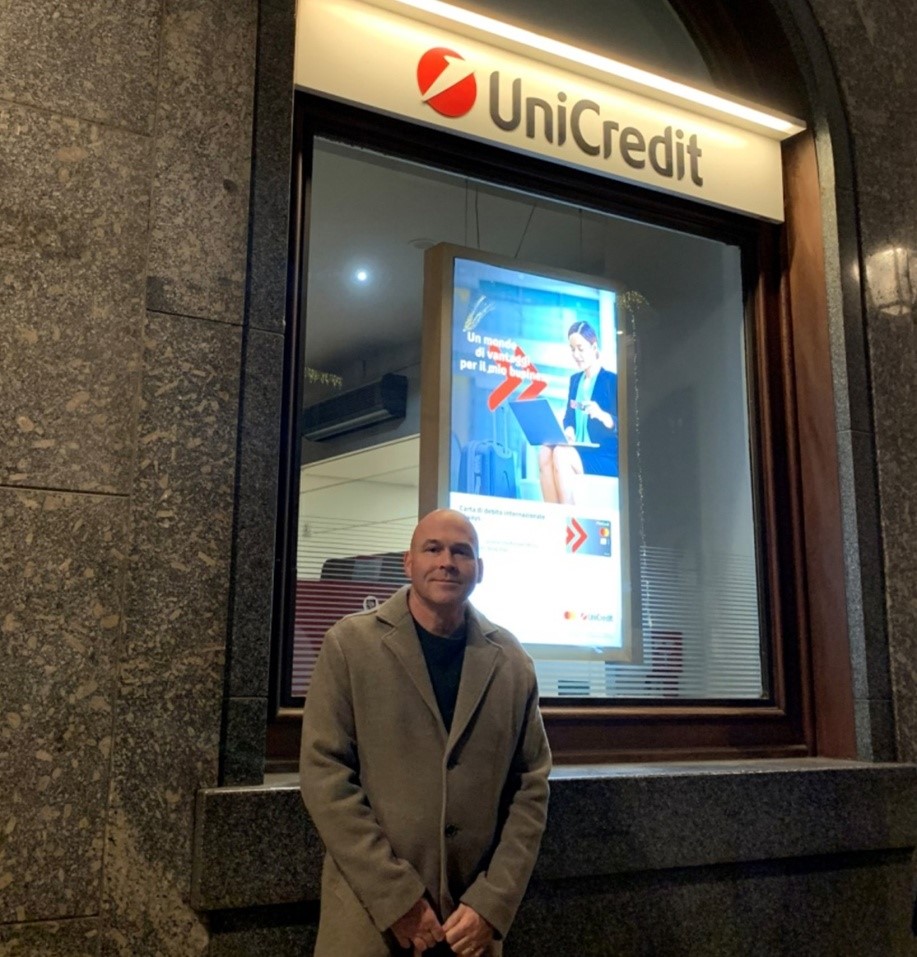

Source: Author
Here’s how this panned out:
- Average entry price from April 2024: ~€35.30
- Dividend yield at purchase: ~5%
- Price as at 15 June 2026: €73.30
- Dividend yield as at 15 June 2026: 4.3%
- Capital gain (over 26 months): ~108%
- Actual yield on cost: ~8.9%
In my own portfolios, I used a little leverage to amplify the position. And yes, there was foreign exchange risk, Italian bank tax, potential tax deductions, and so forth.
But, overall, this sort of position now produces meaningful income, contributing to financial freedom. And the bank is still expanding, attempting to take over a German lender and growing its earnings.
This is the kind of opportunity that liquid markets can offer: the ability to move quickly, take advantage of mispricing, and build income streams that aren’t trapped in illiquid assets.
Now, what about that election?
A coalition of the Left could be more radical than anything we’ve seen before.
My first thought was about Labour’s plan to levy a capital gains tax on property in exchange for a few free doctor visits — for which the average Kiwi doctor already seems far too busy anyway.
But once a capital gains tax is in place, it rarely stays confined to one asset class. It tends to spread. And the Kiwi taxpayer may find themselves trading away a slice of their life’s work in exchange for GST off asparagus, or some other meritless benefit.
Then there is the Greens’ proposal for a wealth tax. And the strangely rising Opportunities Party, who want to tax land at 1.75%. The effect this could have on the availability of rentals or tourist accommodation is chilling.


Source: Green Party / Facebook
I’m quite sure some of these policies would throw a wrecking ball through the small New Zealand economy.
If you have all your money tied up in property, you could be at risk.
But this is where a global share portfolio comes into its own.
It’s mobile. It’s liquid. It’s diversified across jurisdictions, industries, and political systems. It’s not trapped behind a border or dependent on the whims of a single government.
For some, leaving New Zealand might be an option
A permanent move, retaining no ‘permanent place of abode’, could also mean ending tax residency. And around the world, there are countries actively competing for new residents with passive income. They want capital. They want skills. They want retirees and investors who bring stability and spending power.
On the subject of Italy, that provides just one example: Italy offers a special 7% flat tax regime for non-Italians who relocate to a qualifying town in the south with fewer than 20,000 residents.
For the first 10 years, all foreign-sourced income — including portfolio income, dividends, interest, and pensions — is taxed at a flat 7%, with no additional wealth or inheritance taxes.
The aim is to revitalise smaller communities while giving newcomers a highly competitive, low-tax landing spot.
There is global opportunity. New Zealand should compete. Not fall to the politics of envy. Nonetheless, smart investors will see options no matter what happens.

Global diversification isn’t just smart — it might be essential in a shifting political landscape.
Our Wholesale Managed Accounts Strategy focuses on income and growth positions for financial freedom.
We are currently offering a free consultation to Wealth Morning readers who are Eligible or Wholesale Investors.
Do request your free consultation here.
I look forward to speaking with you.
Regards,
Simon Angelo
Editor, Wealth Morning
(This article is the author’s personal opinion and commentary only. It is general in nature and should not be construed as any financial or investment advice. Please contact a licensed Financial Advice Provider to discuss your personal situation. Tax outcomes depend on individual circumstances and may change. Seek professional advice before making decisions. Wealth Morning offers Managed Account Services for Wholesale or Eligible investors as defined in the Financial Markets Conduct Act 2013.)