

‘I don’t pay any attention to what economists say, frankly. Well, think about it. I mean, you have all of these economists with 160 IQs, spending their lives studying it. Can you name me one super-wealthy economist who’s ever made money out of securities?’
—Warren Buffett
Ah, yes. Economists. They’re the modern prophets of our time.
Occasionally, you will see one appear in the news.
He will be considered an expert. Someone with credentials. Someone with intelligence.
So he will be given generous airtime. He will be allowed to talk. And talk. And then talk some more. He will roll out complex models. Formulas. Statistics.
But what he says is less important than the tone of his language. You see, his tone will almost always be negative. Pessimistic. Apocalyptic, even.
He will explain why the market is entering a full-blown crisis. Totally unprecedented. And his expert opinion? Well, the market is done for. It will be crushed by the weight of this looming catastrophe. There’s no way in hell we can possibly recover from this.
This economist will be so certain in his view. So firm in his conviction. And, of course, he will have the stats to back it up.
How can regular folks like us ever doubt him? After all, he is the expert, isn’t he? Someone with credentials. Someone with intelligence.
His prediction must be the truth.
Right? Right?
Well, wrong.
Just take a look at these predictions from almost three decades ago…
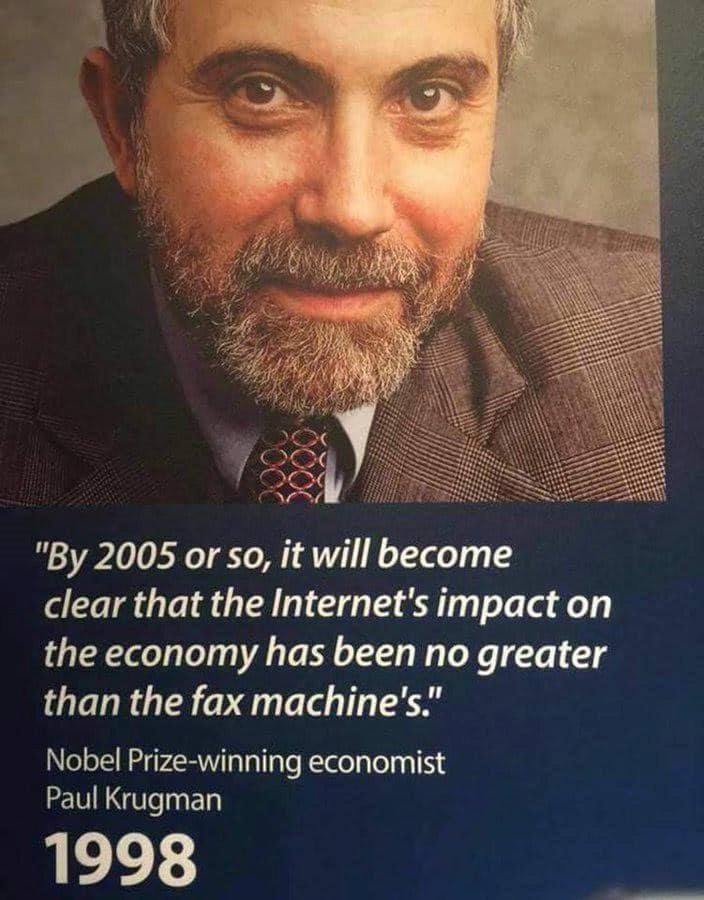

Source: Edgar Santana / Facebook
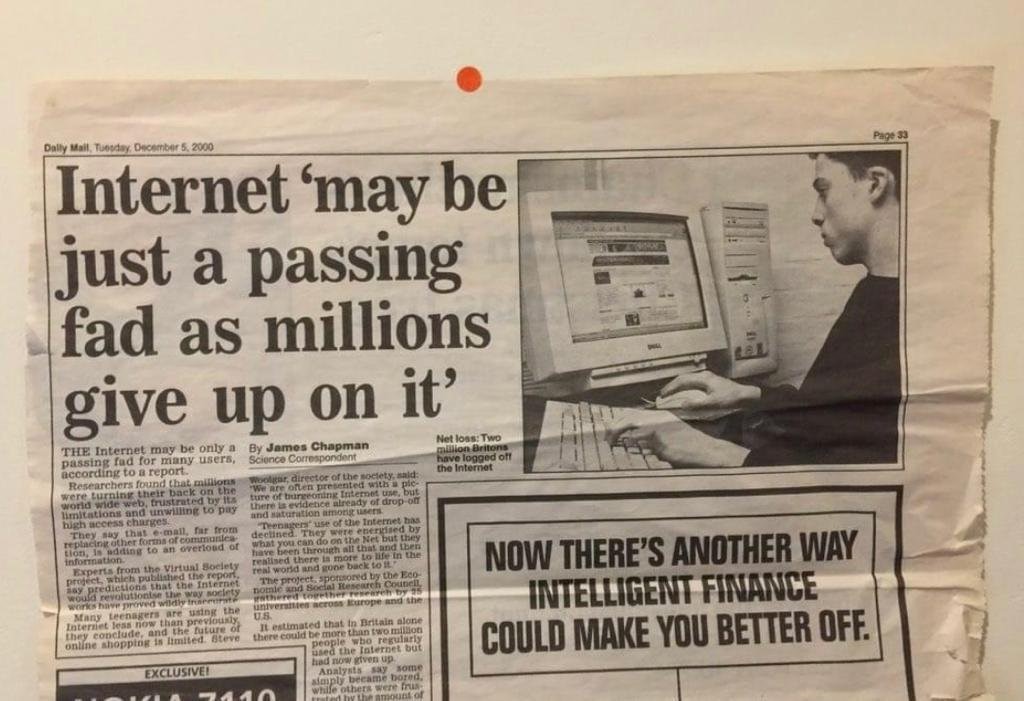

Source: Poorly Aged Stuff / X
Embarrassing, huh? These claims certainly haven’t aged well.
- Now, in hindsight, one thing is crystal clear: the internet’s impact on the economy is much greater than the fax machine ever was.
- In fact, as we speak, over 6 billion people are currently using the internet. That’s over 73% of the world’s population. This is an incredible leap forward. One that even the smartest economists appear to have missed.
But watch out. Lousy predictions aren’t just limited to the late 1990s or early 2000s. They have been happening more recently as well.
- I want to give you snapshots of four major fear events that have happened over the past six years. Just take a look at how the market reacted to them…
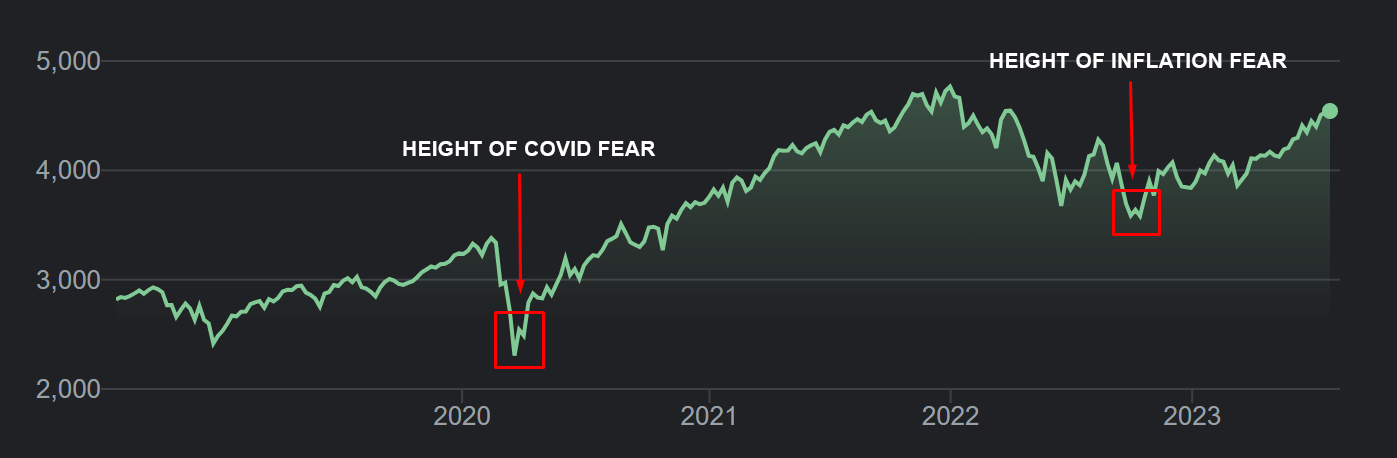

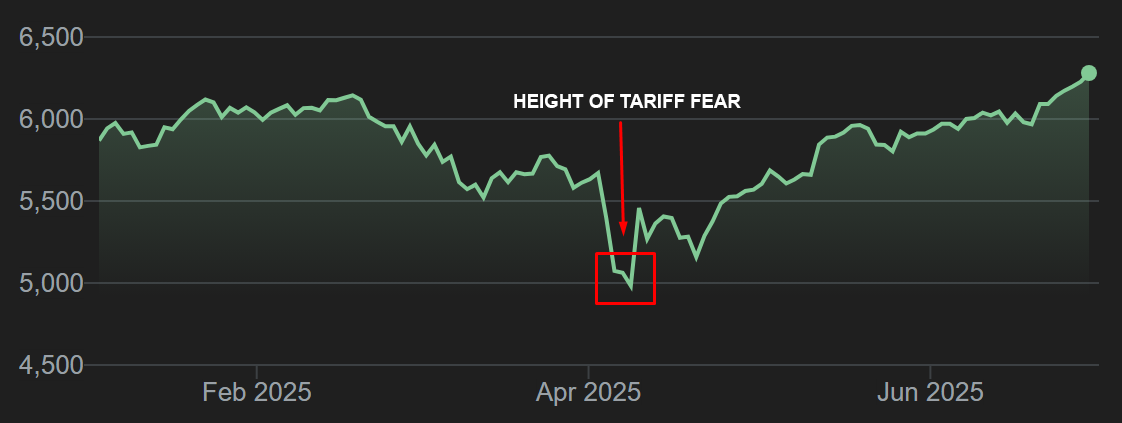

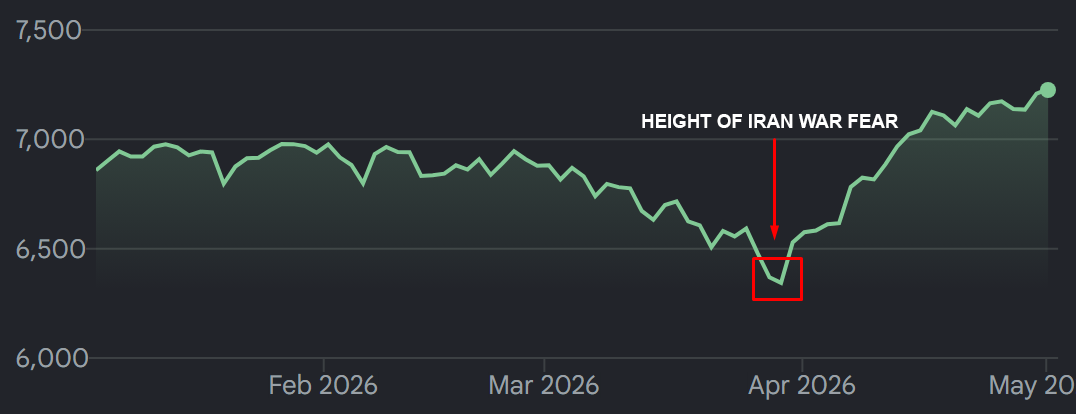

Source: Google Finance
Covid. Inflation. Tariffs. Iran. When these events happened, they gave us scary headlines. We couldn’t help but doomscroll, feeling anxious about the future.
- That’s when economists appeared in our newsfeeds. Jostling for their 15 seconds of fame. Each and every time, they did what they did best. Predicting a collapse. A breakdown. A disintegration.
- Each and every time, they were wrong. The market didn’t fall over and die. Instead, it bounced back. Strengthening. Powering forward.
- For example, since the depths of the pandemic, the S&P 500 is up over 200%. The world has adapted. The world has moved on. And here’s the curious thing: we got an outcome that’s the total opposite of what the economists said would happen. Imagine that.

Source: Morgan Housel / X
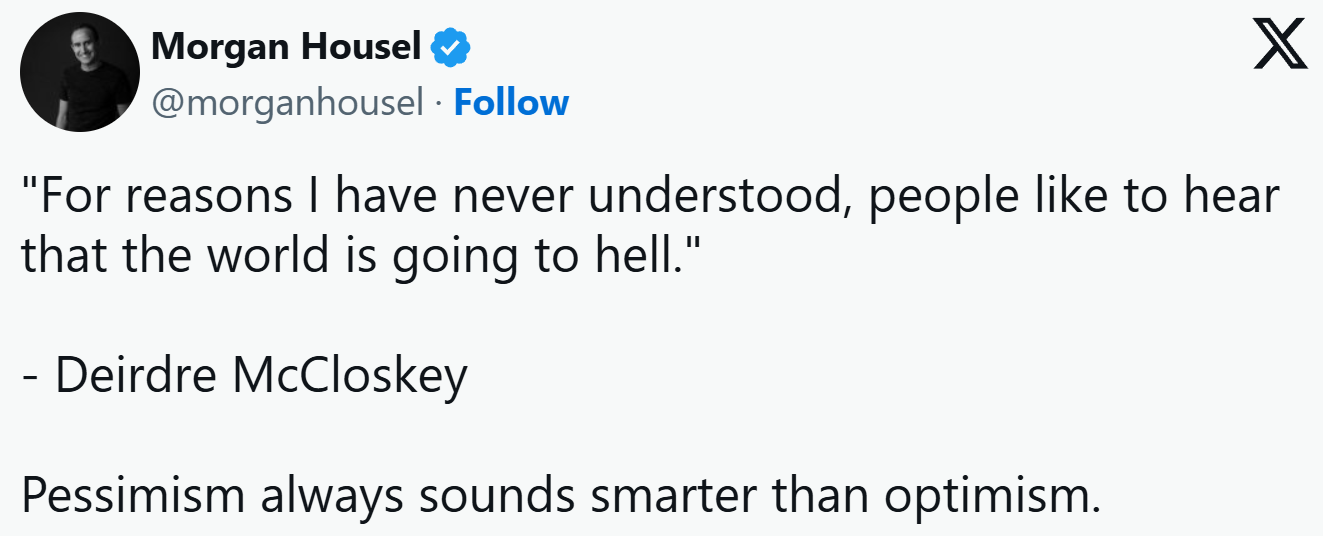
Of course, economists are professional pessimists. They get paid to think about the worst-case scenarios. And the scarier their prophecies are, the more airtime they get.
- But if you want to be an investor, you actually need to go in the opposite direction. You need to be a rational optimist.
- You understand that bad things do happen. Wars. Pandemics. Recessions. But you also understand something else: humanity has a long track record of solving problems. Adapting to pressure. Coming out stronger on the other side.
- I think this is the part that economists often miss. They can model the crisis. But they can’t model the recovery. They can measure the damage. But they can’t measure the resilience. They can calculate the downside. But they can’t calculate the sheer stubbornness of people who refuse to give up.
- This is why their pessimistic predictions so often fail.


Source: Peter Mallouk / X
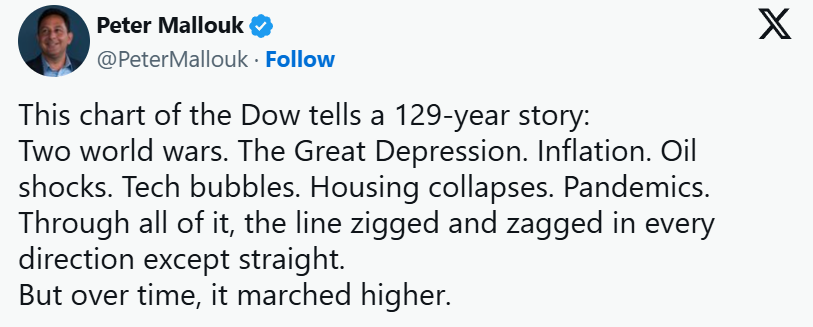
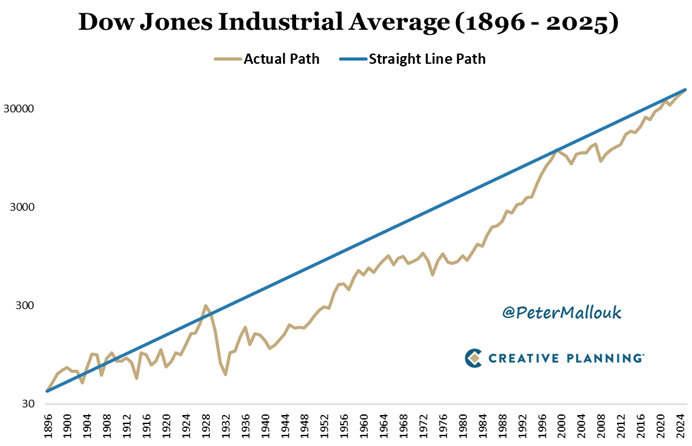
Let’s face it: the experts will tell you about all the ways that things might go wrong. But they won’t tell you about all the ways that things might go right.
- When supply chains break, we find new routes. When energy prices spike, we discover new efficiencies. When a once-in-a-lifetime pandemic hits, we learn how to run businesses from home.
- The market isn’t a sterile lab experiment. It is a living, breathing reflection of the human spirit. Pushing on despite doubt. Despite fear. Despite turbulence.
- I can’t help but reflect on the actions of founders. Entrepreneurs. Engineers. All of them trying to improve and innovate. Fixing problems. Delivering solutions. Powering forward with courage.
- Indeed, that’s how the market works. It’s the sum total of their drive and determination.
So the next time you see an economist appear on your screen, take a deep breath. Remember the fax machine. Remember the ‘passing fad’ of the internet.
- The experts will keep telling you why the future is going to be terrible. But let them. Your job isn’t to outsmart them. It’s to outlast them.
- The zigzags on the chart are just noise. The upward march is the signal. Stay focused on the march. Trust in the tenacity of the human spirit. Leave the pessimism to the people who aren’t making serious money.
Are you looking for someone to stand up for you?
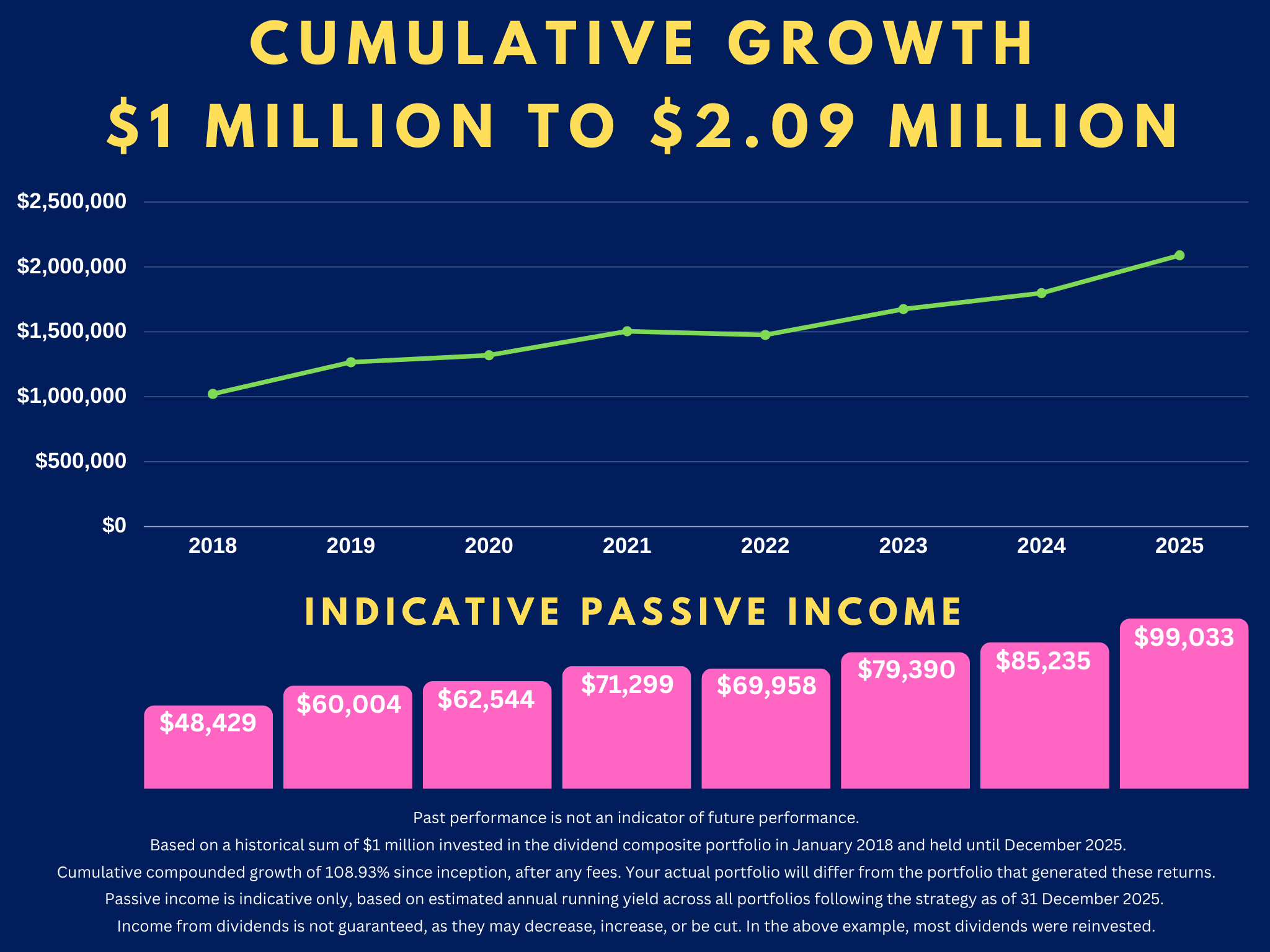

Here at Wealth Morning, we run a night-trading desk. We focus on building up robust and profitable portfolios for our Eligible and Wholesale Clients:
- We seek to stay ahead of the curve and position our clients for income and growth for the next stage of the cycle.
- Are you interested?


Regards,
John Ling
Analyst, Wealth Morning
(This article is the author’s personal opinion and commentary only. It is general in nature and should not be construed as any financial or investment advice. Wealth Morning offers Managed Account Services for Wholesale or Eligible investors as defined in the Financial Markets Conduct Act 2013.)