
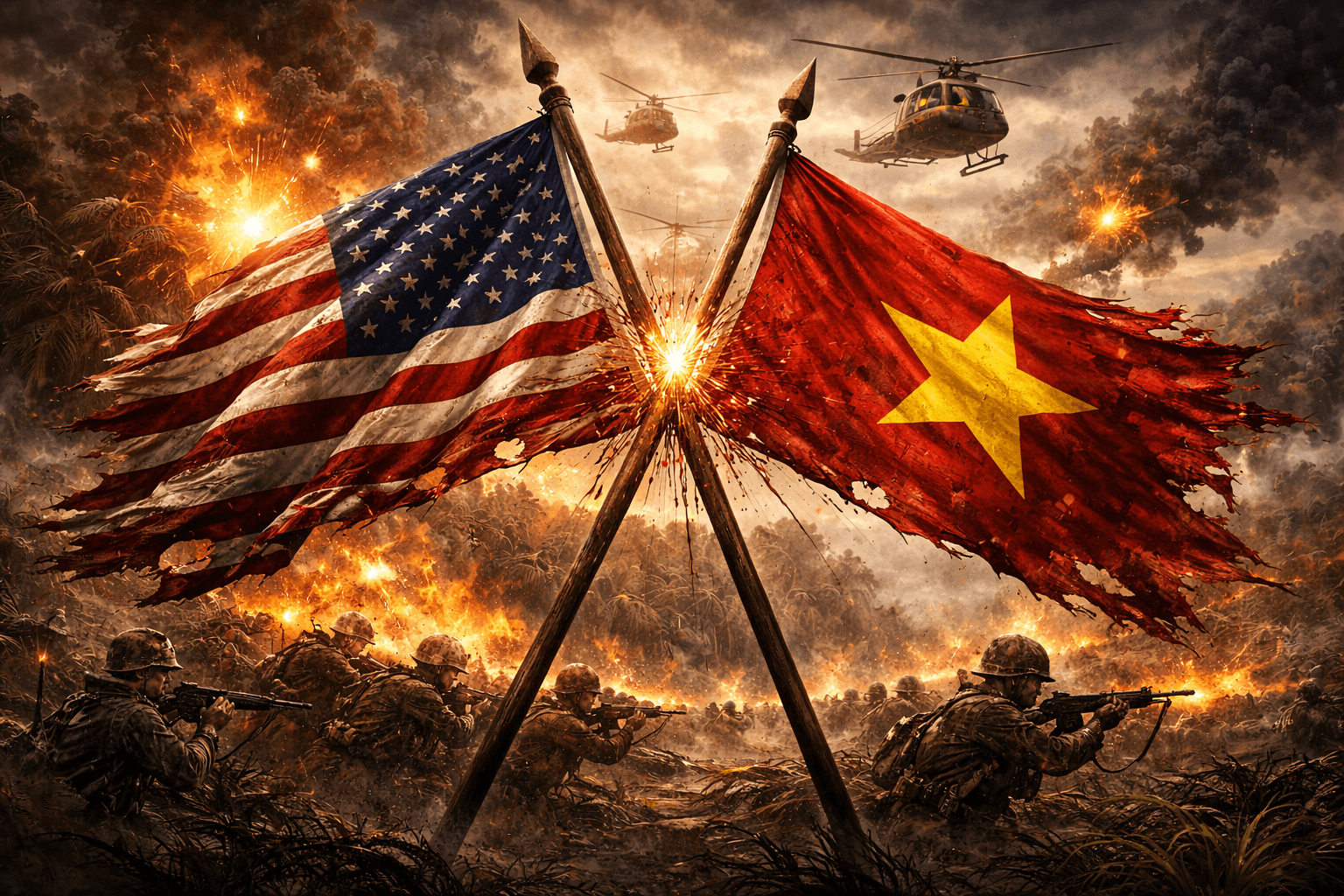
Do you remember what it was like in 1969?
Well, you might recall that the mood was a gloomy one.
The United States was feeling the strain of the Vietnam War.
Despite an escalation of over 500,000 American troops, the North Vietnamese weren’t backing down. In fact, their will to fight appeared to be as strong as ever.
The most obvious sign of this was the Tet Offensive. This was a shocking attack which had taken place in the previous year. The communists carried out a coordinated strike on every major town and city in South Vietnam. This stunned the Americans, shaking their confidence.
By now, all optimism had been lost. It was becoming increasingly clear that the conflict had descended into a quagmire. This was a long, slow grind with no obvious end in sight.
Every day, the casualties mounted.
Every day, the bloody war grew more unpopular.

Source: The Department of Defense / Wikimedia Commons
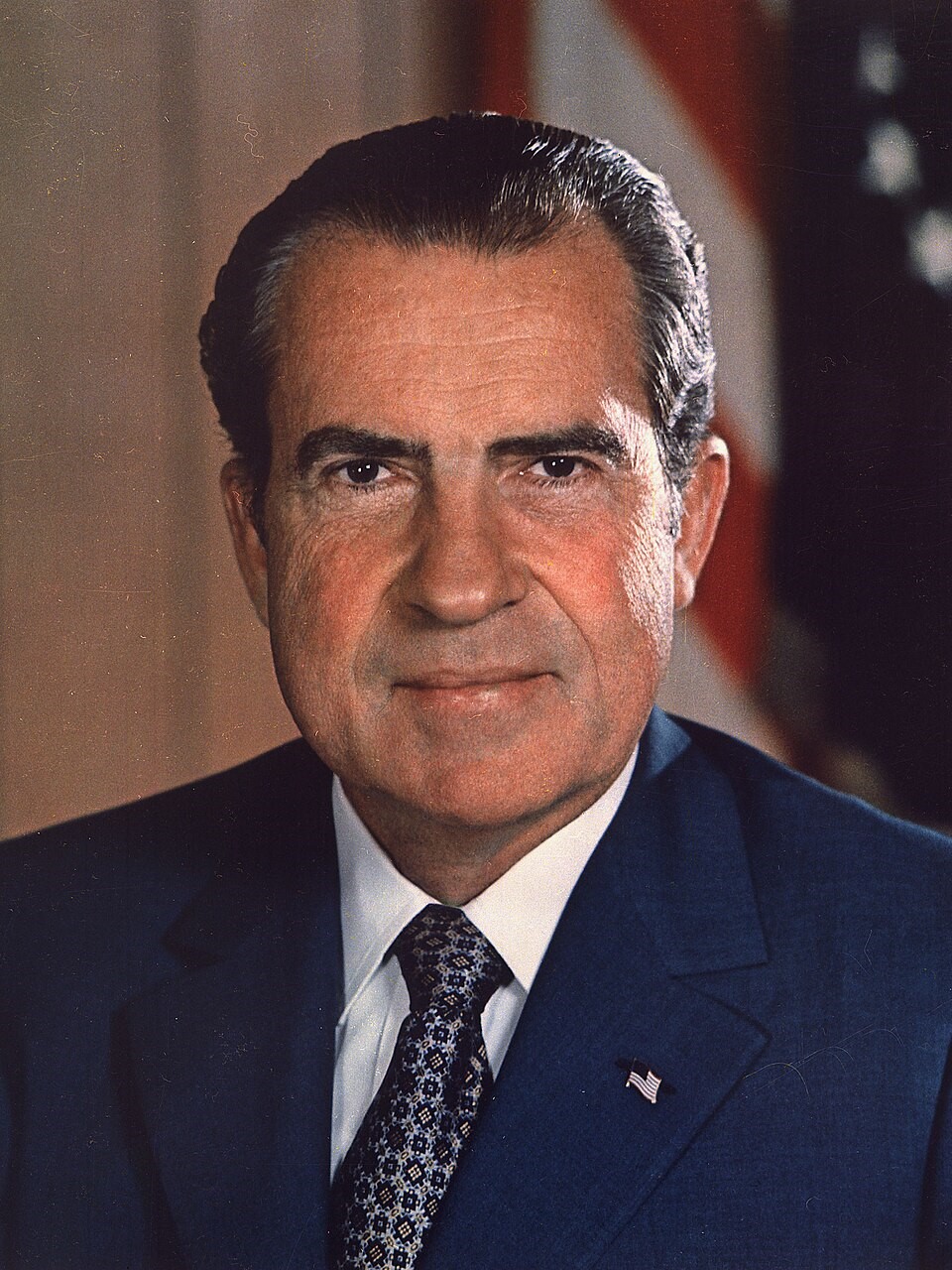
President Richard Nixon needed to find a way to resolve this problem. That’s when he authorised Operation Giant Lance.
- On 27 October 1969, a squadron of B-52 bombers were loaded with nuclear weapons. They took off from Washington. Then they flew over Alaska, in the direction of the Soviet Union.
- They did this for several days, operating in sorties of six bombers at a time. Their flight paths came teasingly close to Soviet airspace — but they were careful enough not to breach it. This served as a nuclear alert. A visible show of force.
- Eventually, on 30 October, Nixon recalled the bombers, ending the nail-biting tension.
It’s extraordinary, isn’t it? Now, here’s what I find remarkable:
- This was a covert operation. The public was kept in the dark, and the details were classified for over three decades. Incredibly enough, we wouldn’t learn about the event until 2002.
- It does raise some questions. Was this an act of madness? Did Nixon push the world to the brink of a nuclear war? And if so, why did he risk it?
R. Haldeman, who served as Nixon’s chief of staff, recalled what the president told him:
‘I call it the Madman Theory, Bob. I want the North Vietnamese to believe I’ve reached the point where I might do anything to stop the war. We’ll just slip the word to them that, “for God’s sake, you know Nixon is obsessed about communism. We can’t restrain him when he’s angry—and he has his hand on the nuclear button” and Ho Chi Minh himself will be in Paris in two days begging for peace.’
So, did Nixon’s gamble actually work? Did he succeed in frightening the communists? Did he do enough to get a favourable deal?
- Well, the short answer is this: we don’t know for sure. Historians continue to debate the effectiveness of Nixon’s strategy.
- But here’s what I find most interesting. In 1973, the United States began pulling troops out of Vietnam. That’s when the communists seized the momentum. They quickly swept over the South. Capturing Saigon by 1975. Unifying the country. What is curious, however, is that they seemed content to stop there. They did not go further.
- So, despite the fear of dominoes falling across Southeast Asia, that worst-case scenario did not happen. In fact, the rest of the region stayed remarkably free of communist control.
It’s clear that the Vietnamese made no attempt to export their brand of guerrilla warfare abroad. But why? Well, I have my own personal theory here:
- When you look at the statistics, you can see how horrible the numbers are. Over 50,000 Americans died during the war. Meanwhile, as many as 3 million Vietnamese may have perished. This was a gut-wrenching affair that exacted a heavy price all around.
- So by the time the communists did prevail, they were exhausted. Perhaps they just wanted to rebuild their country in peace. Perhaps they just wanted to enjoy the hard-won fruits of their victory. They did not have the appetite to export their ideology to the rest of Southeast Asia.
Bruce Willis, the Hollywood actor, has his own perspective on what happened:
‘In some ways I could argue that Vietnam set the stage for the free market and relatively free society in that part of Asia.’
Is his opinion a provocative one? Yeah, you bet. But does he have a point?
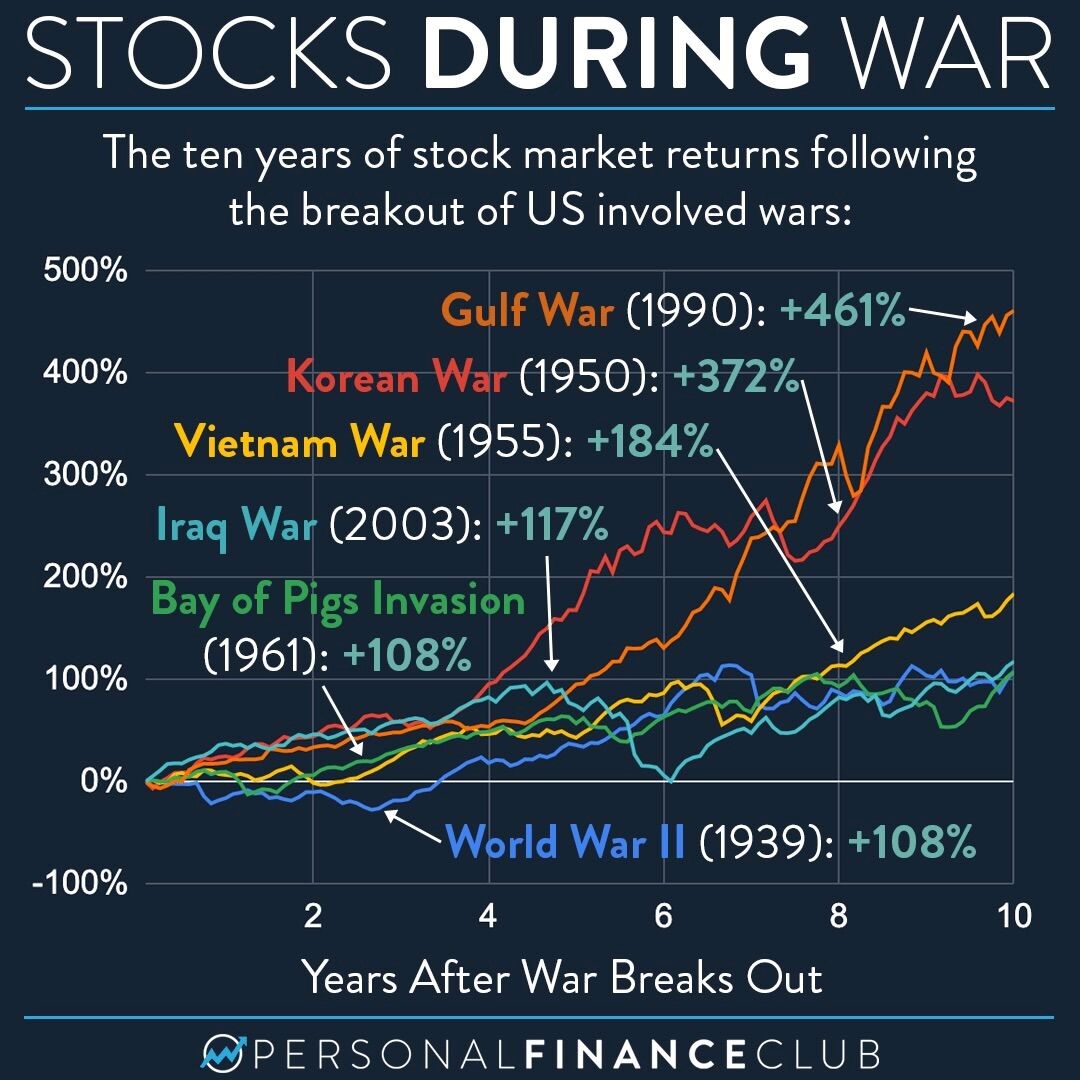
- Well, just think about it: the mainstream media usually portrays America as having lost in Vietnam. Such negative messaging has been repeated so often that it’s become a cliché. Most people take it as the truth.
- But here’s a contrarian thought: what if the opposite is true? What if America actually won? What if America actually did everyone a big favour by fighting the communists to the point of exhaustion? What if a catastrophe in the short-term was necessary to achieve prosperity in the long-term?

Source: Jeremy Schneider / LinkedIn
History has a funny way of revealing its true winners long after the smoke clears and the guns fall silent.
- What looked like an American defeat in 1975 was, in a deeper sense, the exhaustion of a communist ideology that had run out of steam.
- By 1986, Vietnam was on its knees economically. Starvation, isolation, and the sheer cost of the war had forced even the most hardened ideologues to blink. Their nation was bankrupt, and they desperately needed a way out.
- That’s when the Vietnamese government quietly launched Doi Moi — literally, ‘renovation’. This was a set of market-oriented reforms that opened the doors to private business, foreign investment, and global trade.
- Their appetite for guerrilla warfare was eventually replaced by the far more compelling desire: to import Apple iPhones and Toyota Camrys.
This was part of a wider trend unfolding in Southeast Asia, where economic progress spoke louder than bullets and bombs ever could.
- Singapore, already on its way, became the glittering poster child. Meanwhile, Thailand, Malaysia, Indonesia, and the Philippines all rode the same wave — free markets, foreign capital, and a collective decision that ideology was less important than feeding families and building wealth.
- Ultimately, I think something good did come out of the Vietnam War. Yes, it was tragic. Yes, it was brutal. But the aftermath helped prove that central planning can’t compete with the creative spark of free enterprise. The communists got their unified country. But the rest of Southeast Asia got the future.

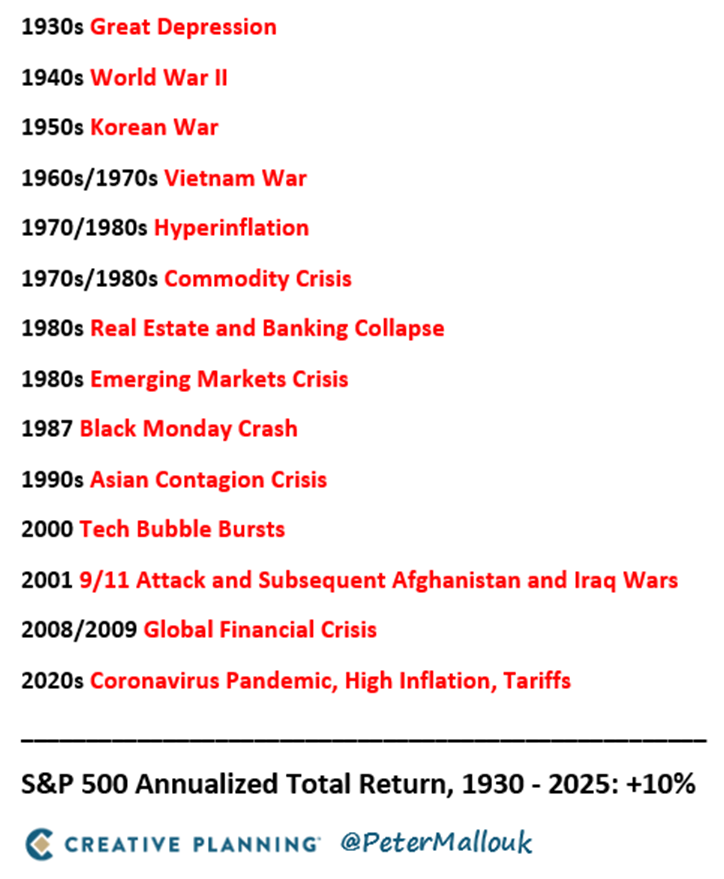

Source: Peter Mallouk / LinkedIn
History keeps showing us that same pattern. An entrepreneurial spirit and a stubborn desire for a better life will win out in the end.
- Wars come. Wars go. But the market’s growth engine is eternal. This means that investors who keep their eyes fixed on that longer journey are usually the ones who end up on the right side of history.
- You shouldn’t sell the future short just because the present looks messy. The future, my friend, really is brighter than you think.
We want to hear from you
Your prosperity is our focus — which is why we are always working hard to uncover new opportunities beyond the radar for you. We’re eager for your feedback:
- If you have enjoyed this article, please consider leaving us a review.
- Let us know what you liked. Let us know what inspired you. Let us know if it’s made you a better investor.


Regards,
John Ling
Analyst, Wealth Morning
(This article is the author’s personal opinion and commentary only. It is general in nature and should not be construed as any financial or investment advice. Wealth Morning offers Managed Account Services for Wholesale or Eligible investors as defined in the Financial Markets Conduct Act 2013.)