
I still remember it like it was yesterday.
It was November 2024.
A friend called me up. His voice sounded stricken on the phone.
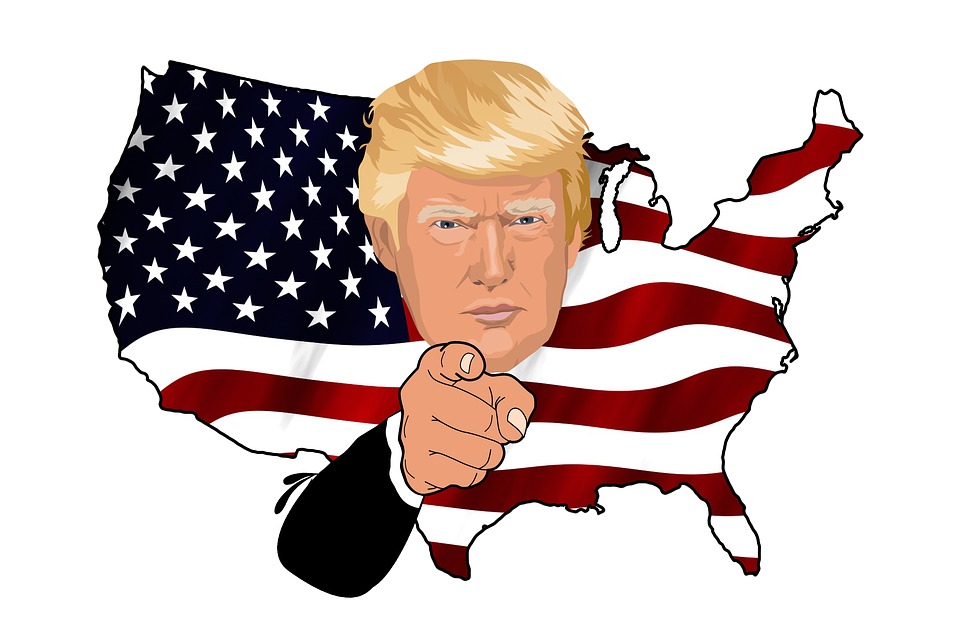
It was looking increasingly clear that Donald Trump was going to return to the White House.
My friend was stunned by this development. It filled him with intense fear. He predicted that global stability would fracture. The economy would crash. We would never recover from this tragedy. It was a new Dark Age.
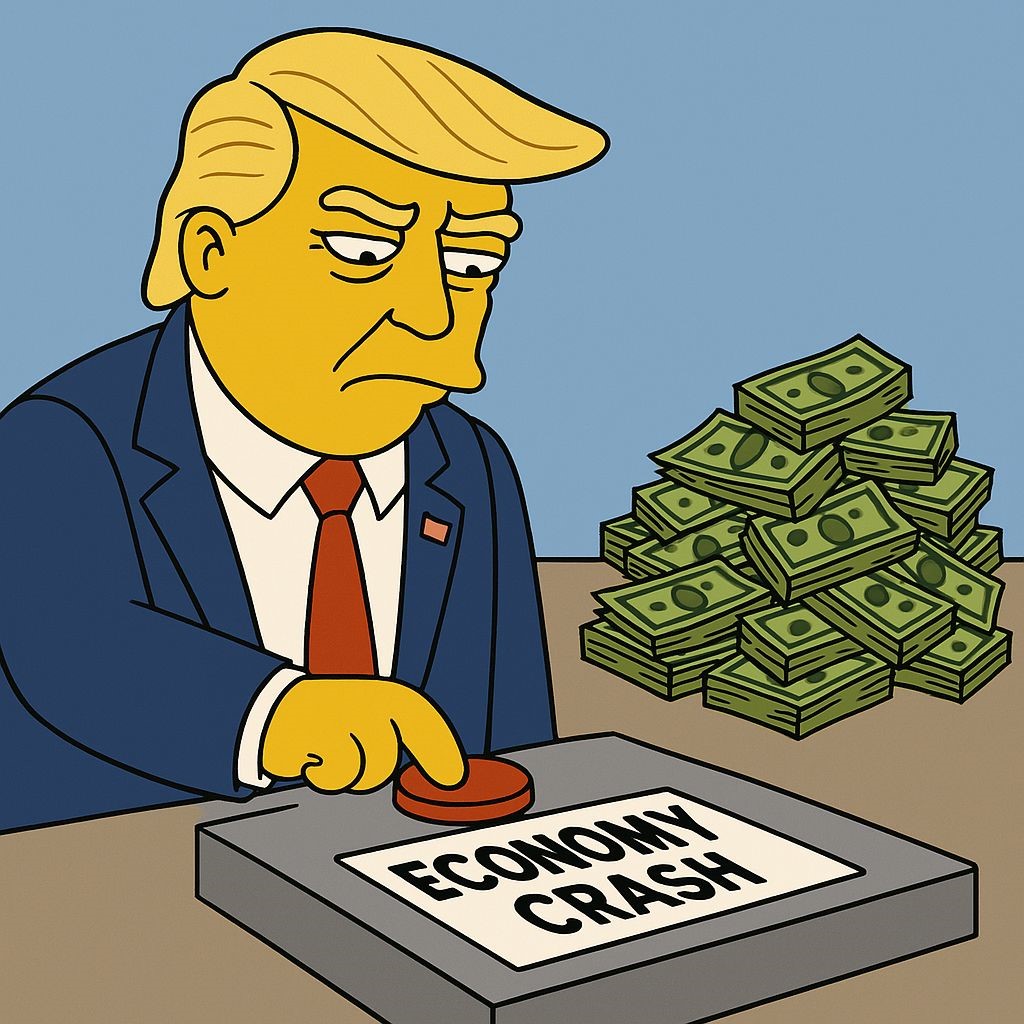

Source: Image generated by OpenAI’s DALL-E
I listened to my friend with empathy. Allowing him to express his frustrations. Allowing him to vent his worries. Eventually, he ran out of things to say.
That’s when I stepped in, gently sharing my honest thoughts with my friend. I said that even though I didn’t know exactly how a new Trump presidency would unfold, I was sure about one thing. Once Trump stepped back into the Oval Office, we would be returning to something that’s historically normal.
I could hear an angry hitch in my friend’s breath. He was surprised at my use of the word ‘normal’. How could anything ever be normal with a guy like Trump?
I shrugged. I said we only needed to look back at our recorded human history. All 5,000 years of it. There was a common pattern here. Present throughout the entirety of our civilisation.
Nations usually looked after their own interests first. They did it aggressively. Through trade. Through war. Through conquest. Everything was done to maximise their own power and prestige. That was normal. That was routine.
But then… suddenly… that pattern was interrupted when the Soviet Union collapsed in 1991. That opened the door to 25 years of globalisation. That’s when we had transnational organisations like the UN trying to enforce wokeness across borders. Universally. Obsessively. With no regard for local sentiments or traditions. That was abnormal.
So, given the weight of history, which was more authentic? Our two-decade experiment with globalism, which only lasted a generation? Or 5,000 years of nationalism, which has lasted countless generations?
Yes, I acknowledged that my friend didn’t like Donald Trump. I acknowledged that a lot of people felt negative about him. They didn’t like his character and outlook.
Nonetheless, Trump was the man of the moment. The historical cycle was already turning. And it was going to bring us full circle. Returning us back to what’s normal.
This wasn’t a question of morality.
This was a question of reality.
So forget about globalism. Say hello to nationalism. It’s coming back in a big way.
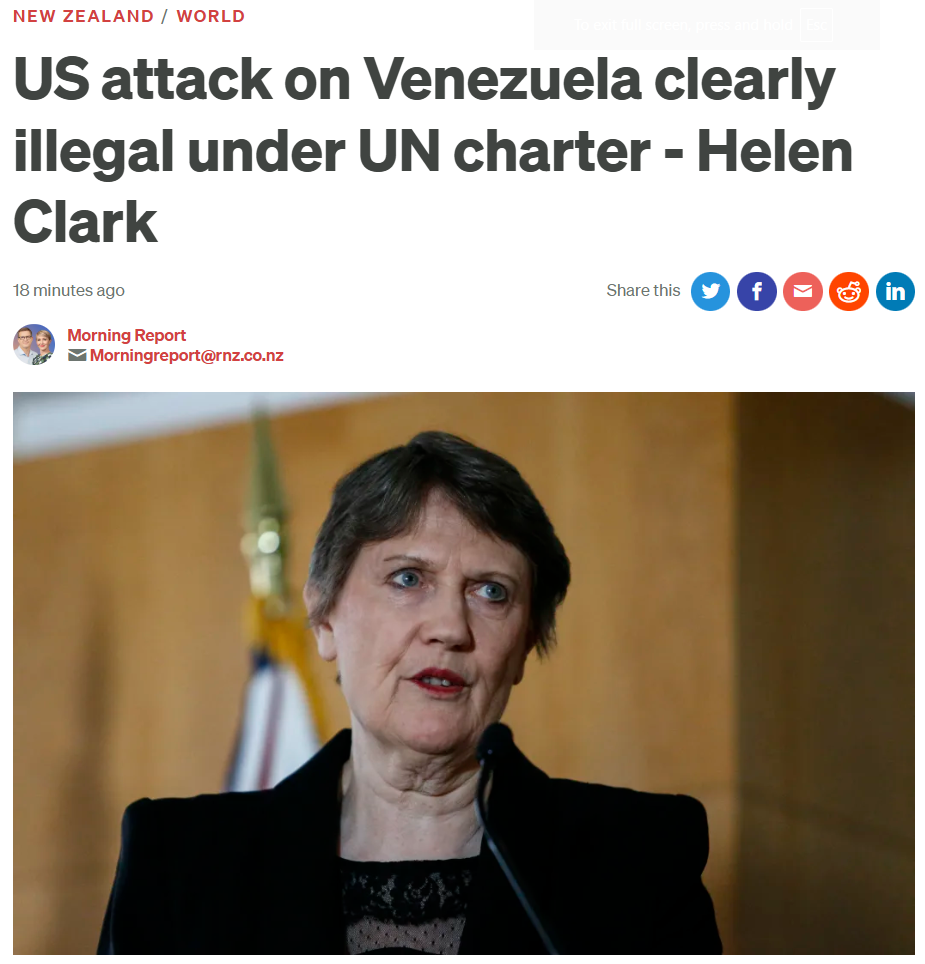

Source: Radio New Zealand
Now, let’s fast-forward to January 2026. Right here. Right now.
- In light of America’s recent police action in Venezuela, my mind has been returning to that conversation I shared with my friend. It feels relevant, especially given what we’re seeing at the moment.
- The globalists are portraying Donald Trump’s executive decision as destabilising. Unhinged. Maybe even immoral.
- They say that he has breached the rules-based order, as laid out by the UN. How can he possibly do this? The global order is sacred. Like a secular religion. Everyone must abide by it. No ifs. No buts.
- They say that Trump is dangerous for going against the norm. He’s behaving like an imperialist. And behaving like an imperialist is always wrong.
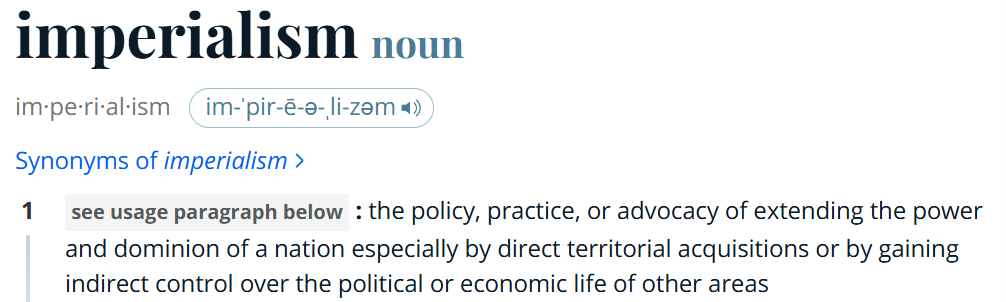

Source: Merriam-Webster Dictionary
But wait. Hold on. Being moralistic is not the same as being realistic. And at a time like this, we could actually benefit from less ideology and more common sense.
- So let me be frank here. China is an imperial power. Russia is an imperial power. And, yes, America is an imperial power as well. To deny this fact is to deny human nature, as well as historical realities.
- Look at what’s playing out internationally. You’ll see that great power competition is what shapes trade routes, supply chains, and energy security. In a world where resources are scarce and every nation is trying to maximise their advantage, imperialism is a natural outcome.
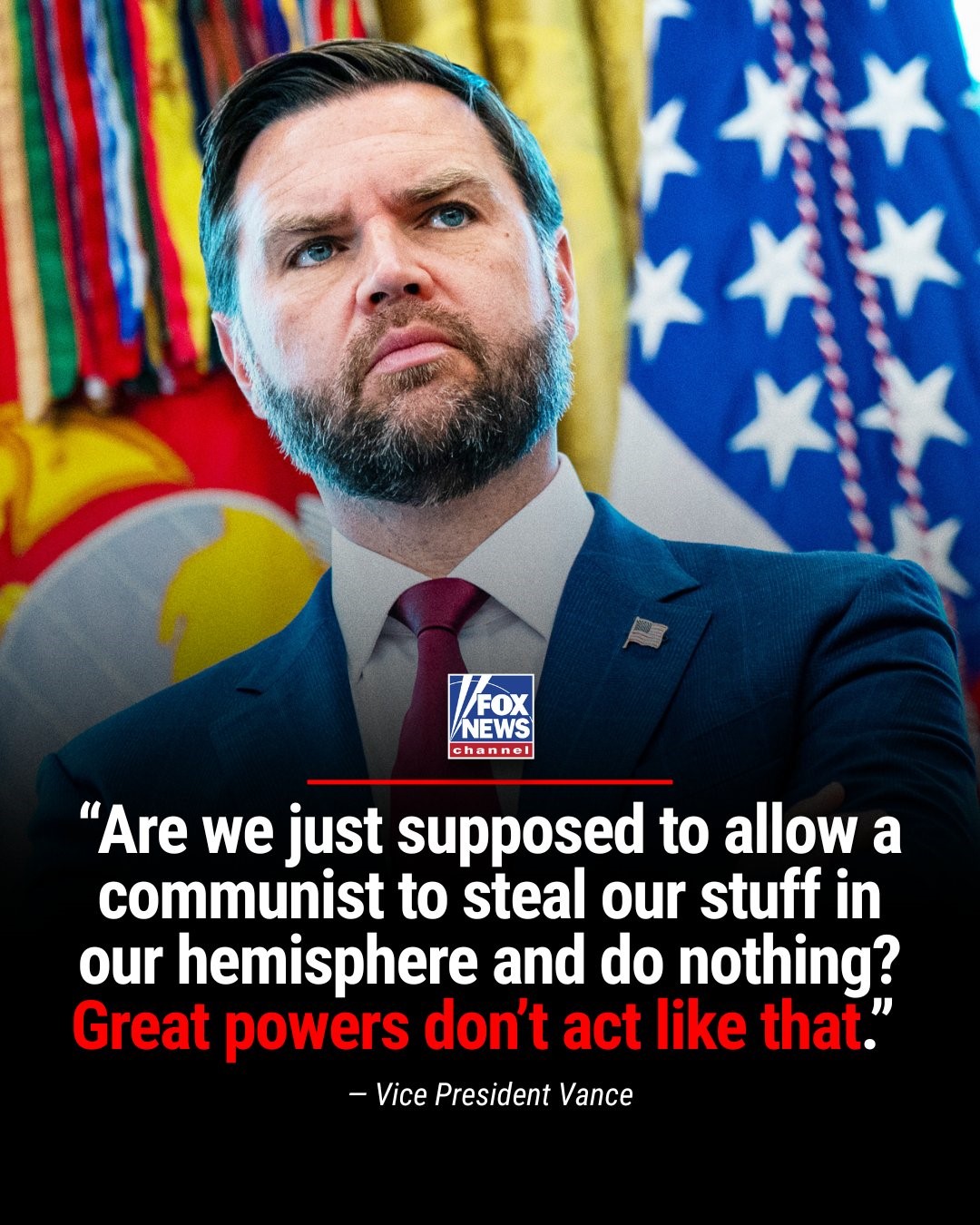
- You might argue that America is better at this game than any other superpower in history. Madeline Albright, who served as secretary of state under President Clinton, once said: ‘If we have to use force, it is because we are America. We are the indispensable nation. We stand tall, and we see further than other countries into the future.’
- The suggestion here is that America is the global policeman. Ideally placed to take decisive action. And everyone else better fall into line.

Source: Fox News / X
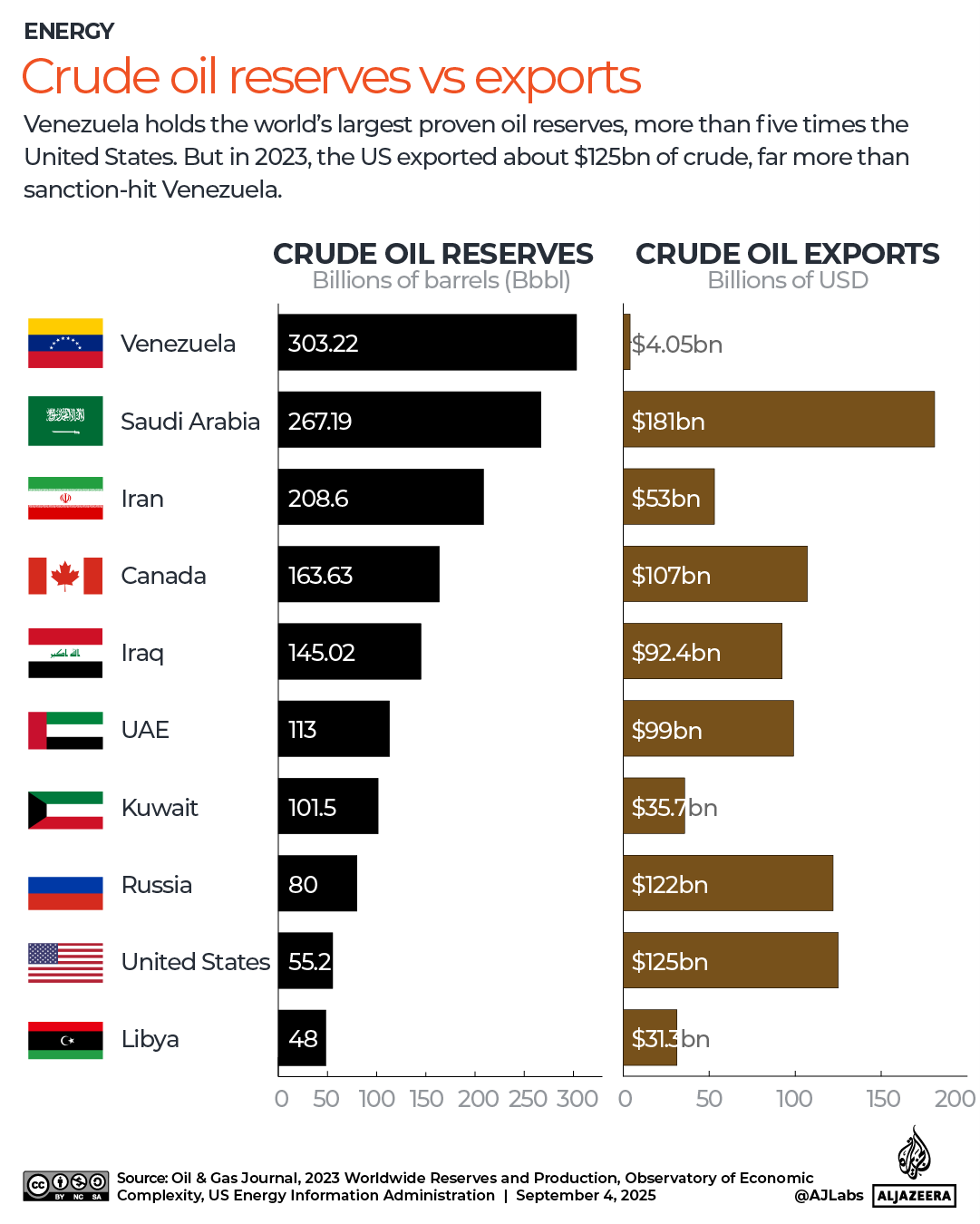
This, of course, brings us to Venezuela. At the moment, Venezuela represents the single largest reservoir of known oil reserves in the world. It also has other prominent resources like gold, iron ore, and bauxite.
- Yet the irony here is that Venezuela is pretty much a failed state. It has been unable to capitalise on its mineral wealth. With a GDP per capita of just over USD $3,000, it’s actually poorer than many African nations.
- Venezuela suffers from what’s known as the ‘resource curse’. The country is plagued by corruption, mismanagement, and incompetence.
- How bad is it? Well, shockingly bad. According to Transparency International’s Corruption Perceptions Index, Venezuela has a ranking of 178 out of 180. It’s the third-most corrupt country in the world, sitting just above South Sudan and Somalia.
- As recently as 2018, Venezuela suffered an annual inflation rate of over 63,000%. That’s devastating.
- In 2026, inflation is projected to moderate to over 200%. That’s still horrible, but perhaps less apocalyptic than usual.
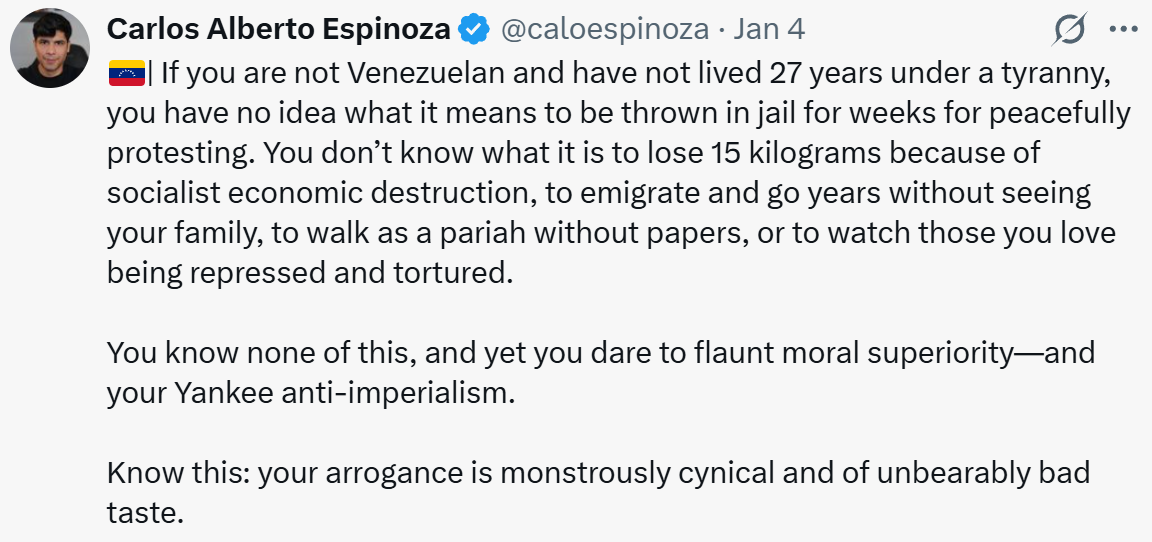
- By all accounts, President Nicolás Maduro has been an awful leader. He has shattered his people’s dignity. Vaporised any chance of social mobility. Incinerated all economic prospects for the nation.

Source: Carlos Alberto Espinoza / X
So is Donald Trump being opportunistic by swooping into Venezuela now? Is taking Nicolás Maduro off the board a good idea? Will regime change lead to something better?
- Well, history is still unfolding as we speak. The future remains fuzzy. In the classic words of Donald Rumsfeld: ‘There are unknown unknowns.’
- However, make no mistake about it. We are facing a turning point now. For years, Venezuela’s oil output has been crippled. But Trump clearly has ideas about repairing the nation’s infrastructure, then turning its economic fortunes around.
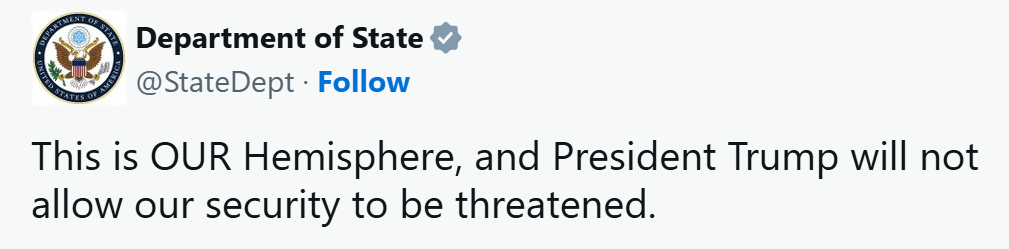
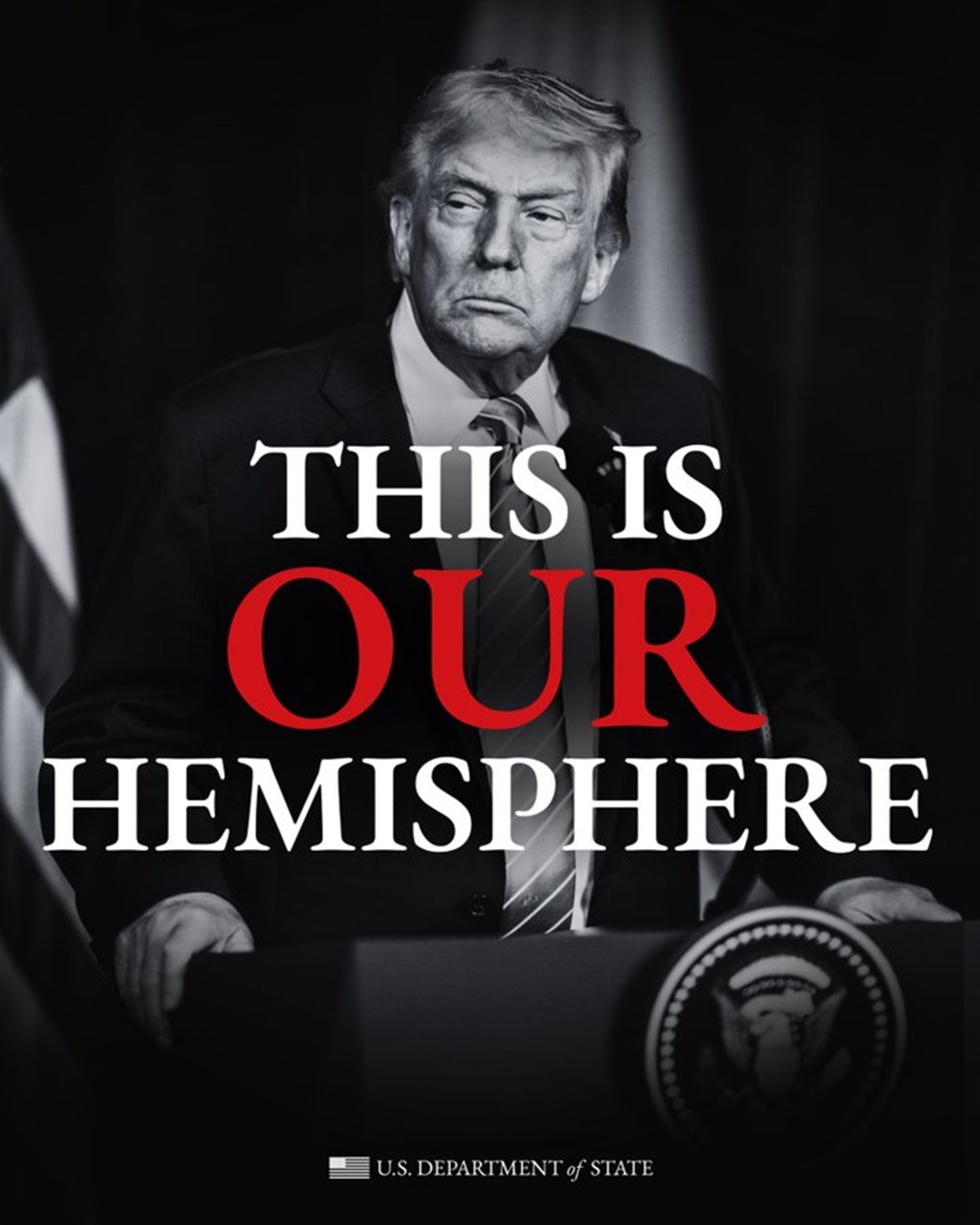
- By doing so, he appears to be taking a page from the Monroe Doctrine of the 19th century and updating it for the 21st. This new Trump Doctrine is about high-speed, low-drag.


Source: Department of State / X
Here’s what MarketWatch has to say about this approach:
Every consequential presidency produces a doctrine. The Truman Doctrine committed America to containing Soviet expansion. The Reagan Doctrine embraced rollback, not merely containing the Soviets but actively supporting insurgencies inside their empire to reverse their gains. The Bush Doctrine, forged after September 11, made pre-emption and democracy promotion twin pillars of American security.
Each doctrine answered a question: What is America’s purpose in the world?
Trump’s answer is elemental: to get a better deal.
This is not isolationism. Isolationists don’t send carrier groups to the Caribbean, strike Iranian nuclear facilities or extract foreign presidents in the dead of night. Trump has used military force more aggressively than any president since George H.W. Bush.
This is transactional hegemony. America remains the world’s dominant power, but dominance has been monetized. Every benefit the U.S. provides has a price. Every relationship has terms. Every deal is evaluated by what America can extract.
What makes the “Trump doctrine” possible now, versus when it was merely aspirational in 1987, is leverage. America holds cards today it did not hold then.

Source: Al Jazeera
Mind you, the Trump Doctrine isn’t just about expanding the footprint of American empire in the Western Hemisphere. There is actually a larger play here, which also has a direct impact on the Eastern Hemisphere.
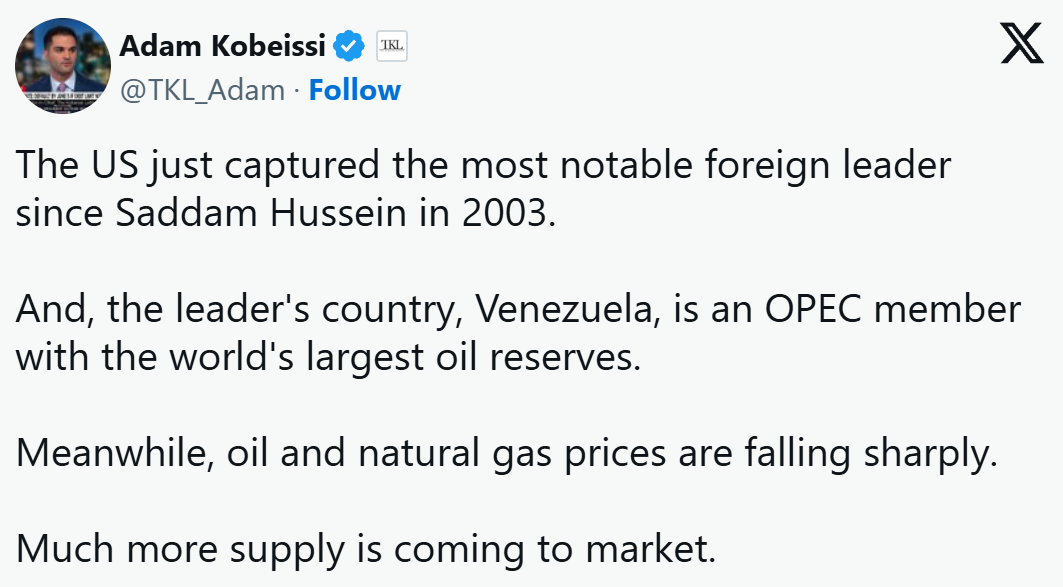
- Vishnu Varathan, an analyst from Mizuho Financial Group, has a bullish view: ‘China’s energy security is compromised at the margin whilst the US gains significant energy dominance advantage.’
- Meanwhile, hedge fund manager Bill Ackman is also feeling positive: ‘The removal of Maduro will lower oil prices, which is good for America and very bad for Russia. A weaker Russian economy will increase the probability that the war in Ukraine ends sooner and on more favorable terms for Ukraine. And Putin will be sleeping in his safe room from this point going forward.’
- Interestingly enough, Michael Burry of Big Short fame also seems cautiously optimistic: ‘Russia oil just became less important in the intermediate and long-term.’

Source: Adam Kobeissi / X
Now, I make no judgement about what’s right and wrong here. I’m not a fan of moralising. But what I’m a fan of is acknowledging reality. Here’s why it matters:
- As ordinary investors, we have no say over what empires do on the world stage. Our job is only to identify risks and opportunities, then use that financial intelligence in a wise way. So that we can prosper. So that we can protect our loved ones. So that we don’t get the short end of the stick.
- The ancient Greek philosopher Thucydides understood this reality very well. He said: ‘The strong do what they can and the weak suffer what they must.’
- So if you’re still agonising about the demise of the UN rules-based order, my advice is this: don’t. Ideology is useless. Virtue-signalling is wasted energy. What really matters here is the law of the jungle. It’s about Darwinism. Survival of the fittest.
- Stephen Miller, the current White House deputy chief of staff, has declared: ‘We live in a world that is governed by strength, that is governed by force, that is governed by power. These are the iron laws of the world.’
- Understand this. Acknowledge this. Then position yourself accordingly as an investor. These are the facts of life.
Regards,
John Ling
Analyst, Wealth Morning
(This article is the author’s personal opinion and commentary only. It is general in nature and should not be construed as any financial or investment advice. Wealth Morning offers Managed Account Services for Wholesale or Eligible investors as defined in the Financial Markets Conduct Act 2013.)